

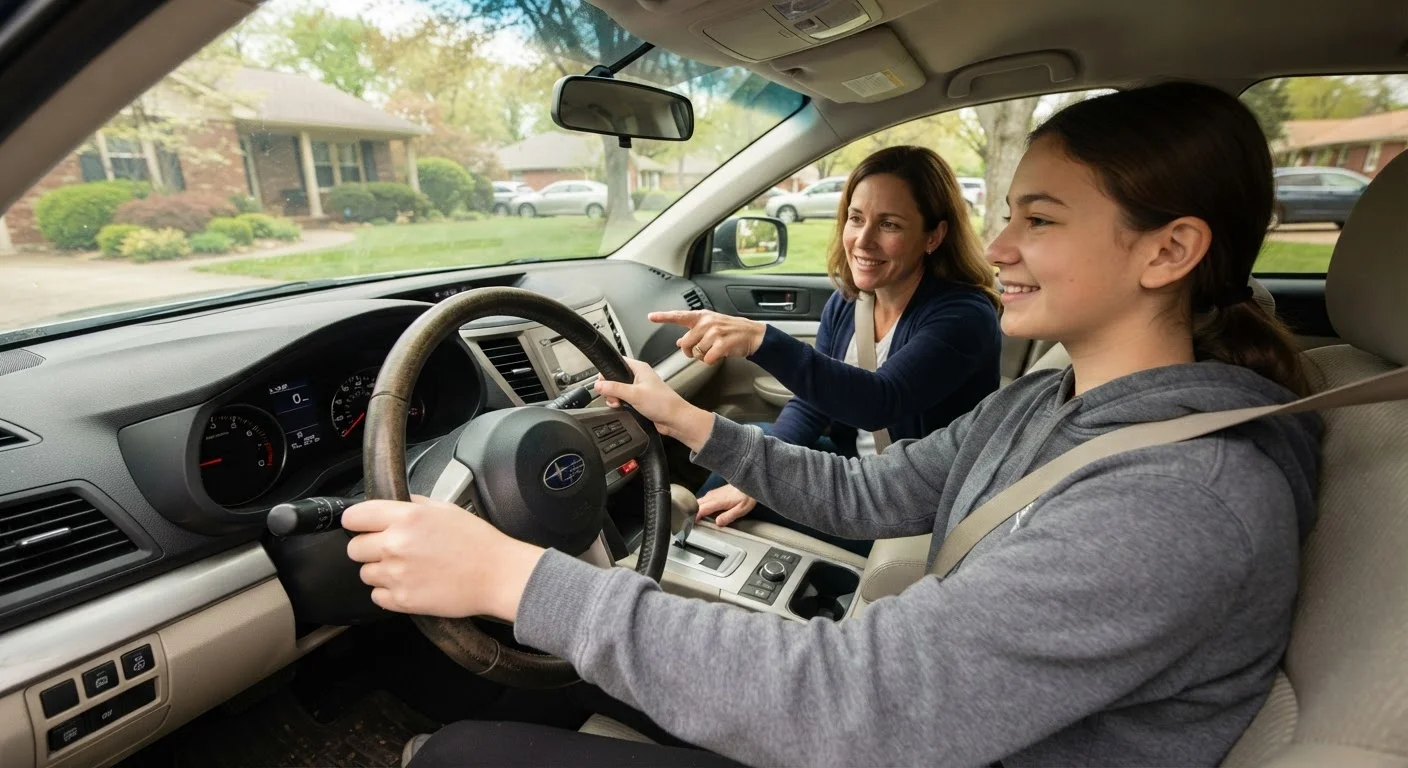
Why Adding a Teen Changes More Than Just the Premium
Most parents expect their car insurance bill to climb when a teenager earns their license - but fewer anticipate how broad the ripple effect can be. The premium increase is real and often significant, but the process of adding a teen driver also prompts a useful review of whether your overall coverage is appropriately structured for higher risk.
Teen drivers are involved in crashes at disproportionately higher rates than older drivers, according to data from the National Highway Traffic Safety Administration (NHTSA). Insurers price this risk into the premium. What that number looks like for your family depends on your insurer, your state, your teen's age and gender (where state law permits use of those rating factors), and which vehicle they drive.
Beyond cost, there are procedural realities: licensing documentation, policy updates, and legal driving restrictions that now apply to anyone who takes the wheel. First-time car ownership often comes with surprises - and the same is true for first-time teen-driver households.
Ask About Every Available Discount
Many insurers offer discounts for good academic performance (typically a B average or higher), completion of a certified driver education course, or limiting your teen to a vehicle with strong safety ratings. Ask your insurer specifically which discounts apply to young drivers on your policy - not all are advertised upfront.
What to Prepare Before You Call Your Insurer
Having the right materials on hand before contacting your insurer streamlines the process and helps you ask better questions. You'll want your current policy documents, your teen's license details, and any training certificates that might qualify for a discount.
What you will need
Current auto insurance policy documents
Needed to review existing coverage limits, deductibles, and listed drivers before making changes.
Teen's driver's license
Required by the insurer to formally add the driver to the policy.
Driver education completion certificate
May qualify your teen for a discount on your premium with many insurers.
Vehicle VIN
Insurers use this to verify the vehicle's safety rating and set rates accurately.
Don't Delay Adding Your Teen
In most states, once your teen is a licensed driver living in your household, insurers expect them to be listed on your policy. Driving on an undisclosed license can be treated as material misrepresentation, which may give your insurer grounds to reduce or deny a claim. Contact your insurer as soon as your teen receives their license.
Once you have those in hand, follow the steps below to work through the process systematically.
Review your current policy before calling your insurer
Pull out your existing declarations page - the summary sheet that lists your covered vehicles, drivers, coverage types, and limits. Note your current liability limits, deductible amounts, and whether you carry comprehensive and collision coverage. Understanding your baseline makes the upcoming conversation with your insurer far more productive.
This is also a good moment to consider whether your current coverage levels are adequate once a less-experienced driver is in the mix. See our guide to comprehensive vs. collision coverage to clarify what each type protects against.
Contact your insurer and formally add your teen
Call or log into your insurer's portal and request to add a new driver. You will need your teen's full name, date of birth, license number, and license issue date. The insurer will also ask which vehicle(s) the teen has access to. Be accurate and complete - omitting vehicles they have reasonable access to can create problems at claim time.
Your insurer will recalculate your premium on the spot or within a short processing window. Ask for the new estimated premium in writing before agreeing to the change, so you have documentation to compare.
Ask about every applicable discount
Before ending the call, systematically ask about discounts that apply to young drivers: good-student discounts, driver education credits, telematics or usage-based programs (apps or plug-in devices that monitor driving behavior), and away-at-school discounts if your teen won't have regular car access. Not every discount is offered proactively.
Revisit your liability and coverage limits
With a teen now on the policy, this is an appropriate time to assess whether your liability coverage is sufficient. Liability pays for damage or injury your teen causes to others in an at-fault accident. State minimums are often low relative to real-world costs of a serious collision. Many financial professionals suggest carrying significantly higher limits than the state minimum, though your specific situation should guide that decision.
If you don't already carry collision coverage on the vehicle your teen drives, weigh the cost of adding it against the vehicle's current value. Our comprehensive vs. collision explainer walks through how to think about that tradeoff.
Understand your state's graduated licensing rules
Most US states use a Graduated Driver Licensing (GDL) system that restricts new drivers - typically limiting nighttime driving, the number of passengers allowed, and phone use. These restrictions are legal requirements, not suggestions. Violations can affect your teen's license standing and, depending on the insurer, may be reviewed if a claim arises.
Check your state's DMV website for the specific GDL conditions that apply to your teen's license stage. Keeping these restrictions visible - posted in the car or reviewed together as a family - reinforces safer habits. Visit our safe driving hub for further guidance on building good road habits from the start.
Minimum Coverage May Not Be Enough
Teen drivers statistically have higher crash rates than experienced adults. If your policy carries only your state's minimum liability limits, a serious at-fault accident could leave your family exposed to costs that exceed those limits. Review your liability coverage before your teen starts driving regularly.
This article provides general information about auto insurance for educational purposes. It is not personalized insurance, legal, or financial advice. Coverage availability, pricing, and state regulations vary. Consult a licensed insurance professional to understand the options that apply to your specific situation.
The content provided on our blog site traverses numerous categories, offering readers valuable and practical information. Readers can use the editorial team’s research and data to gain more insights into their topics of interest. However, they are requested not to treat the articles as conclusive. The website team cannot be held responsible for differences in data or inaccuracies found across other platforms. Please also note that the site might also miss out on various schemes and offers available that the readers may find more beneficial than the ones we cover.