

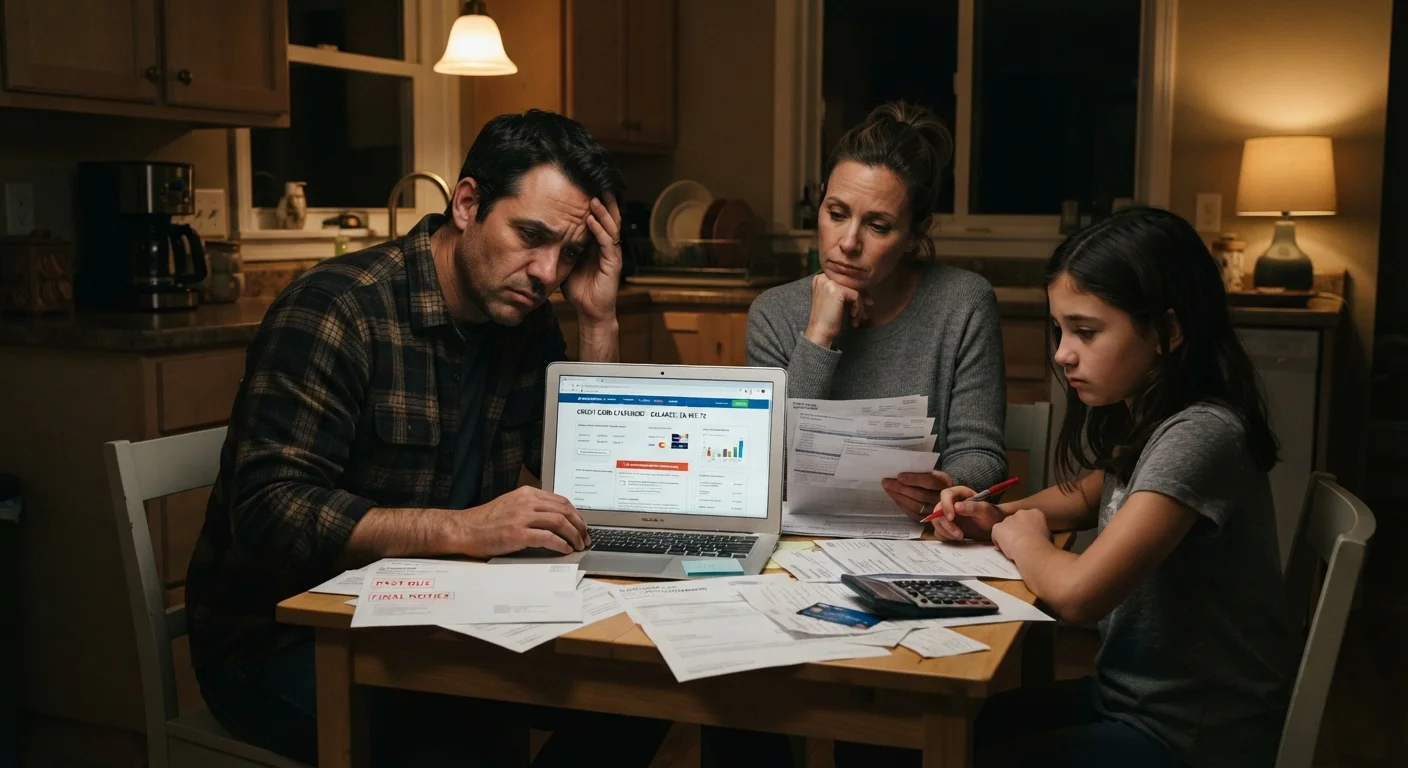
How Responsible Borrowers Drift Into Deep Debt
Debt problems don't always start with reckless spending. Many families find themselves carrying more debt than they planned after a string of individually reasonable-looking decisions - a medical bill put on a card, a car loan stretched to lower monthly payments, a home equity line used for a necessary repair. The problem is rarely a single bad choice. It's a pattern of small miscalculations, compounded over time.
Understanding why these patterns emerge - not just that they're bad - is what makes it possible to interrupt them. The mistakes below are among the most common, and each one is preventable with the right framing.
Treating the minimum payment as the target payment rather than the floor.
Why it happens: Monthly minimums feel manageable, and card statements rarely emphasize the true long-term cost of paying just that amount.
Allowing lifestyle creep to quietly outpace income growth.
Why it happens: When a raise arrives or a loan is paid off, spending naturally expands to fill the gap - dining out more, upgrading subscriptions, or funding larger purchases on credit.
Underestimating how compound interest accelerates the balance owed.
Why it happens: Most people think of interest as a flat add-on, but credit card interest compounds - meaning interest accrues on previously unpaid interest, not just the original purchase amount.
Confusing secured and unsecured debt consequences.
Why it happens: Borrowers often treat all debt as roughly equivalent, not realizing that defaulting on a secured loan (like a mortgage or auto loan) risks losing the underlying asset.
Ignoring small recurring charges that steadily inflate a credit balance.
Why it happens: Subscription services, app charges, and automatic renewals are easy to forget when they're spread across multiple cards or charged infrequently.
What the Numbers Actually Mean for Your Family
~$6,500
Average US household credit card balance
According to Federal Reserve consumer credit data, average revolving credit balances per household have consistently remained in the mid-thousands of dollars.
20%+
Typical credit card APR in recent years
The Federal Reserve's G.19 consumer credit report has tracked average credit card interest rates above 20% APR in recent periods, making unpaid balances especially costly.
Numbers like these illustrate why the mechanics of debt matter as much as the intent behind borrowing. A family that borrows in good faith and services their debt responsibly can still end up paying far more than they anticipated if the underlying structure of the loan isn't well understood.
Minimum Payments Are a Costly Trap
Credit card issuers are required to disclose how long it takes to pay off a balance making only minimum payments - check your statement. The number is often startling. On a $5,000 balance at 20% APR, paying only minimums can take over 15 years and cost thousands in interest alone.
The path forward involves both correcting current habits and building a stronger framework for future borrowing. Keeping debt from derailing your family budget requires tracking what you owe, prioritizing repayment strategically, and protecting the rest of your household finances in the process.
This article is for general informational purposes only and does not constitute personalized financial advice. Please consult a qualified financial professional regarding your specific circumstances.
The content provided on our blog site traverses numerous categories, offering readers valuable and practical information. Readers can use the editorial team’s research and data to gain more insights into their topics of interest. However, they are requested not to treat the articles as conclusive. The website team cannot be held responsible for differences in data or inaccuracies found across other platforms. Please also note that the site might also miss out on various schemes and offers available that the readers may find more beneficial than the ones we cover.