

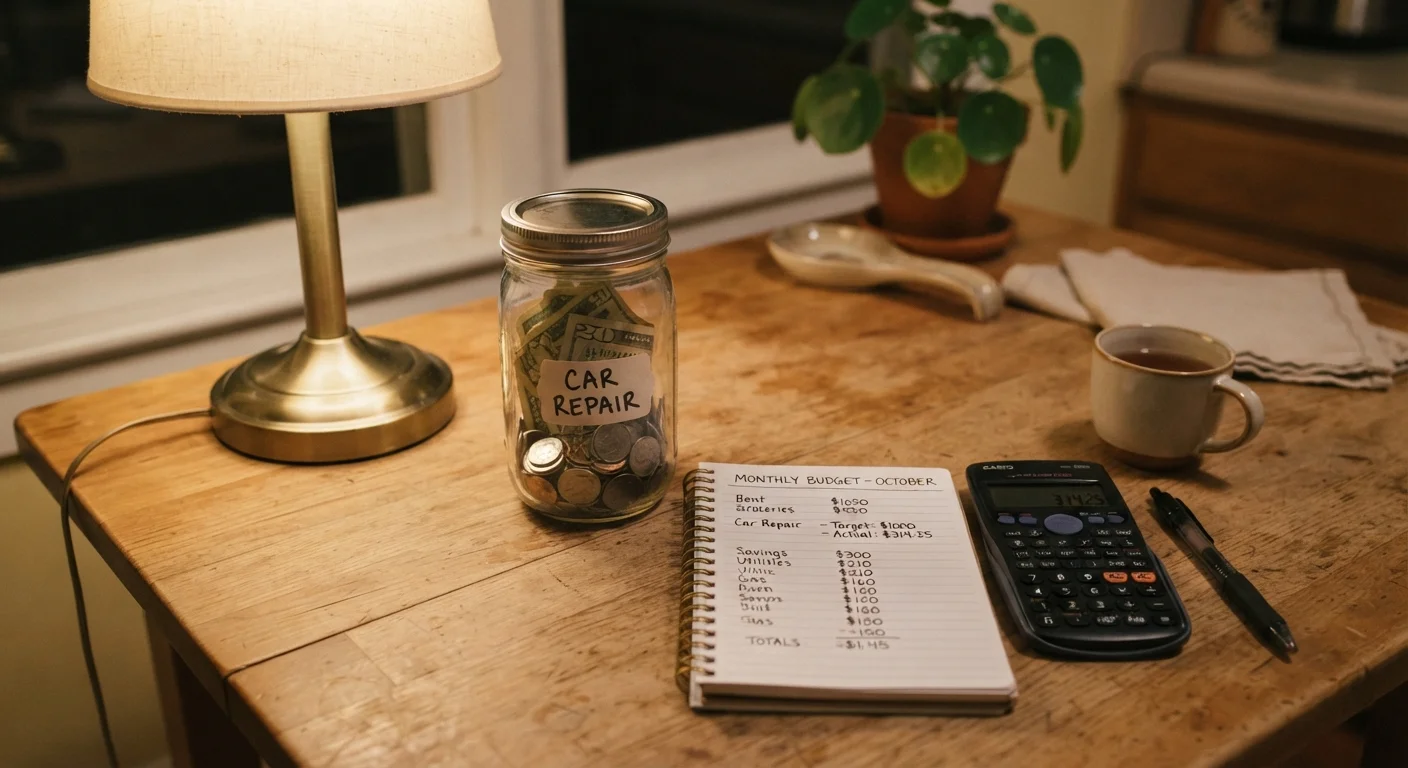
Why Predictable Costs Still Derail Budgets
Most families know their car will eventually need new tires. They know the holidays come every December. They know the home insurance premium arrives like clockwork. Yet when these costs land, they still feel disruptive - because the money wasn't set aside ahead of time.
This is the gap sinking funds are designed to close. Unlike genuine financial emergencies, these are costs you can see coming. The problem isn't the expense itself; it's that monthly budgets are usually built around regular, recurring costs and leave irregular ones to chance. Those irregular costs are exactly what the hidden spending categories families leave out of their budget article addresses - annual fees, car maintenance, school costs, pet care. Sinking funds are the practical solution to those gaps.
~$1,000
Average unexpected car repair cost
According to AAA research, the average American driver faces unexpected vehicle repair bills in the range of $500-$1,500, costs a sinking fund can absorb without disrupting a monthly budget.
40%
Americans who can't cover a $400 emergency
Federal Reserve surveys have consistently found that a significant share of U.S. households struggle to handle even a modest unplanned expense without borrowing or selling something.
12x
Monthly contributions needed for annual costs
Any predictable yearly expense - insurance, registration, holiday spending - can be fully funded by dividing the total by 12 and saving that amount each month.
How a Sinking Fund Actually Works
The mechanics are straightforward. You identify a future expense, estimate its total cost, then divide that amount by the number of months until you need it. That figure becomes your monthly contribution to a dedicated fund.
For example: if your family spends around $600 on holiday gifts each year and you start saving in January, you'd set aside $50 a month. By December, the money is ready. No credit card, no scramble.
This same logic applies to car registration fees, back-to-school shopping, annual subscriptions, or a family vacation. The key requirement is that the expense be reasonably predictable - either in timing, amount, or both.
Name Your Funds Specifically
Label each sinking fund by its actual purpose - 'Car Tires,' 'Holiday Gifts,' 'Annual Insurance' - rather than grouping them under vague names like 'Misc Savings.' Specific labels make it easier to track progress and harder to raid a fund for unrelated purchases.
Sinking funds sit in a different category from your emergency fund. Emergency funds absorb the truly unexpected. Sinking funds absorb the inevitable.
Setting Up Sinking Funds for Your Family
Start by listing every irregular or annual expense your household faces. Review last year's bank statements - costs that appeared once or twice are strong candidates. Common sinking fund categories for families include:
- Vehicle maintenance and registration - oil changes, tires, annual tags
- Home repairs and appliances - HVAC servicing, water heater replacement
- Medical and dental costs - deductibles, orthodontics, vision
- Holidays and gifts - birthdays, winter holidays, school events
- Annual insurance premiums - if paid in a lump sum rather than monthly
- School and childcare costs - supplies, activities, field trips
Once you have your list, assign a target amount and a target date to each. Then calculate the monthly contribution needed. This process fits naturally into building a family savings plan from the ground up.
You Don't Need Separate Bank Accounts
Some families use spreadsheets or budgeting apps to track multiple sinking funds within a single savings account. Others prefer named sub-accounts at their bank. Either approach works - the priority is consistent contributions and clear tracking, not a specific account structure.
Sinking Funds as a Behavior-Change Tool
Beyond the math, sinking funds change how a family relates to money. Expenses that used to feel stressful become neutral - just a scheduled withdrawal from a fund already grown to meet them. That shift reduces the urge to reach for credit when costs arise unexpectedly.
They also make saving feel purposeful. A contribution to a named fund - "vacation" or "new laptop" - feels more concrete than adding to a general savings balance. Research in behavioral finance consistently finds that labeling or earmarking money increases follow-through on saving goals. This is central to the idea behind goal-based saving, which organizes finances around specific priorities rather than one undifferentiated pot.
“The goal is to make irregular expenses boring. Once a cost is planned and funded, it stops being a crisis - it's just an errand.”
— Elizabeth Warren, U.S. Senator and co-author of 'All Your Worth,' a book on balanced household budgeting
For families working with limited margins, even small sinking fund contributions matter. Directing $15 or $20 a month toward a car maintenance fund means something is waiting when the time comes, reducing the pressure to borrow. The right account for the timeline also affects how effectively each fund grows.
This article provides general financial education and is not personalized financial advice. Consider speaking with a licensed financial professional about decisions specific to your household.
Frequently Asked Questions
An emergency fund covers unexpected events you can't predict - job loss, a sudden medical bill, or an urgent home repair. A sinking fund covers costs you know are coming, like annual insurance premiums or holiday gifts. Both serve different purposes and ideally exist side by side. See <a href="/family-finance/saving-and-goals/what-an-emergency-fund-actually-is-and-why-one-month-isnt-enough">what an emergency fund actually covers</a> for a fuller explanation.
There's no fixed rule, but most families find three to six funds practical to manage. Common categories include car maintenance, home repairs, annual insurance, medical costs, and holidays. Start with the irregular expenses that have caught your budget off guard in the past.
Many families use a dedicated savings account or a high-yield savings account for sinking funds, keeping them separate from day-to-day checking. Some banks allow multiple named sub-accounts within one account, which makes tracking each fund easier without opening many separate accounts.
Prioritize the expense that is closest in time or carries the biggest financial risk if unpaid. Even small weekly contributions add up. A guide on <a href="/family-finance/saving-and-goals/saving-on-a-tight-budget-strategies-that-work-when-margins-are-slim">saving on a tight budget</a> can help identify room in constrained finances.
No - sinking funds are a tool within a budget, not a substitute for one. They handle irregular expenses, but you still need a broader plan for your monthly income and essential costs. Think of them as specific budget line items that accumulate over time.
The content provided on our blog site traverses numerous categories, offering readers valuable and practical information. Readers can use the editorial team’s research and data to gain more insights into their topics of interest. However, they are requested not to treat the articles as conclusive. The website team cannot be held responsible for differences in data or inaccuracies found across other platforms. Please also note that the site might also miss out on various schemes and offers available that the readers may find more beneficial than the ones we cover.