

Why Weekend Projects Actually Move the Needle
Big renovations get the attention, but it's often the unglamorous Saturday projects - a tube of sealant here, a fresh filter there - that make the most immediate difference in how a home feels day to day. Drafts, humidity swings, inconsistent temperatures, and stale air are comfort problems that rarely require a contractor. They require attention.
The projects below are sized for a weekend, use widely available materials, and address the root causes of common comfort complaints rather than masking symptoms. If you're weighing which tasks to prioritize, the seasonal home maintenance checklist is a useful companion to work through room by room. And for any project that edges toward electrical, gas, or structural territory, consult a licensed professional - that line is non-negotiable.
Replace or add weatherstripping on exterior doors
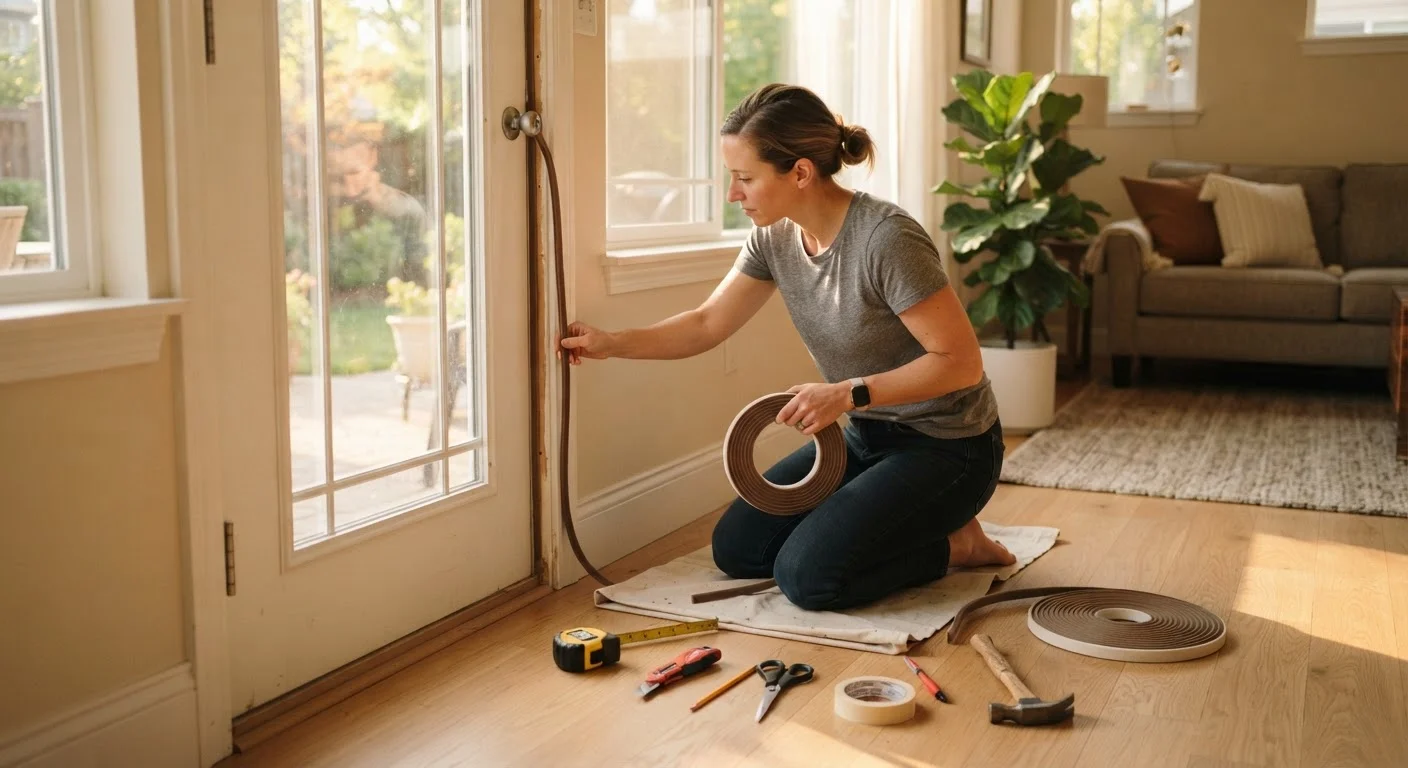
Exterior doors are one of the most common sources of drafts, and weatherstripping degrades faster than most homeowners realize - especially on frequently used doors. Compressed, torn, or missing strips let conditioned air escape and outdoor air infiltrate, making rooms near entries feel consistently uncomfortable regardless of thermostat settings.
Most door weatherstripping is installed without special tools: a utility knife, a tape measure, and a screwdriver cover the majority of installations. Foam tape works for low-traffic gaps; V-strip (tension seal) and door sweeps handle higher-wear locations like the door bottom and side jambs. Our detailed guide to caulking vs. weatherstripping clarifies which material belongs where, which saves both time and money on materials.
Worn weatherstripping is one of the fastest, cheapest fixes that makes an immediate difference.
Caulk around window frames and interior trim
Windows lose heat and cooling primarily through the gap between the frame and the surrounding wall, not just through the glass. Hairline cracks in caulk - especially on older windows - are easy to miss visually but meaningful in aggregate. A full perimeter of failed caulk on multiple windows adds up to significant air exchange.
Use paintable latex caulk for interior trim and a weatherproof silicone or siliconized-latex product for exterior applications. Clean out old, crumbling caulk first with a putty knife or oscillating tool; applying new caulk over failed material reduces adhesion and longevity. One tube typically covers several windows. Smooth joints with a dampened finger or a caulking tool for a clean, lasting seal.
Recaulking a window's perimeter costs under five dollars and can noticeably reduce drafts the same day.
Change furnace filters and check return air vents
A clogged or incorrect furnace filter restricts airflow, causes the system to work harder, and - critically - reduces indoor air quality. Most one-inch pleated filters should be changed every 60-90 days, though households with pets or allergy sufferers may need more frequent replacement. Higher-MERV filters capture finer particles but also restrict airflow more; check your HVAC unit's documentation for the range it's designed to handle.
While the filter is out, inspect return-air vents throughout the home. Furniture pushed against vents, closed registers, or blocked grilles create uneven pressure that translates into hot and cold spots room to room. Keeping vents clear and filters fresh is explored in more depth in our guide to furnace filters, airflow, and air quality.
Correct filter maintenance is one of the few tasks that simultaneously protects equipment and improves air quality.
Seal attic bypasses where conditioned air escapes
Attic bypasses - gaps around recessed lights, plumbing penetrations, wiring runs, and top plates - are responsible for a substantial share of heat loss in many homes, yet they sit out of sight and rarely get addressed. Even a well-insulated attic floor loses significant energy if the air barrier beneath it is full of small openings.
Access your attic on a cool morning with a flashlight, and look for daylight, visible gaps, or frost patterns in winter (which indicate warm air escaping). Use fire-rated caulk or expanding foam appropriate for each gap type; recessed can lights require specific air-tight covers, not standard foam. Refer to attic vs. wall insulation to understand how air sealing and insulation work as a system rather than independently.
Sealing attic bypasses before adding insulation is the correct order - and the step most families skip.
Install or clean bathroom and kitchen exhaust fans
Exhaust fans are the primary defense against excess humidity in the two rooms that generate it most. A non-functional or undersized fan allows moisture to build up in walls and ceilings, contributing to mold risk, paint failure, and - in bathrooms without windows - persistent musty odors. Many homes have fans that are technically operational but caked with dust to the point of moving little air.
Remove the fan cover (most snap off or are held by two clips), wash it with warm soapy water, and vacuum lint from the fan blades and housing. If the fan is more than 10-15 years old or notably loud, it may be worth replacing; modern units are significantly quieter and more efficient. Verify that the duct exits through the roof or a wall cap - not into the attic, which is a code violation in most jurisdictions and a common source of moisture damage.
A clean, properly vented exhaust fan is one of the best defenses against hidden moisture damage.
Add a programmable or smart thermostat
Swapping a basic thermostat for a programmable model is a straightforward wiring task for most forced-air systems: turn off the breaker, label and detach wires, mount the new base, reconnect by label, and restore power. Most units walk through setup on-screen. The result is a home that adjusts temperature automatically around your family's schedule rather than running at a constant setpoint throughout the day.
Note that homes with older heating systems - some multi-stage, radiant, or heat-pump setups - may require compatibility research before purchasing a replacement unit. Consult the thermostat's compatibility guide or a qualified HVAC technician if you're uncertain. Avoid wiring changes if your system uses 240V line-voltage thermostats, which require a licensed electrician.
A programmable thermostat turns comfort management from reactive to automatic, fitting around your schedule.
Making It a Habit, Not a One-Off
Comfort improvements compound over time. A door sealed this fall, combined with an attic air-seal next spring and a ventilation check the summer after, builds a measurably tighter, more consistent home - often without a single large expenditure. Tracking what you've done and when is simple but valuable; many families use the home maintenance hub as a reference to keep recurring tasks on a reliable schedule.
Track What You've Done and When
Keep a simple home maintenance log - a dated notebook page or a shared notes app works fine - recording each project, the materials used, and any observations about what you found. This record is invaluable when troubleshooting problems later, scheduling follow-up work, or providing documentation when selling the home. It also makes it easier to spot patterns, like a room that needs recaulking every two years, suggesting a deeper moisture or movement issue worth investigating.
If you're uncertain whether a project is within your skill level, the framework in DIY repairs vs. calling a pro gives practical criteria for making that call confidently - before you're halfway through a job.
The content provided on our blog site traverses numerous categories, offering readers valuable and practical information. Readers can use the editorial team’s research and data to gain more insights into their topics of interest. However, they are requested not to treat the articles as conclusive. The website team cannot be held responsible for differences in data or inaccuracies found across other platforms. Please also note that the site might also miss out on various schemes and offers available that the readers may find more beneficial than the ones we cover.