

Why Kids Resist Homework (It's Rarely What You Think)
Nightly homework conflict is one of the most common frustrations parents describe - yet the cause is rarely simple defiance. Children resist homework for concrete, understandable reasons: they're mentally exhausted, they don't understand what's being asked, they're bored by repetitive work, or they've learned that resistance eventually gets them parental help. Recognizing the actual driver is the first step toward a lasting fix.
Developmental context matters too. Younger children have limited working memory and attention spans. Expecting a second-grader to sustain independent focus for 45 minutes isn't a discipline problem - it's a mismatch between expectation and developmental reality. Even older students hit a wall after seven or eight hours of structured school demands.
10 min
Recommended homework per grade level per night
The National Education Association and National PTA have long endorsed a "10-minute rule" - roughly 10 minutes of homework per grade level per night as a general guideline.
30%
Of students report homework-related stress regularly
A survey by Challenge Success at Stanford found that a significant share of students describe homework as a primary source of stress, particularly when volume feels excessive.
The good news: most homework battles have identifiable causes, and targeted adjustments - rather than stricter rules - tend to resolve them. The common mistakes below reflect patterns educators and researchers see repeatedly in family homework dynamics.
Common Homework Mistakes - and How to Avoid Them
Starting homework immediately after school, without any downtime.
Why it happens: Parents often assume earlier is better to get it done before the evening rush. But children's cognitive resources are significantly depleted after a full school day.
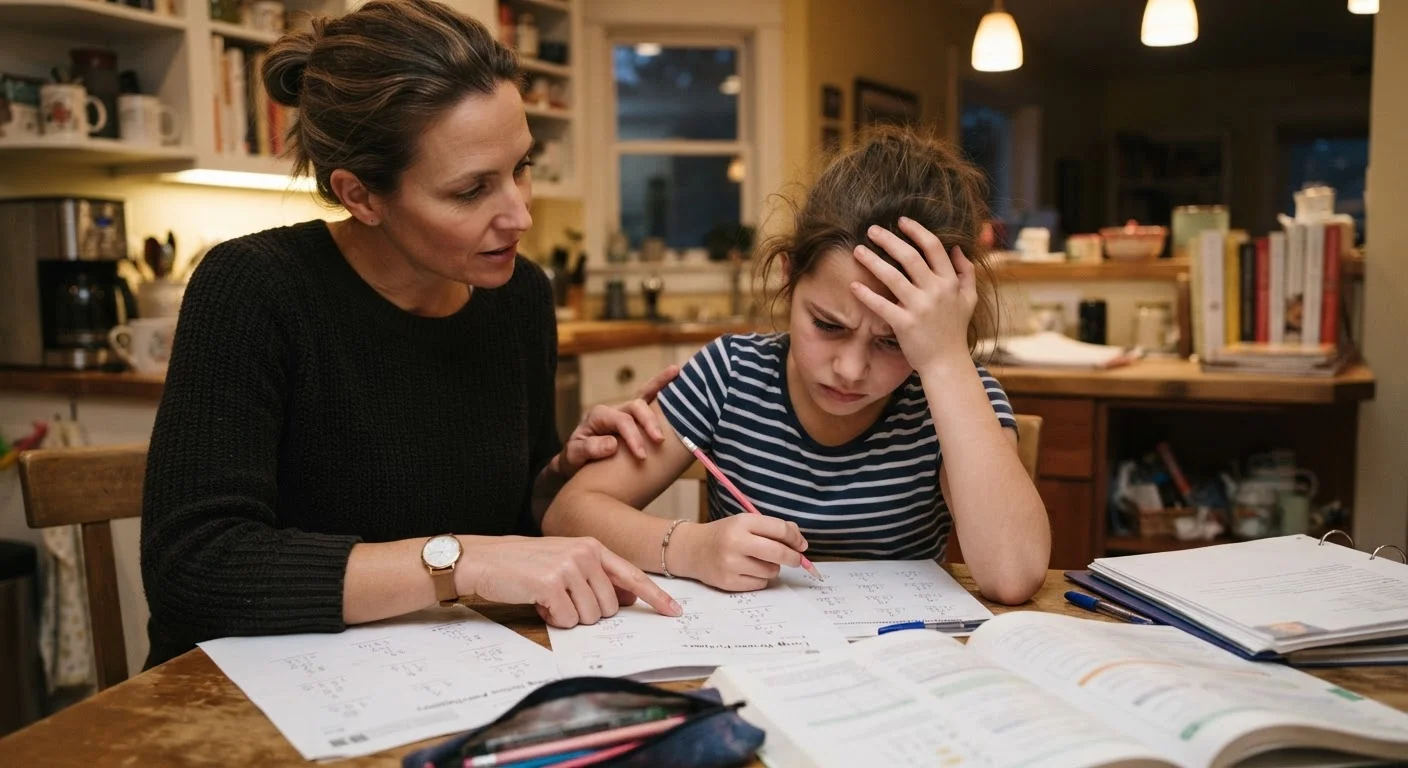
Sitting beside the child and guiding every problem or answer.
Why it happens: It feels efficient and kind to help a struggling child. But over-scaffolding removes the productive struggle that builds genuine understanding and self-efficacy.
Letting homework location and timing shift from day to day.
Why it happens: Family schedules vary, and flexibility can feel considerate. In practice, unpredictability increases negotiation, resistance, and mental warm-up time.
Assuming a child who says "I don't get it" is being lazy or difficult.
Why it happens: Frustration can look like resistance. Parents sometimes misread confusion as attitude, which escalates tension rather than resolving the block.
Never reaching out to the teacher about homework concerns.
Why it happens: Parents may feel it sounds like a complaint, or assume the teacher is too busy. Many homework battles are fueled by assignments that are unclear, miscopied, or genuinely mismatched with a child's current level.
If you notice that frustration, disengagement, or avoidance are becoming a pattern rather than an occasional rough evening, learning to recognize early warning signs can help you address issues before they compound.
Chronic Struggle May Signal Something Deeper
If homework battles are intense, frequent, and paired with signs of anxiety, persistent avoidance, or academic decline, it may be worth requesting a conversation with your child's teacher or school counselor. These patterns can sometimes point to unmet learning needs or attention challenges that benefit from professional support. This article offers general guidance - it is not a substitute for individualized educational or psychological assessment.
Building a Homework Environment That Actually Works
Beyond avoiding the mistakes above, a few proactive habits significantly reduce daily friction. A consistent, low-distraction workspace - even just a cleared kitchen table - signals to a child's brain that it's time to focus. Background TV and frequent phone notifications are among the most disruptive environmental factors for sustained concentration.
Avoid Turning Homework Into Punishment
Withholding dinner, screen time, or social activities until homework is perfect can increase anxiety and damage a child's relationship with learning. Setting reasonable expectations and offering genuine encouragement tends to produce far better long-term results than pressure-based tactics.
Involve your child in setting up the routine when possible. Children who have some ownership over when and where they work tend to show less resistance than those who have routines imposed on them without input. A simple choice - "Do you want to start with math or reading tonight?" - can shift the dynamic meaningfully.
For families building broader structure around learning, our guide on enriching your child's education at home offers practical starting points that don't require overhauling your schedule. Smoother evenings often start earlier in the day - see how a structured morning routine can reduce end-of-day stress for the whole family.
The content provided on our blog site traverses numerous categories, offering readers valuable and practical information. Readers can use the editorial team’s research and data to gain more insights into their topics of interest. However, they are requested not to treat the articles as conclusive. The website team cannot be held responsible for differences in data or inaccuracies found across other platforms. Please also note that the site might also miss out on various schemes and offers available that the readers may find more beneficial than the ones we cover.