

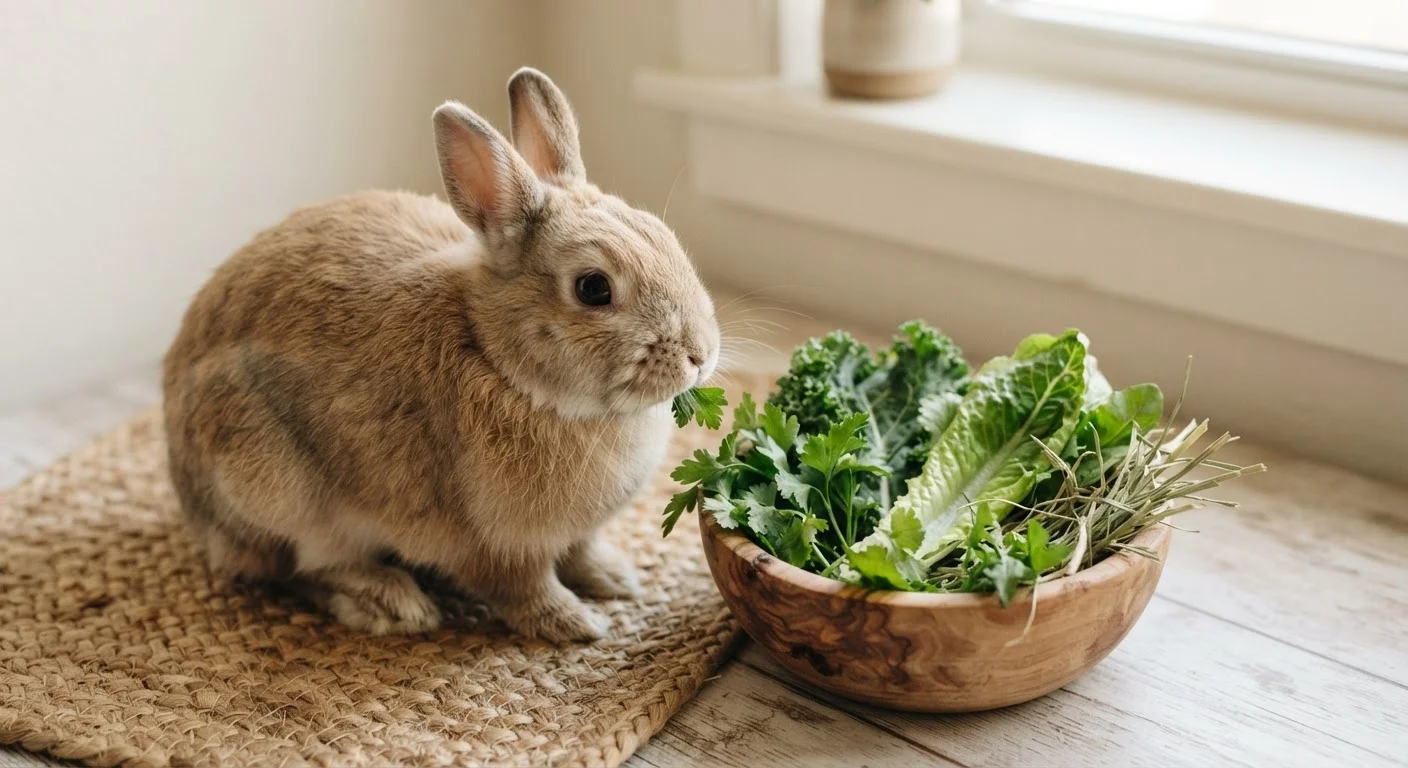
The Foundation: Hay Above Everything Else
If there is one rule in rabbit nutrition, it is this: unlimited fresh hay, every single day. Hay should make up roughly 80-90% of a rabbit's diet. It provides the long-strand fiber that keeps the digestive system moving and wears down continuously growing teeth - both critical functions for rabbit health.
Timothy hay is the most widely recommended variety for adult rabbits. Orchard grass and meadow hay are suitable alternatives. Alfalfa hay is higher in calcium and protein, which is appropriate for young rabbits under six months but can contribute to urinary problems if fed long-term to adults.
Hay should always be available in a rack or pile - not just sprinkled in a bowl. Rabbits need to graze throughout the day and night. Running low on hay, even for several hours, can disrupt gut motility. If you are setting up your rabbit's space for the first time, the pre-arrival checklist covers hay racks and other essentials to have ready before your rabbit arrives.
| Hay proportion of diet | 80-90% of daily intake (House Rabbit Society guidelines) |
| Best hay type for adults | Timothy hay (or orchard grass) |
| Daily greens amount | ~1-2 cups per kg of body weight |
| Pellet serving (adult) | ~¼ cup per 5 lbs body weight |
| Water delivery | Bowl or bottle - refreshed daily |
| Safe fruit treats | Small pieces, occasional only |
Fresh Leafy Greens: Daily, Not Optional
Fresh greens are the second pillar of rabbit nutrition, contributing moisture, nutrients, and variety. A healthy adult rabbit can eat approximately one to two packed cups of leafy greens per day per kilogram of body weight - though any new vegetable should be introduced gradually over one to two weeks to avoid digestive upset.
Good options include romaine lettuce, green leaf lettuce, cilantro, parsley, basil, dill, and carrot tops. Darker leafy greens like kale and spinach can be offered occasionally but are high in oxalates and calcium, so rotate them rather than feeding them daily.
Iceberg lettuce has almost no nutritional value and is high in water - it is not harmful in tiny amounts but provides little benefit. Avoid any greens from the onion family (onions, leeks, chives), which can be toxic to rabbits.
Gut motility
The natural muscular contractions that move food through a rabbit's digestive tract. Rabbits rely on constant hay intake and movement to keep this system functioning; a slowdown - called GI stasis - is a serious and potentially life-threatening condition.
Oxalates
Naturally occurring compounds found in some leafy greens (such as spinach and kale) that can bind to calcium and accumulate in the urinary tract if fed in large amounts. Rotating high-oxalate greens with lower-oxalate options reduces this risk.
Timothy hay
A grass hay widely recommended for adult rabbits. It is lower in calcium and protein than legume hays like alfalfa, making it well-suited for long-term daily feeding.
GI stasis
A dangerous slowdown or stoppage of the rabbit's digestive system, often triggered by insufficient fiber, stress, or illness. Early signs include reduced appetite and fewer or smaller droppings.
Alfalfa hay
A legume-based hay higher in protein and calcium than grass hays. Appropriate for young or underweight rabbits, but generally not recommended as a daily staple for healthy adult rabbits.
Pellets and Treats: Supporting Roles Only
Pellets are often over-fed, especially by first-time owners. A plain, high-fiber timothy-based pellet serves as a useful nutritional supplement - not a dietary cornerstone. Adult rabbits generally do well with a modest amount: roughly one quarter cup per 2.3 kg (5 lbs) of body weight daily. Overfeeding pellets can reduce hay consumption and contribute to obesity.
Choose plain pellets over mixed "muesli" blends. Rabbits selectively eat the tastiest pieces from mixes, missing key nutrients in the process.
Treats should be genuine extras - a small piece of fruit (apple without seeds, banana, strawberry) offered occasionally. High sugar content means fruit is a sometimes-food, not a daily staple. Commercially marketed yogurt drops and honey-coated chews are not appropriate for rabbits, regardless of packaging claims.
Understanding what a healthy appetite looks like matters as much as knowing what to feed. Changes in eating behavior - eating less hay, ignoring greens, or stopping altogether - can be an early sign of illness. Our guide on signs a small pet is unwell covers what to watch for.
When to Call Your Vet About Eating
A rabbit that stops eating hay for more than a few hours, produces very few droppings, or appears lethargic may be experiencing GI stasis - a veterinary emergency. Do not wait to see if things improve on their own. Contact a rabbit-savvy vet promptly if you notice these signs.
Water, Foods to Avoid, and Settling a New Rabbit In
Fresh water should be available at all times, either in a heavy ceramic bowl or a sipper bottle. Many rabbits prefer bowls, which are easier to drink from - just clean them daily to prevent bacterial buildup.
Several common foods are genuinely dangerous to rabbits and should never be offered: chocolate, avocado, raw onion, garlic, rhubarb, and anything containing added sugar or artificial sweeteners. Bread, crackers, and cereals are not toxic but offer poor nutrition and displace hay intake.
If you have just brought a new rabbit home, introduce dietary changes slowly. Stress during the settling-in period affects digestion, so keeping food consistent for the first week or two is wise. The first two weeks guide offers a practical timeline for this transition. When in doubt about any aspect of your rabbit's diet or health, a rabbit-savvy veterinarian is the right person to consult.
This article provides general educational information about rabbit nutrition and is not a substitute for personalized veterinary advice. Always consult a qualified veterinarian for guidance specific to your rabbit's health and dietary needs.
The content provided on our blog site traverses numerous categories, offering readers valuable and practical information. Readers can use the editorial team’s research and data to gain more insights into their topics of interest. However, they are requested not to treat the articles as conclusive. The website team cannot be held responsible for differences in data or inaccuracies found across other platforms. Please also note that the site might also miss out on various schemes and offers available that the readers may find more beneficial than the ones we cover.