

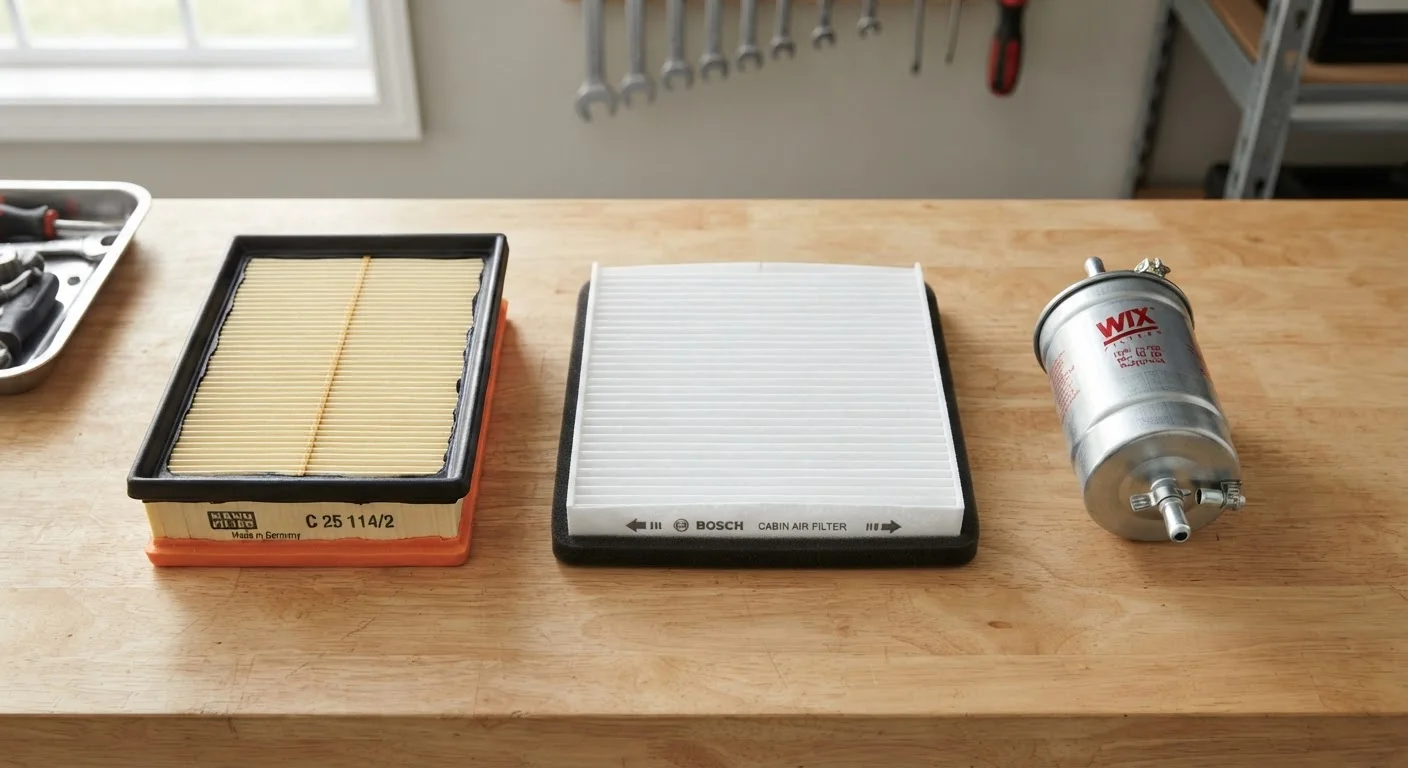
Three Filters, Three Very Different Jobs
Your vehicle runs three distinct filters, and confusing them - or neglecting any one of them - can affect engine health, fuel delivery, and even the air your family breathes inside the car. Understanding what each filter does makes it far easier to stay on schedule without relying entirely on a service advisor to tell you what you need.
| Engine Air Filter Interval | Every 15,000-30,000 miles (check owner's manual) (Varies by vehicle and driving conditions) |
| Cabin Air Filter Interval | Every 15,000-25,000 miles, or annually (AAA general guideline) |
| Fuel Filter Interval (inline) | Every 30,000 miles for vehicles with serviceable inline filters (Varies widely; many newer vehicles have lifetime sealed units) |
| DIY Difficulty - Engine Air Filter | Easy - typically tool-free |
| DIY Difficulty - Cabin Air Filter | Easy to moderate - often behind glove box |
| DIY Difficulty - Fuel Filter | Moderate to professional - fuel system pressure involved |
The engine air filter sits between the outside air and your engine's intake. Every internal combustion engine needs a precise mixture of air and fuel to run efficiently. The air filter's job is to make sure that air arrives clean - free of dust, pollen, insects, and road debris that could cause abrasive damage to cylinder walls and other engine components over time.
The cabin air filter serves a completely separate purpose: it cleans the air flowing through your vehicle's heating and air conditioning system before it reaches the passenger compartment. This is the filter that directly affects air quality for everyone riding in the car - particularly important for passengers with allergies, asthma, or other respiratory sensitivities.
The fuel filter protects the fuel delivery system. Gasoline and diesel can carry trace contaminants - rust particles from storage tanks, sediment, and microscopic debris - that can clog or damage fuel injectors over time. The fuel filter catches these contaminants before they reach sensitive components. See our full maintenance schedule guide for how filter intervals fit alongside other service items.
Signs Each Filter Is Overdue - and What to Do About It
Filters don't fail dramatically - they degrade gradually, which is why it's easy to overlook them until a problem develops. Knowing what to watch for puts you ahead of avoidable repairs.
Engine Air Filter Warning Signs
- Reduced fuel economy that isn't explained by other factors
- Sluggish acceleration or rough idling
- A visibly dirty or grey filter when inspected (a new filter is typically white or off-white)
- Check engine light triggered by airflow sensor errors
Replacing an engine air filter is one of the most straightforward DIY maintenance tasks. On most vehicles, the filter sits in a plastic housing near the top of the engine and requires no tools to access. Check your owner's manual for the correct filter specification before purchasing a replacement.
Cabin Air Filter Warning Signs
- Reduced airflow from vents even at high fan settings
- Musty or stale odors when the heat or AC is running
- Increased dust accumulating inside the car
- Allergy symptoms worsening during drives
Cabin filters are usually accessible behind the glove box or under the dashboard. Many owners replace this filter themselves after watching a vehicle-specific tutorial, though some designs require more disassembly. The car maintenance myths article covers why skipping cabin filter changes is a surprisingly common and costly oversight.
Fuel Filter Warning Signs
- Engine hesitation or stumbling at highway speeds
- Difficulty starting, especially when the engine is warm
- Surging or uneven power delivery under acceleration
- In severe cases, a no-start condition
Fuel Filter Work Often Requires a Mechanic
On most modern vehicles, the fuel filter is integrated into the fuel pump module inside the gas tank - making it inaccessible without depressurizing the fuel system and, in many cases, dropping the tank. This is work that generally belongs in a qualified mechanic's hands. If your vehicle has a separate, inline fuel filter, some experienced DIYers can replace it, but fuel system work carries fire and injury risk if done incorrectly. Always consult your owner's manual and, when uncertain, seek professional service.
Because fuel filter location and serviceability vary so widely between vehicles, always verify your specific model's setup in the owner's manual or a factory service guide before attempting any fuel system work.
The content provided on our blog site traverses numerous categories, offering readers valuable and practical information. Readers can use the editorial team’s research and data to gain more insights into their topics of interest. However, they are requested not to treat the articles as conclusive. The website team cannot be held responsible for differences in data or inaccuracies found across other platforms. Please also note that the site might also miss out on various schemes and offers available that the readers may find more beneficial than the ones we cover.