

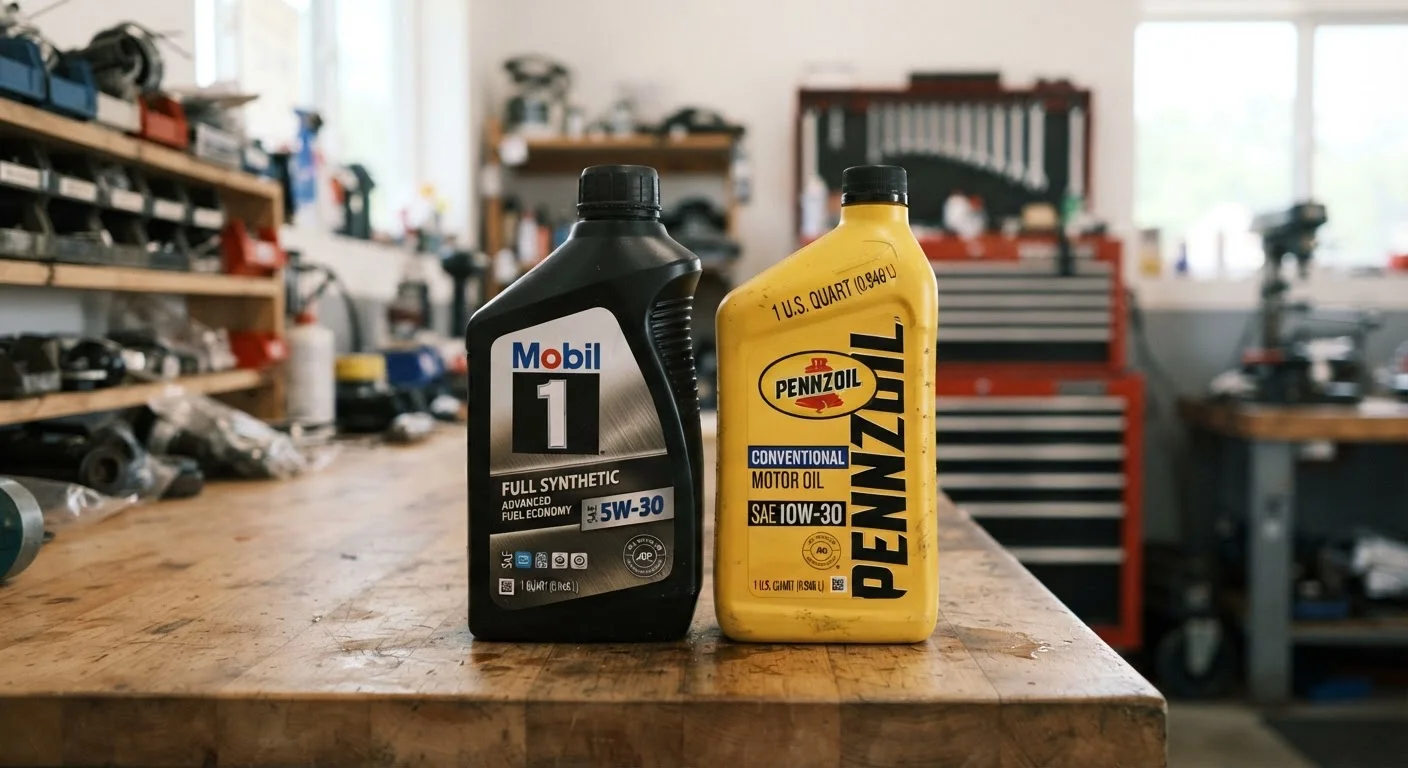
Option A
Synthetic Motor Oil
The engineered, high-performance formulation.
Best for: Drivers with newer vehicles, turbocharged engines, extreme climates, or longer oil change intervals.
Option B
Conventional Motor Oil
The time-tested, petroleum-based standard.
Best for: Owners of older vehicles with low mileage and straightforward, mild-weather driving conditions.
How the Two Oils Are Made - and Why It Matters
Conventional motor oil is refined directly from crude petroleum. The refining process removes many impurities, but the resulting molecules still vary in size and shape, which affects how the oil behaves under stress.
Synthetic motor oil is either fully synthesized from chemical compounds or produced from a more refined petroleum base that is then chemically restructured. The goal is uniformly shaped molecules that flow predictably, resist breakdown, and maintain viscosity (thickness) across a wider temperature range.
This molecular consistency is the core engineering difference. It's not marketing language - it's why synthetic oil typically outperforms conventional in laboratory and real-world engine tests, particularly under conditions that push an engine hard. That said, "better in testing" doesn't automatically mean every driver will notice a difference in daily use.
| Criterion | Synthetic Motor Oil | Conventional Motor Oil |
|---|---|---|
| Base material | Chemically engineered compounds | Refined crude petroleum |
| Cold-weather startup protection | Flows faster at low temps | Slower to reach components |
| Heat resistance | Higher thermal stability | Breaks down sooner under heat |
| Typical change interval | 7,500-15,000 miles (varies by make) | 3,000-5,000 miles |
| Cost per quart | Higher | Lower |
| Best engine fit | Modern, turbocharged, high-stress | Older, naturally aspirated engines |
| Manufacturer requirement | Required by many newer vehicles | Acceptable for many older vehicles |
Where Each Oil Performs Best
Synthetic oil has a clear advantage at cold startup - it flows faster to engine components before the engine warms up, which is when most mechanical wear actually occurs. It also holds up better under sustained heat, making it a practical choice for towing, stop-and-go city driving in summer, and turbocharged engines that run significantly hotter than naturally aspirated ones.
Conventional oil remains a reasonable choice for older vehicles with less demanding engines, especially if the manufacturer originally specified it and the car is driven in moderate conditions. Many well-maintained engines have logged hundreds of thousands of miles on conventional oil without issue.
One area where families are often misled: the oil change interval. The long-standing "every 3,000 miles" rule was built around conventional oil and older engine designs. Most modern vehicles running full synthetic can go 7,500 to 10,000 miles or more between changes - some manufacturer schedules extend to 15,000 miles. See how this outdated rule quietly costs families money for more context.
7,500-10,000 mi
Typical synthetic oil change interval
Many automakers specify this range for full synthetic - well above the outdated 3,000-mile conventional guideline still promoted by some quick-lube chains.
~90%
Engine wear occurring at cold startup
Engineering research has long indicated that a large majority of engine wear happens in the first moments after a cold start, before oil reaches all components - an area where synthetic has a measurable advantage.
How to Decide: Start With Your Owner's Manual
The single most reliable guide to which oil your engine needs is the owner's manual. It specifies the oil viscosity grade (such as 5W-30 or 0W-20) and, in many newer vehicles, explicitly calls for full synthetic. Using the wrong viscosity - regardless of whether it's synthetic or conventional - can reduce fuel efficiency and, in worst-case scenarios, affect engine protection.
If your manual gives you a choice, consider these factors:
- Engine age and design: Turbocharged, direct-injection, or high-revving engines generally benefit more from synthetic.
- Climate: Regions with cold winters or extreme summer heat favor synthetic's wider temperature performance range.
- Driving patterns: Frequent short trips, towing, or heavy loads put more stress on oil and favor synthetic's stability.
- Budget: Synthetic costs more per quart, but longer change intervals can partially offset that difference over time.
If you're buying a used vehicle and aren't sure what oil has been used, or if your car has over 75,000 miles, consult a qualified mechanic before switching oil types. Some high-mileage engines have worn seals that behave differently with synthetic oil's detergency properties. This is part of the broader picture covered in common car ownership myths that cost families money.
For a complete picture of where oil changes fit within your vehicle's service schedule, see your family car's full maintenance schedule, explained.
Synthetic Blend: A Middle-Ground Option
Synthetic blend oils mix conventional and synthetic base stocks, offering some of synthetic's performance benefits at a lower price point than full synthetic. They can be a practical option for drivers whose vehicles don't require full synthetic but who want improved protection over straight conventional oil. Check your owner's manual to confirm compatibility before switching to a blend.
The content provided on our blog site traverses numerous categories, offering readers valuable and practical information. Readers can use the editorial team’s research and data to gain more insights into their topics of interest. However, they are requested not to treat the articles as conclusive. The website team cannot be held responsible for differences in data or inaccuracies found across other platforms. Please also note that the site might also miss out on various schemes and offers available that the readers may find more beneficial than the ones we cover.