

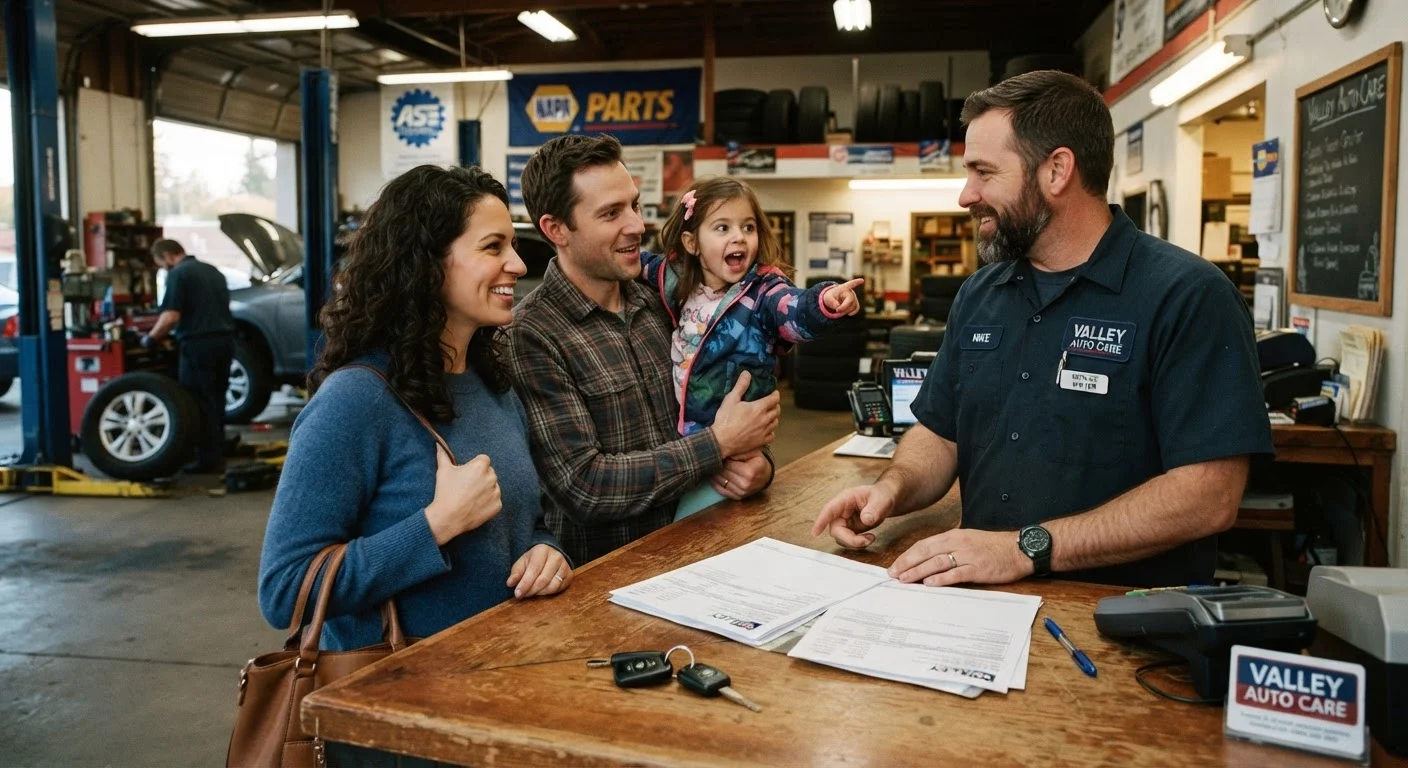
Why the Shop Visit Feels Stressful - and How to Change That
For many families, visiting a mechanic ranks among the more anxiety-inducing errands on the calendar. The combination of unfamiliar terminology, time pressure, and the fear of being quoted an inflated price can make even a routine oil change feel like a negotiation. The good news: a little preparation shifts the dynamic entirely.
Most repair shops operate professionally and honestly. But like any service transaction, informed customers tend to get better outcomes - not because mechanics treat them differently, but because clear communication leads to accurate diagnoses and fewer misunderstandings. Understanding common car ownership myths can also help you arrive with realistic expectations about what your car actually needs.
What you will need
Before You Go: What to Prepare
Arriving prepared takes only a few minutes and makes a measurable difference. Pull out your owner's manual and note the manufacturer's recommended maintenance schedule - this is your baseline for what service is genuinely due. Many shops will suggest services ahead of schedule; knowing the manufacturer's actual intervals means you won't agree to work your car doesn't need yet. Our guide on car maintenance myths covers several common upsells worth knowing about in advance.
Write down any symptoms your car is exhibiting - unusual sounds, smells, dashboard warning lights, or changes in handling. Be specific: when does the noise occur? Only when braking? Only at highway speed? At startup when the engine is cold? This level of detail helps the mechanic reproduce the issue efficiently rather than spending billable diagnostic time guessing.
Owner's Manual
Provides the manufacturer's recommended maintenance intervals so you can verify whether suggested services are actually due.
Symptom Notes
A written description of noises, warning lights, or handling changes to communicate accurately with the service advisor.
Service History File
Past repair receipts help you confirm which services have already been performed and avoid paying for duplicates.
Online Labor/Parts Reference
Free online resources allow you to cross-check quoted parts prices against retail rates as a general reasonableness check.
Step-by-Step: How to Handle the Shop Visit
Follow these steps from drop-off to pickup to protect your time and budget.
Describe symptoms, not diagnoses
When speaking with the service advisor, describe what you observe rather than what you think is wrong. Say "There's a grinding noise when I apply the brakes at low speed" rather than "I think my rotors are bad." When customers self-diagnose, shops sometimes confirm the stated diagnosis without fully investigating - which can mean a misdiagnosis and an unnecessary repair.
Request a written estimate before authorizing work
Do not authorize any work without a written estimate. Most states require shops to provide one upon request, and many require it by default. The estimate should itemize parts and labor separately. If the shop needs to diagnose the problem first, ask how much the diagnostic fee is and whether it will be credited toward the repair if you proceed.
Ask which repairs are urgent versus advisable
When the shop presents a list of recommended repairs, ask the service advisor to distinguish between what is safety-critical now, what can wait until your next visit, and what is simply preventive. Shops are not wrong to point out future maintenance needs, but you are under no obligation to address everything at once. Prioritizing safety-critical items first is always reasonable.
Ask questions if you don't understand a charge
If a line item on the estimate is unclear, ask the service advisor to explain it in plain language. Reputable shops expect and welcome these questions. Specifically useful questions include: "What will happen if I don't do this repair now?", "Can you show me what you found?", and "Is this covered under my warranty?" For newer vehicles, refer to your warranty documentation or contact your dealer before approving repairs that may be covered at no cost.
Get a second opinion for large repairs
For any repair estimated above $300, getting a second opinion from a different shop is a reasonable and common practice. Simply tell the first shop you'd like to think it over - you are not obligated to explain further. Bring the written estimate to the second shop so they can assess the same scope of work. A significant difference in price may reflect labor rate differences, parts sourcing, or - occasionally - an inflated original quote.
Don't Authorize Work Under Pressure
Some shops communicate urgency in ways that feel pressuring - implying your car is unsafe to drive and must be repaired immediately. While some issues genuinely are safety-critical, others are not. If you feel rushed, it's acceptable to ask for your keys back, take the written estimate, and make a calm decision at home. A reputable shop will respect that.
Understanding the Estimate and Your Rights
Once you receive a written estimate, review each line item. Estimates typically list parts, labor hours, and the labor rate separately. Labor rates vary widely by region and shop type - dealerships generally charge more per hour than independent shops. You can cross-reference parts prices against major auto parts retailers online to get a general sense of markup. Labor time estimates are often drawn from industry flat-rate guides, so a repair listed as 2.5 hours should take roughly 2.5 hours regardless of whether the technician finishes faster.
If the estimate includes services described vaguely as a "tune-up," ask exactly what that includes. Our article on the real difference between a tune-up and routine maintenance breaks down what that term actually means so you're never oversold. You are legally entitled in most US states to receive your old replaced parts upon request - ask before the work begins.
Building a Relationship With One Shop Pays Off
Families who consistently use one reputable independent shop often benefit from better communication, more candid advice, and a mechanic who knows their vehicle's history. This doesn't mean never comparison-shopping - but loyalty to a trustworthy shop can reduce the friction and anxiety of every visit over time.
The content provided on our blog site traverses numerous categories, offering readers valuable and practical information. Readers can use the editorial team’s research and data to gain more insights into their topics of interest. However, they are requested not to treat the articles as conclusive. The website team cannot be held responsible for differences in data or inaccuracies found across other platforms. Please also note that the site might also miss out on various schemes and offers available that the readers may find more beneficial than the ones we cover.