

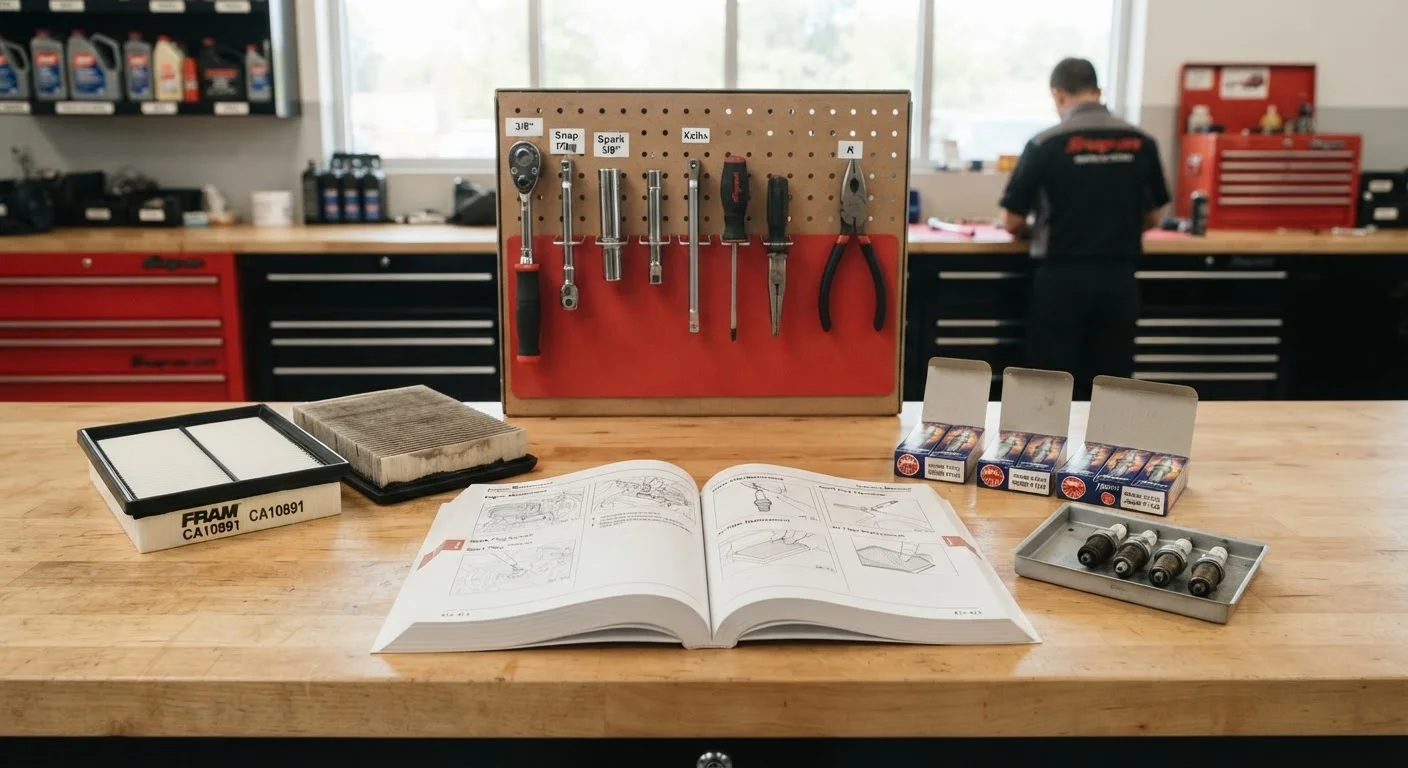
Option A
Routine Maintenance
The scheduled, manufacturer-driven foundation of car care.
Best for: Every vehicle owner - following the factory schedule prevents breakdowns and protects warranty coverage.
Option B
Tune-Up
A targeted service for ignition and fuel system components.
Best for: Drivers experiencing rough idling, reduced fuel economy, or hard starts - or those hitting high-mileage ignition service intervals.
Why the Confusion Exists
Walk into almost any shop and mention you want a "tune-up," and you'll get a different answer depending on where you are. That's because the term no longer has a standardized, industry-wide meaning. Decades ago, tune-ups were well-defined: distributors, points, condensers, and carburetors all required regular hands-on adjustment. Modern vehicles replaced nearly all of that with electronic fuel injection, coil-on-plug ignition, and onboard diagnostics. The term stuck around, but what it covers varies widely from shop to shop.
Routine maintenance, by contrast, is precisely defined - by your vehicle's manufacturer. It's the schedule printed in your owner's manual outlining exactly what to inspect, replace, or service at specific mileage or time intervals. For a deeper breakdown of those intervals, see Your Family Car's Maintenance Schedule, Explained.
| Criterion | Routine Maintenance | Tune-Up |
|---|---|---|
| Trigger | Mileage or time interval | Symptoms or ignition service interval |
| Defined by | Vehicle manufacturer / owner's manual | Individual shop - varies widely |
| Core components | Oil, filters, tires, fluids, brakes | Spark plugs, ignition wires, fuel filter |
| Frequency | Regular, ongoing (some items every 3,000-7,500 miles) | Every 30,000-100,000 miles depending on plug type |
| Applies to all vehicles | Yes | Yes, but scope varies by engine design |
| Can prevent breakdowns | Yes - primary purpose | Yes - when ignition wear is the issue |
| Always ask for | Due services per owner's manual | Itemized list of parts being replaced |
What Routine Maintenance Actually Covers
Routine maintenance is the predictable, ongoing work that keeps your car mechanically sound regardless of how it's running. Typical items include:
- Engine oil and filter changes - the most frequent scheduled service, critical to engine longevity
- Tire rotations - promotes even tread wear and extends tire life
- Air filter replacement - both engine and cabin air filters have manufacturer-recommended intervals
- Fluid checks and top-offs - brake fluid, coolant, transmission fluid, and power steering fluid
- Brake inspections - pad thickness and rotor condition checked at regular intervals
- Battery and belt inspections - timing belts and serpentine belts have specific replacement mileages
None of these depend on whether your car is running poorly - they're time- and mileage-driven. Skipping them is one of the most common ways families end up with expensive, preventable repairs.
35%
Breakdowns linked to lack of maintenance
AAA estimates that a significant share of roadside breakdowns involve components that regular maintenance would have caught or addressed.
30,000-100,000 mi
Spark plug replacement interval range
Conventional copper spark plugs typically need replacement around 30,000 miles; iridium or platinum plugs may last up to 100,000 miles depending on the manufacturer's specification.
What a Tune-Up Actually Covers
A legitimate tune-up targets the components responsible for ignition and fuel delivery - the systems that directly affect whether your engine starts cleanly, runs smoothly, and uses fuel efficiently. Core tune-up components typically include:
- Spark plugs - the most universally agreed-upon tune-up item; worn plugs cause misfires and poor fuel economy
- Ignition wires or coil boots - degrade over time and can cause intermittent misfires
- Fuel filter - restricts flow when clogged, though many modern vehicles have in-tank filters with very long service intervals
- PCV (positive crankcase ventilation) valve - a small, inexpensive part that affects engine breathing
What a tune-up does not inherently include: oil changes, tire rotations, brake inspections, or fluid flushes. If a shop bundles all of those under a single "tune-up" price without itemizing them, ask for a breakdown. You may be paying for routine maintenance work packaged under a different label.
For guidance on navigating those conversations confidently, see Talking to a Mechanic Without Getting Overwhelmed or Overcharged.
Iridium and Platinum Plugs Changed the Game
Older vehicles with copper spark plugs often needed new plugs every 20,000-30,000 miles - making tune-ups a fairly regular occurrence. Most vehicles built in the last two decades use longer-lasting iridium or platinum plugs rated for 60,000-100,000 miles. This means many drivers genuinely don't need ignition work nearly as often as they might assume. Check your owner's manual for your vehicle's specific interval rather than relying on a general rule.
How to Use This Knowledge at the Shop
The practical takeaway is straightforward: lead with your owner's manual, not with shop terminology. When you bring your car in, tell the service advisor your current mileage and ask which manufacturer-scheduled services are due. That's a much more defensible starting point than asking for a "tune-up" and accepting whatever that means to that particular shop.
If your car is showing symptoms - rough idle, hesitation, declining fuel economy, hard starts - describe those symptoms specifically. A good technician will diagnose the cause rather than default to a package service. Symptoms may point to spark plugs, but they could also indicate a dirty throttle body, a faulty sensor, or a vacuum leak.
If you're weighing which tasks you might handle yourself versus which require a professional, DIY Car Maintenance vs. Taking It to a Shop lays out where that line typically falls. Spark plug replacement, for example, is within reach for many motivated home mechanics on accessible engines - but always consult your owner's manual and proceed carefully.
The content provided on our blog site traverses numerous categories, offering readers valuable and practical information. Readers can use the editorial team’s research and data to gain more insights into their topics of interest. However, they are requested not to treat the articles as conclusive. The website team cannot be held responsible for differences in data or inaccuracies found across other platforms. Please also note that the site might also miss out on various schemes and offers available that the readers may find more beneficial than the ones we cover.