

Our Verdict
DIY maintenance makes strong sense for predictable, low-risk tasks where the consequences of a minor mistake are limited and reversible. For anything that directly affects vehicle safety - brakes, steering, suspension - or requires specialized diagnostic equipment, a qualified mechanic is the safer and often more economical choice over time. The most empowered approach is knowing the difference before you start, not after.
| Best for | Recommended |
|---|---|
| Drivers comfortable with basic tools handling routine upkeep | DIY Maintenance |
| Safety-critical systems including brakes, steering, and airbags | Professional Shop |
| Vehicles still under manufacturer or powertrain warranty | Professional Shop |
| First-time owners learning what routine service involves | DIY for simple checks; shop for scheduled service |
The Real Value of Knowing Where the Line Is
For US families trying to keep vehicle costs under control, the instinct to handle maintenance at home is completely reasonable. Many routine tasks genuinely are within reach - and handling them yourself can save real money without creating real risk. The challenge is that not all maintenance tasks are equal, and the consequences of misjudging the line range from minor inconvenience to serious safety hazard.
This guide is built around one practical question: which jobs can a motivated, careful home mechanic handle confidently, and which ones should go directly to a shop? The answer depends on three factors - the safety stakes involved, the tools and knowledge required, and what happens if something goes wrong. New to car ownership? Understanding this distinction early saves money and prevents the kind of mistakes that turn a $30 task into a $500 repair.
What Most Drivers Can Safely Do at Home
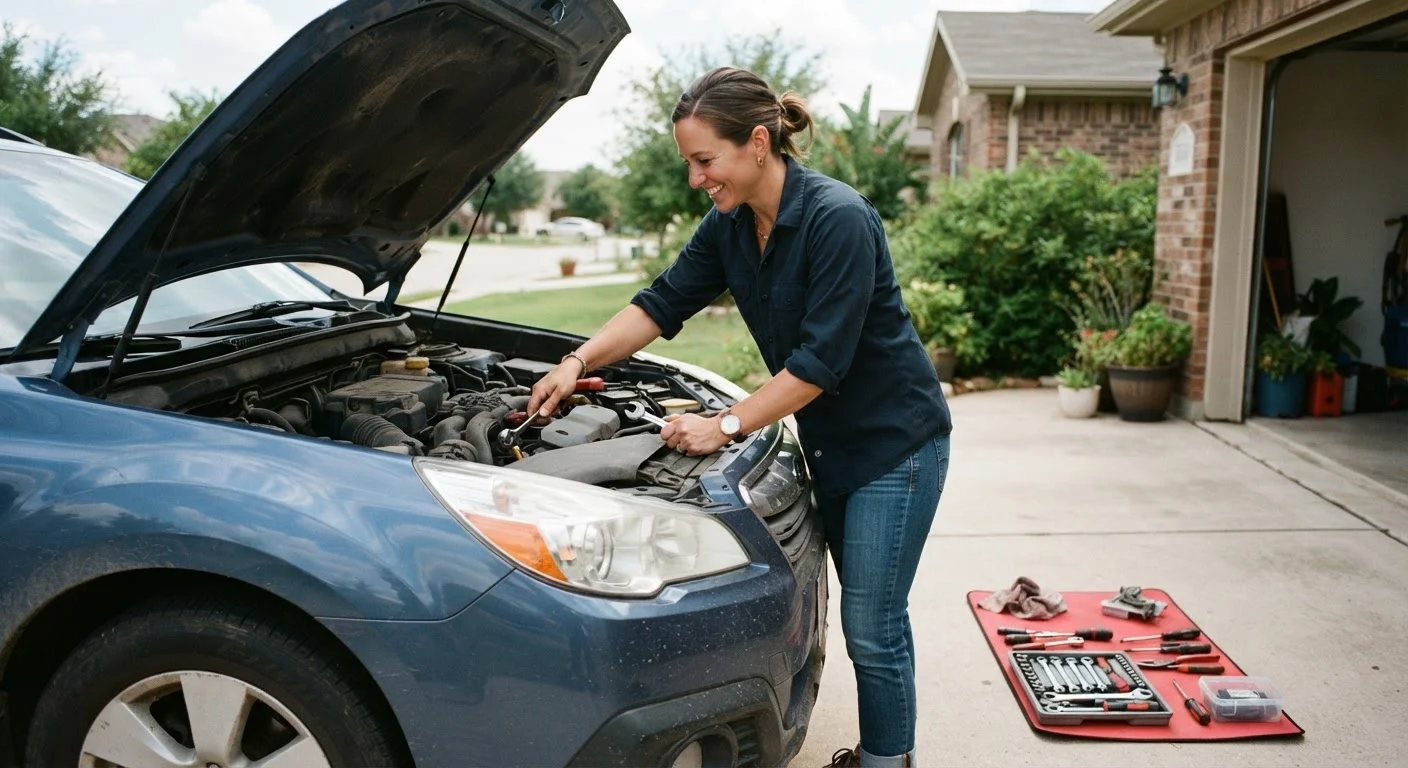
Several maintenance tasks require no specialized training and carry minimal risk if performed carefully. These are good starting points for anyone building confidence with vehicle upkeep:
- Engine air filter replacement: Typically involves unclipping a housing, swapping the filter, and reattaching. No fluids, no torque specs, and the result is immediately visible.
- Cabin air filter replacement: Usually located behind the glove box or under the dashboard. Straightforward on most vehicles with basic instructions from the owner's manual.
- Windshield wiper blades: Wiper arms have a simple release mechanism. New blades come with instructions and typically require no tools at all.
- Checking and topping off fluids: Engine oil, coolant (only when cold), washer fluid, and power steering fluid can all be checked visually. A pre-trip fluid check is something any driver can do in a driveway.
- Battery terminal inspection: Cleaning visible corrosion from terminals with a wire brush is manageable at home - though understanding battery warning signs and safe handling matters before you start.
Start With Your Owner's Manual
Before attempting any maintenance task - or deciding whether to hire a shop - check your vehicle's owner's manual first. It specifies the correct fluids, filter types, torque specifications, and service intervals for your exact make and model. Following manufacturer guidance also protects any remaining warranty coverage. If you've misplaced the manual, most automakers provide digital versions through their official websites.
Oil changes occupy a middle ground. They're technically doable at home, but require safely raising the vehicle, using proper jack stands (never just a scissor jack), handling hot oil safely, and disposing of used oil responsibly at a certified collection site. If any of those steps feel uncertain, a quick-lube shop is a reasonable, low-cost alternative.
Tasks That Belong at a Professional Shop
Some maintenance and repair jobs carry consequences serious enough that professional handling isn't just a convenience - it's a safety matter. These include:
- Brake system work: Pad replacement, rotor resurfacing, caliper service, and brake line repair all affect your vehicle's ability to stop. Errors here are not recoverable on the road.
- Suspension and steering components: Worn ball joints, tie rods, and struts affect vehicle control. These also require alignment after replacement - equipment no home mechanic has.
- Transmission service: Fluid changes on some transmission types are accessible; internal transmission repairs are not. Misdiagnosis here is expensive.
- Timing belt or chain replacement: Involves disassembling significant engine components. An error can cause catastrophic engine damage.
- Airbag or SRS system work: Supplemental restraint systems involve pyrotechnic components. This is strictly professional territory.
- Check engine light diagnosis: Reading a code at an auto parts store tells you a code, not a cause. Proper diagnosis requires a qualified technician interpreting data in context.
| Task | DIY Feasibility | Risk if Done Wrong | Tools Needed | Typical Shop Cost Saved | |
|---|---|---|---|---|---|
| Engine air filter replacement | High | Very low | None beyond a screwdriver | ~$20-$30 | |
| Windshield wiper blades | High | Very low | None | ~$15-$25 labor | |
| Oil and filter change | Moderate | Low if done carefully | Drain pan, filter wrench, jack stands | ~$30-$60 labor | |
| Cabin air filter replacement | High | Very low | None or basic tools | ~$20-$40 labor | |
| Brake pad replacement | Low-Moderate | High - affects stopping distance | Specialized tools, torque wrench | ~$80-$150 labor | |
| Tire rotation | Low (requires safe lift) | Moderate - improper torque is dangerous | Floor jack, jack stands, torque wrench | ~$20-$50 | |
| Spark plug replacement | Moderate | Moderate - incorrect torque can damage threads | Socket set, torque wrench | ~$40-$100 labor | |
| Suspension or steering repair | Very low | Very high - direct safety impact | Specialty tools, alignment equipment | Varies widely |
Talking to a mechanic confidently is a skill in itself - knowing what these jobs involve means you can ask the right questions and evaluate estimates with more confidence.
Brake and Safety System Work Carries Real Risk
Brake pads, rotors, calipers, ABS components, and steering linkages are safety-critical systems. Errors in these areas - including improper torque, incorrect part fitment, or air introduced into brake lines - can compromise your vehicle's ability to stop or steer safely. Unless you have confirmed mechanical training and the correct tools, these jobs should go to a qualified technician. The cost of a professional brake job is far lower than the consequences of a failure on the road.
The Hidden Costs of DIY Gone Wrong
The appeal of DIY is straightforward: skip the labor markup, learn something useful, finish on your own schedule. But the calculus changes when a task goes wrong. A stripped oil drain plug can require professional repair. Brake components installed without the correct torque specification may need immediate re-service. And some errors - particularly on safety systems - create hazards that aren't obvious until they matter most.
Similar logic applies in other areas of home upkeep: the cost of tools, materials, and potential do-overs can exceed what a professional would have charged. In automotive maintenance, that math gets sharper when safety is involved.
There's also the warranty dimension. On newer vehicles, some manufacturers require service records showing work was performed according to their specifications. DIY oil changes are generally acceptable if you document the correct oil type and filter - but complex repairs done outside a dealership or certified shop may affect warranty claims. Check your warranty terms before proceeding with non-routine work.
For a clearer picture of what scheduled maintenance actually involves versus what shops sometimes upsell, see the real difference between a tune-up and routine maintenance. And before accepting any service recommendation at face value, separating myth from fact on common car care advice can prevent unnecessary spending.
77%
of vehicles found to need service or repairs
AAA's Vehicle Research Center has consistently found that a large majority of vehicles inspected during car care events need some form of maintenance or repair - many of which owners were unaware of.
$1,200+
Average annual vehicle maintenance cost per household
AAA estimates that average vehicle ownership costs, including maintenance, continue to rise annually, underscoring why understanding what you can do yourself matters financially.
The content provided on our blog site traverses numerous categories, offering readers valuable and practical information. Readers can use the editorial team’s research and data to gain more insights into their topics of interest. However, they are requested not to treat the articles as conclusive. The website team cannot be held responsible for differences in data or inaccuracies found across other platforms. Please also note that the site might also miss out on various schemes and offers available that the readers may find more beneficial than the ones we cover.