

Our Verdict
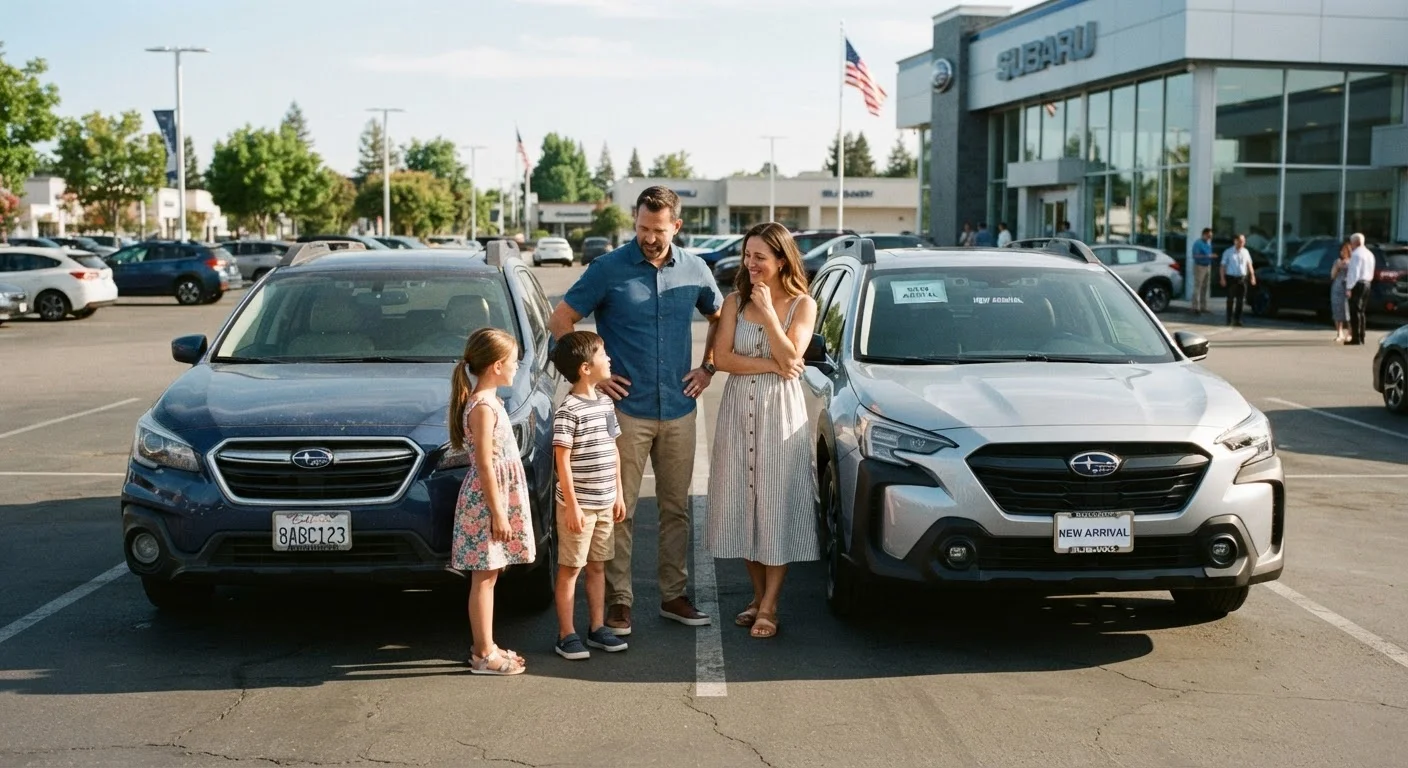
Neither new nor used is universally the right answer for families. A new car delivers peace of mind through warranty coverage and modern safety technology, while a used car - particularly a certified pre-owned model - can stretch a household budget significantly further. The right choice depends on how long you plan to keep the vehicle, how much you can comfortably finance, and what safety features matter most to your household.
| Best for | Recommended |
|---|---|
| Families prioritizing warranty coverage and latest safety technology | New Car |
| Budget-conscious households wanting lower monthly payments | Used Car |
| Buyers who want warranty protection without full new-car pricing | Certified Pre-Owned |
| Long-term owners planning to keep the vehicle 8-10 years | New Car |
The Real Cost Difference: Beyond the Sticker Price
The purchase price is the most visible number in any car-buying decision, but it rarely tells the whole story. A new vehicle typically carries a higher sticker price, but also comes with a manufacturer's warranty - usually three years or 36,000 miles bumper-to-bumper and five years or 60,000 miles on the powertrain, though this varies by manufacturer. That warranty can translate into meaningful savings if a significant repair arises in the first few years.
Used cars cost less upfront, but families should account for the vehicle's remaining warranty coverage (if any), likely maintenance needs, and the possibility of repairs not covered by the seller. A vehicle that's two to four years old may have already shed the steepest portion of its depreciation curve - new cars can lose a substantial portion of their value in the first year - while still having years of reliable service ahead.
Running the numbers over a five-year window - including estimated fuel costs, insurance premiums, expected maintenance, and financing interest - gives a more accurate picture than the purchase price alone. For a deeper look at household vehicle budgeting, see the family budgeting hub for practical frameworks.
| New Car | Certified Pre-Owned | Standard Used Car | |
|---|---|---|---|
| Purchase Price | Highest | Mid-range | Lowest |
| Depreciation Risk | Steepest in year one | Mostly absorbed already | Minimal further drop |
| Warranty Coverage | Full manufacturer warranty | Extended CPO warranty | Little to none |
| Financing Rates | Typically lower APR | Moderate APR | Higher APR common |
| Insurance Cost | Higher premiums | Moderate premiums | Generally lower premiums |
| Safety Technology | Latest generation | Near-current features | Varies by model year |
| Unknown Repair Risk | Low (warranty covers early issues) | Low to moderate (CPO inspected) | Higher - independent inspection recommended |
Financing, Insurance, and What Lenders See Differently
Lenders generally offer lower interest rates on new vehicles than on used ones, because new cars carry less uncertainty about their condition and value. However, the higher loan principal on a new car can offset that rate advantage - especially if the loan term is stretched to six or seven years to keep monthly payments manageable.
Insurance costs also differ. New vehicles typically cost more to insure because their replacement value is higher. Comprehensive and collision coverage - which most lenders require on financed vehicles - will be priced based on the car's value. A two- or three-year-old vehicle of the same model may carry noticeably lower premiums.
Get the Total Monthly Cost in Writing
Before agreeing to any financing arrangement, ask the lender or dealer to provide the total amount paid over the life of the loan - not just the monthly payment. A lower monthly payment spread over 72 or 84 months can result in paying significantly more in interest than a shorter loan at a higher monthly rate. Comparing the full loan cost side-by-side helps families make a more informed decision.
Families considering leasing as an alternative to purchasing can find a detailed comparison of how each path affects monthly cash flow and long-term equity in our article on buying vs. leasing a car.
Safety Features and Reliability: Reading Between the Model Years
Modern safety technology has advanced considerably across model years. Features like automatic emergency braking, blind-spot monitoring, and rear cross-traffic alerts - once found only on luxury vehicles - have become standard or widely available on mainstream models. A new car is more likely to include the latest generation of these systems.
That said, a three- to five-year-old vehicle from a reliable manufacturer can still offer a strong safety rating and many of the features families rely on daily. The NHTSA and the Insurance Institute for Highway Safety (IIHS) publish crash-test ratings and safety assessments for vehicles by model year - consulting these before any purchase is strongly advised.
Reliability history is also worth researching independently. Some model years of otherwise solid vehicles are known within the industry for specific issues. A pre-purchase inspection by an independent, qualified mechanic - not the selling dealer - can surface concerns that aren't visible in a test drive. Our guide on talking to a mechanic without getting overwhelmed can help you ask the right questions before and after any inspection.
~20%
Typical first-year new car depreciation
Industry data consistently shows new vehicles can lose roughly 15-20% of their value within the first year of ownership, though the exact figure varies by make and model.
3 in 4
Used car buyers who skip pre-purchase inspections
Consumer advocacy groups estimate the majority of used car buyers forgo an independent mechanical inspection, potentially missing issues not disclosed by sellers.
Certified Pre-Owned: A Middle Path Worth Considering
Certified pre-owned (CPO) vehicles occupy a useful middle ground. These are used vehicles - typically late-model and lower-mileage - that have been inspected to manufacturer standards and relisted with some form of extended warranty coverage. CPO programs are administered by manufacturers, so the specific terms vary, but they generally provide more buyer protection than a standard used-car purchase.
CPO vehicles usually cost more than comparable non-certified used cars, and the certification doesn't guarantee a trouble-free ownership experience. However, for families who want some warranty coverage but can't justify the depreciation hit of buying new, CPO is often worth the premium.
Once you've made your decision, the ownership journey is just beginning. Our car maintenance hub covers the routine upkeep that keeps any vehicle - new or used - running safely for years. And if this is your first time navigating ownership paperwork, fees, and insurance timelines, first-time car owner insights walks through the details that often catch new buyers off guard.
The content provided on our blog site traverses numerous categories, offering readers valuable and practical information. Readers can use the editorial team’s research and data to gain more insights into their topics of interest. However, they are requested not to treat the articles as conclusive. The website team cannot be held responsible for differences in data or inaccuracies found across other platforms. Please also note that the site might also miss out on various schemes and offers available that the readers may find more beneficial than the ones we cover.