

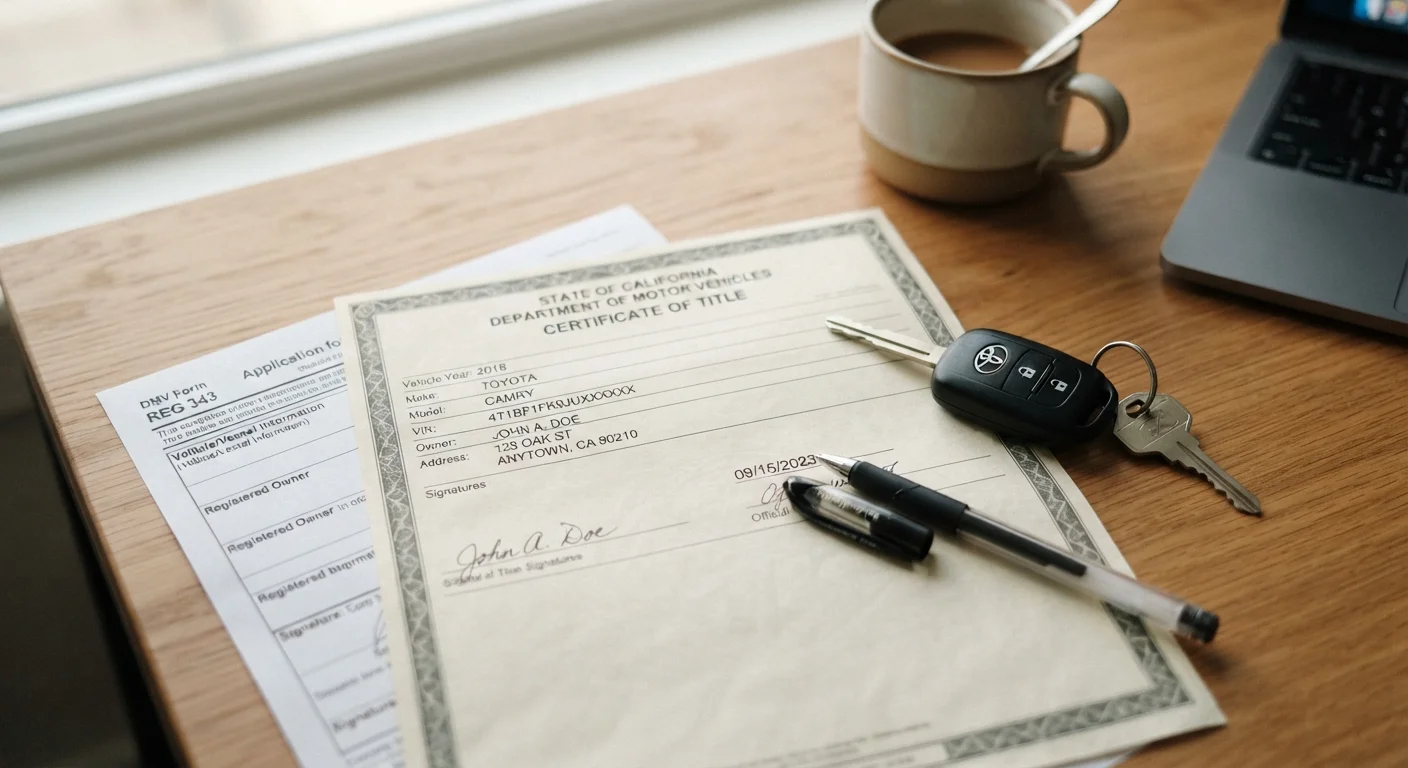
Why Title Transfers Go Sideways
Transferring a car title seems straightforward: seller signs, buyer pays, paperwork goes to the DMV. In practice, errors on a single line can halt the process for weeks or, in serious cases, leave a buyer legally unable to register the vehicle at all. Understanding what commonly goes wrong - and why - protects both parties and saves significant time and money.
Title transfer rules vary by state, but the core requirements are consistent: accurate identification of the vehicle, valid signatures from all legal owners, a correct odometer disclosure, and a title that is free of unresolved liens. When any of these elements are off, the DMV will typically reject the submission entirely. See our guide to vehicle registration basics for a full walkthrough of the documentation process.
Leaving the odometer disclosure section blank or incorrectly filled in.
Why it happens: Sellers sometimes skip this field assuming it's optional, or buyers accept a pre-signed title without checking completeness.
Not catching an existing lien on the title before the sale closes.
Why it happens: Sellers may have paid off a loan but never received or filed the lien release, leaving an old lender's name still recorded on the title.
Missing a required co-owner signature on the title.
Why it happens: Buyers and sellers often overlook that a title listing two people joined by 'and' requires both signatures, not just one.
Using correction fluid (white-out) or crossing out information on the title.
Why it happens: Mistakes happen when filling out paperwork, and the instinct is to correct them in place rather than obtaining a replacement title.
Missing the state's deadline to submit the title after purchase.
Why it happens: Buyers are often unaware that most states impose a strict window - typically 10 to 30 days - between purchase and DMV submission.
Steps to Take Before You Sign Anything
Prevention is far less costly than correction. Before completing a private sale or dealer purchase, run a vehicle history report to confirm there are no open liens. Lenders are legally required to release a lien once a loan is paid off, but paperwork delays happen - and the seller may not even be aware a lien is still recorded.
Never Accept a Title With Alterations
A title that has been corrected with white-out, has crossed-out text, or contains any alterations will almost certainly be rejected by the DMV. There are no workarounds - the seller must obtain a replacement (also called a duplicate) title from their state before the transfer can proceed. Walking away from a deal over this is entirely reasonable.
Confirm that the name on the title exactly matches the seller's government-issued ID, including middle names and suffixes. If the title lists two owners joined by "and," both must sign. If joined by "or," either may sign alone - a distinction that trips up many buyers.
Fill out the odometer disclosure section in ink immediately, with the seller present. Never accept a title with this section blank or corrected with white-out. For vehicles 10 years old or newer, federal law under the Truth in Mileage Act requires a written odometer statement, and discrepancies can carry federal penalties.
New owners should also be aware of state deadlines. Most states require the buyer to submit the signed title to the DMV within 10 to 30 days of purchase. Missing that window often means late fees or the need to track down the seller again for additional documentation. First-time buyers especially should review what first-time car owners often discover too late to avoid surprises beyond the title itself.
Do Not Pay in Full Until the Title Is Clear
Completing payment before verifying a clean, lien-free title puts you at serious legal and financial risk. If a lender still holds an interest in the vehicle, they can repossess it even after you've paid the seller. Always confirm lien status and title accuracy before money changes hands.
If you are purchasing a vehicle that still has an active loan, the lender holds the title. In that case, the seller must pay off the loan and receive a lien release before any transfer can proceed. Do not complete payment until you have confirmed the title is free and clear - or until the payoff is handled simultaneously through a trusted escrow arrangement. For families helping a younger member finance a vehicle, the risks of co-signing a vehicle loan are worth reviewing as well.
The content provided on our blog site traverses numerous categories, offering readers valuable and practical information. Readers can use the editorial team’s research and data to gain more insights into their topics of interest. However, they are requested not to treat the articles as conclusive. The website team cannot be held responsible for differences in data or inaccuracies found across other platforms. Please also note that the site might also miss out on various schemes and offers available that the readers may find more beneficial than the ones we cover.