

Start here
What Vehicle Registration Actually Means
Next
The Title: Proof of Ownership
Then
License Plates: What to Expect
Also useful
Registration Fees and What Drives Them
Finally
Renewal Deadlines and How to Stay on Track
What Vehicle Registration Actually Means
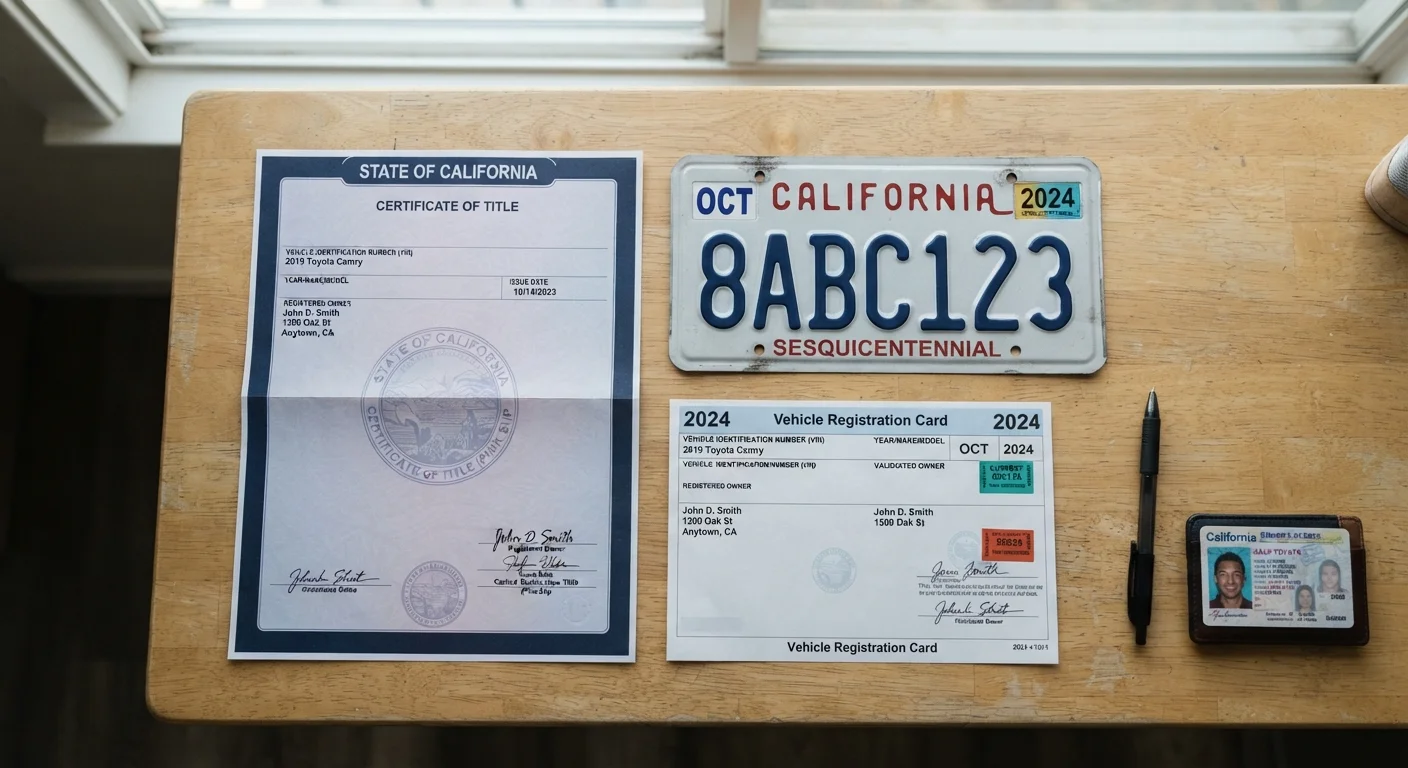
Vehicle registration is the process by which your state government officially records that a specific car, truck, or SUV is permitted to operate on public roads. Each registered vehicle receives a registration document and, in most cases, a decal or sticker that attaches to the license plate to show the registration is current.
Registration is not the same as ownership. It is a recurring state permit - think of it as a license for the vehicle itself, separate from your driver's license. If you are new to car ownership, our guide on things first-time car owners wish someone had told them covers many of the paperwork surprises that catch families off guard.
Vehicle Title
A legal document issued by the state that names the official owner of a vehicle. It must be transferred whenever the vehicle changes hands.
Vehicle Registration
A state-issued permit confirming that a specific vehicle is authorized to operate on public roads. It must be renewed periodically.
Lien
A legal claim a lender holds on a vehicle until an auto loan is fully repaid. The lien is noted on the title and must be released before the owner can hold a clear title.
VIN
Vehicle Identification Number - a unique 17-character code assigned to every vehicle that appears on the title, registration, and dashboard. It is used to identify the vehicle in all official records.
Emissions Inspection
A test required in many states to confirm a vehicle's exhaust emissions fall within legal limits before registration is approved or renewed.
Lien Release
A document provided by a lender confirming that an auto loan has been paid in full and the lender no longer has a legal claim on the vehicle.
The Title: Proof of Ownership
The vehicle title - sometimes called a certificate of title - is a legal document issued by your state that names the vehicle's owner. It includes identifying details such as the VIN, make, model, year, and any lien holder (a lender who has a financial claim on the vehicle).
When you buy a car, the seller signs the title over to you, and you then submit it to your state DMV to have a new title issued in your name. Errors during this step - a missing signature, incorrect odometer reading, or unresolved lien - can cause significant delays. Our detailed article on transferring a car title walks through every common mistake to avoid.
Title Errors Can Delay Your Registration
A title with incorrect information - wrong VIN, missing seller signature, or an unsatisfied lien - cannot be accepted by the DMV until the error is corrected. This can delay your ability to register the vehicle for weeks. Always review the title carefully before leaving a dealership or completing a private sale.
If you have an active auto loan, the lender typically holds the title until the loan is repaid. Once you pay it off, request a lien release document promptly so you can obtain a clear title in your name.
License Plates: What to Expect
License plates are issued by the state and serve as the visible identifier for your registered vehicle. When you register a car for the first time, you receive new plates along with your registration documents. In most states, plates stay with the owner when a vehicle is sold - you remove them and either transfer them to your next car or return them to the DMV.
Many states offer specialty or personalized plates for an additional fee. These are a cosmetic choice and carry no special privileges. Keep in mind that some states issue one plate (rear only) while others require two (front and rear) - check your state's requirement to avoid a citation.
Transferring Plates Between Vehicles
If you sell a car and buy another, check whether your state allows plate transfers before you go to the DMV. Many states let you transfer existing plates to a newly purchased vehicle, which can save the cost of new plate issuance. Bring your current registration, the new vehicle's title, and proof of insurance to complete the transfer in one visit.
Registration Fees and What Drives Them
Registration fees vary significantly from state to state and are not always straightforward. Common factors that influence what you pay include:
- Vehicle weight: Heavier vehicles often carry higher fees because of greater road wear.
- Vehicle age and value: Some states charge a percentage of the vehicle's assessed value, which decreases as the car ages.
- County or local surcharges: Many states allow counties or cities to add fees on top of the state base rate.
- Emissions or inspection fees: If your state requires a smog check or safety inspection as a condition of registration, those costs are separate and paid to the inspection station.
Keeping registration current is one of the responsible car ownership habits that protects both your investment and your legal standing as a driver. Budget for renewal costs annually even if your notice arrives biennially.
Renewal Deadlines and How to Stay on Track
Registration typically expires on a fixed date - often your birthday or the month you first registered the vehicle, depending on the state. Most DMVs mail a renewal notice four to six weeks before expiration, but relying solely on that notice is risky if your address on file is outdated.
You can usually renew in one of three ways: online through your state's DMV portal, by mail using the renewal form sent to you, or in person at a DMV office. Online renewal is available in most states and is often the fastest option.
Online Renewal Is Not Available Everywhere
Some states require an in-person visit if your vehicle needs a new inspection, if your address has changed, or if there are any outstanding fees on your record. Before assuming you can renew online, log into your state DMV's portal or call ahead to confirm your eligibility for remote renewal.
Missing the deadline results in a late penalty in most states, and driving with expired registration can lead to a traffic citation. Set a personal calendar reminder 60 days before your expiration date as a backup to the mailed notice. Staying consistent with registration - and with maintenance tasks like those covered in your family car's maintenance schedule - helps keep ownership costs predictable and avoids avoidable expenses.
Frequently Asked Questions
Most states require the vehicle title (or a lien release if the loan is paid off), proof of current auto insurance, a valid government-issued ID, and payment for applicable fees. Some states also require a passed emissions or safety inspection before they will issue registration.
In most US states, vehicle registration is valid for one or two years. Your state's DMV will typically mail a renewal notice to your address on file. It is wise to confirm your mailing address is current so you don't miss the notice.
Driving with expired registration is a traffic violation in every state and can result in a fine. In some states, an officer may also place your vehicle out of service until registration is brought current. The penalty varies widely by jurisdiction.
No - they are different documents. The title is a legal record establishing who owns the vehicle. Registration is a state permit to operate that vehicle on public roads. You can hold a title without current registration, but you cannot legally drive without valid registration.
Yes. When you have an active auto loan, the lender typically holds the title but the vehicle is still registered in your name. Once the loan is paid off, the lender releases the lien and you can obtain a clear title.
Yes. Most states require new residents to register their vehicle within 30 to 90 days of establishing residency. You will generally need to surrender your old plates, obtain a new title issued by the new state, and pass any required local inspections.
The content provided on our blog site traverses numerous categories, offering readers valuable and practical information. Readers can use the editorial team’s research and data to gain more insights into their topics of interest. However, they are requested not to treat the articles as conclusive. The website team cannot be held responsible for differences in data or inaccuracies found across other platforms. Please also note that the site might also miss out on various schemes and offers available that the readers may find more beneficial than the ones we cover.