

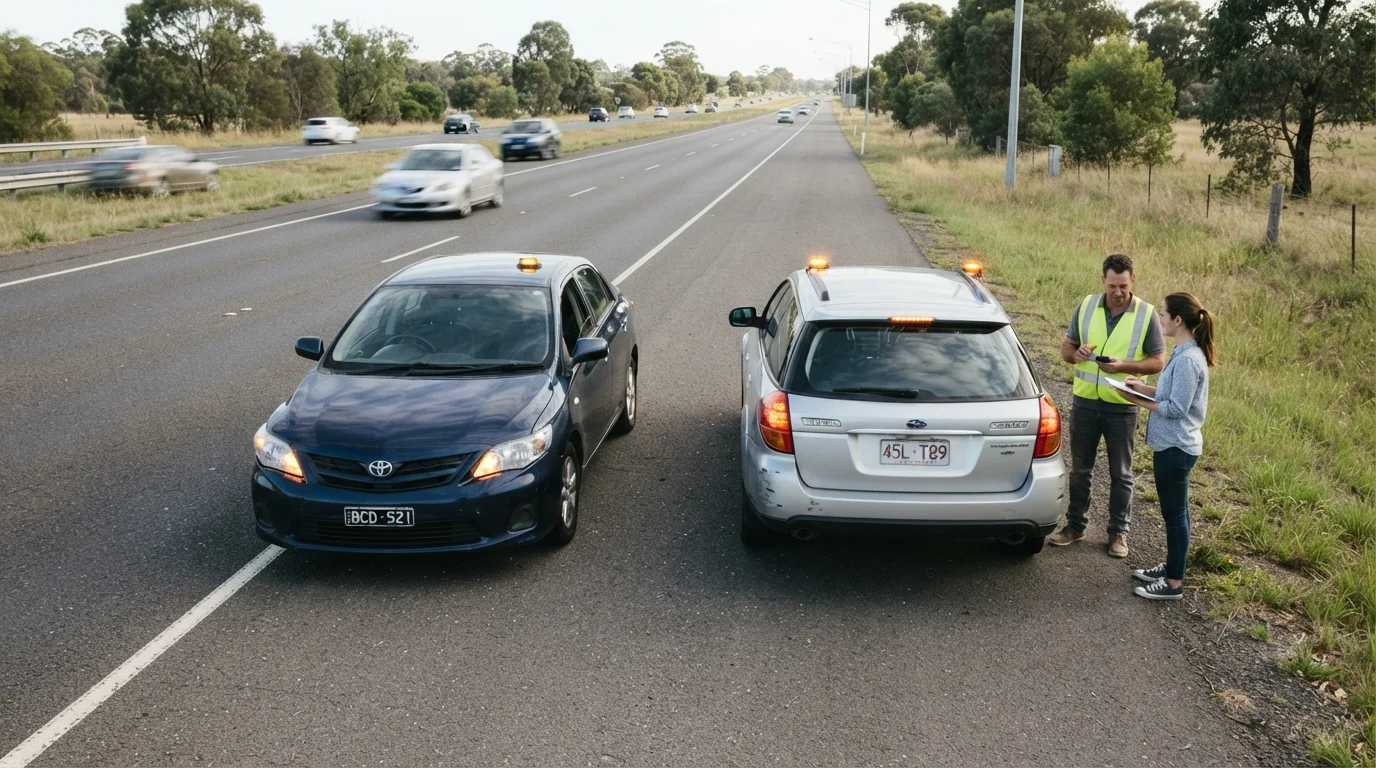
Why the First Few Minutes Matter So Much
A collision triggers an immediate stress response. Heart rate spikes, thinking narrows, and it becomes genuinely difficult to recall what to do - even for experienced drivers. This is normal, but it means the decisions you make in the first few minutes can carry real consequences for your safety, your insurance claim, and any legal matters that follow.
Understanding the correct sequence of actions before an accident ever happens is one of the most practical things a driver can do. It is part of a broader approach to safe driving that the Complete Family Safe Driving Reference covers in full. The steps below are designed to be memorable enough to execute under pressure.
What you will need
Step-by-Step: What to Do at the Scene
Follow these steps in order. Some may happen simultaneously depending on the situation, but the priority sequence - safety, medical, documentation, reporting - should guide every decision.
Smartphone or camera
Photograph the scene, vehicle damage, license plates, and any visible injuries for your insurance claim and records.
Pen and paper (or notes app)
Record the other driver's information, witness contact details, and officer badge number accurately.
Insurance card and vehicle registration
Required to exchange information with the other driver and provide to law enforcement.
Emergency roadside kit
Warning triangles or flares help alert oncoming traffic to the stopped vehicles.
Check for injuries and call 911
Before anything else, assess yourself and any passengers for injuries. If anyone is hurt - or if you are unsure - call 911 immediately. Do not move anyone who may have a neck or spinal injury unless there is an immediate danger such as fire or oncoming traffic. When speaking to the dispatcher, give your location as precisely as possible.
Move to safety and activate hazard lights
If the vehicles are drivable and remaining on the road creates a hazard, move them to the shoulder or a nearby parking area. Turn on your hazard lights immediately. If you have warning triangles or flares in an emergency kit, place them behind the vehicles to alert approaching drivers.
Exchange information with the other driver
Once it is safe to do so, exchange the following with every driver involved:
- Full name and contact information
- Driver's license number and state
- License plate number
- Insurance company name and policy number
- Vehicle make, model, and year
Also note the names and phone numbers of any witnesses present at the scene.
Document the scene with photos
Before vehicles are moved, use your phone to photograph all angles of vehicle damage, the overall accident scene, road conditions, traffic signals or signs, skid marks, and any visible injuries. Wide shots establish context; close-ups capture details. This documentation is often critical during the insurance claims process.
File a police report
In many states, you are legally required to file a police report when accidents result in injury, death, or property damage above a certain threshold. Even when not required, having an official report provides an objective, third-party account of the incident. Ask the responding officer for the report number before leaving the scene.
Notify your insurance company
Contact your insurer as soon as possible - ideally the same day. Most policies require prompt reporting and your cooperation in any investigation. Provide factual details of what happened without speculating about fault. Your insurer will guide you through the claims process. For a clearer picture of what your coverage actually protects, see our guide on collision and comprehensive coverage.
Admitting Fault Can Hurt You Later
Statements like 'I'm sorry' or 'I didn't see you' can be interpreted as admissions of liability, potentially affecting insurance claims and any legal proceedings. Confine your conversation at the scene to factual information: names, contact details, insurance policy numbers, and vehicle information. Let investigators and insurers determine fault based on the evidence.
Keep an Accident Info Card in Your Glove Box
Many drivers freeze at the scene and forget what information to gather. Print a simple checklist - name, license, plate, insurance, photos - and keep it with your registration. This small preparation step can make a stressful situation significantly more manageable.
After You Leave the Scene
Once the immediate situation is handled, your work is not finished. Seek a medical evaluation even if you feel fine - symptoms of whiplash, concussion, and soft-tissue injuries can be delayed by 24 to 72 hours. Keep copies of all medical visits, repair estimates, and correspondence with your insurer.
If the other driver was uninsured or underinsured, your own policy's uninsured motorist coverage may apply - another reason it pays to understand your policy thoroughly. First-time car owners in particular often discover gaps in their coverage after an incident; our article on what first-time car owners wish they'd known covers several of these common surprises.
Finally, consider what contributed to the accident. Was it a lapse in situational awareness, fatigue, or a high-risk maneuver? Building safer driving habits after a collision is one of the most productive ways to process the experience and reduce the likelihood of a future one.
Never Leave the Scene Early
Leaving the scene of an accident before exchanging information and speaking with police - if required - can result in serious criminal charges in most U.S. states, even if you were not at fault. Stay calm, stay put, and wait for law enforcement to clear the scene. If you are in a location that feels unsafe, move only to a nearby safe area and remain visible.
The content provided on our blog site traverses numerous categories, offering readers valuable and practical information. Readers can use the editorial team’s research and data to gain more insights into their topics of interest. However, they are requested not to treat the articles as conclusive. The website team cannot be held responsible for differences in data or inaccuracies found across other platforms. Please also note that the site might also miss out on various schemes and offers available that the readers may find more beneficial than the ones we cover.