

Our Verdict
Envelope budgeting remains a sound, proven framework for households that struggle to stay within variable spending categories. The digital version removes most of the physical friction while keeping the psychological guardrails intact. Like any budget method, it works when used consistently - and falls flat when ignored after the first week.
Best suited for families with steady monthly income who want a structured, category-by-category spending limit and are willing to review their envelopes regularly together.
What Envelope Budgeting Actually Is
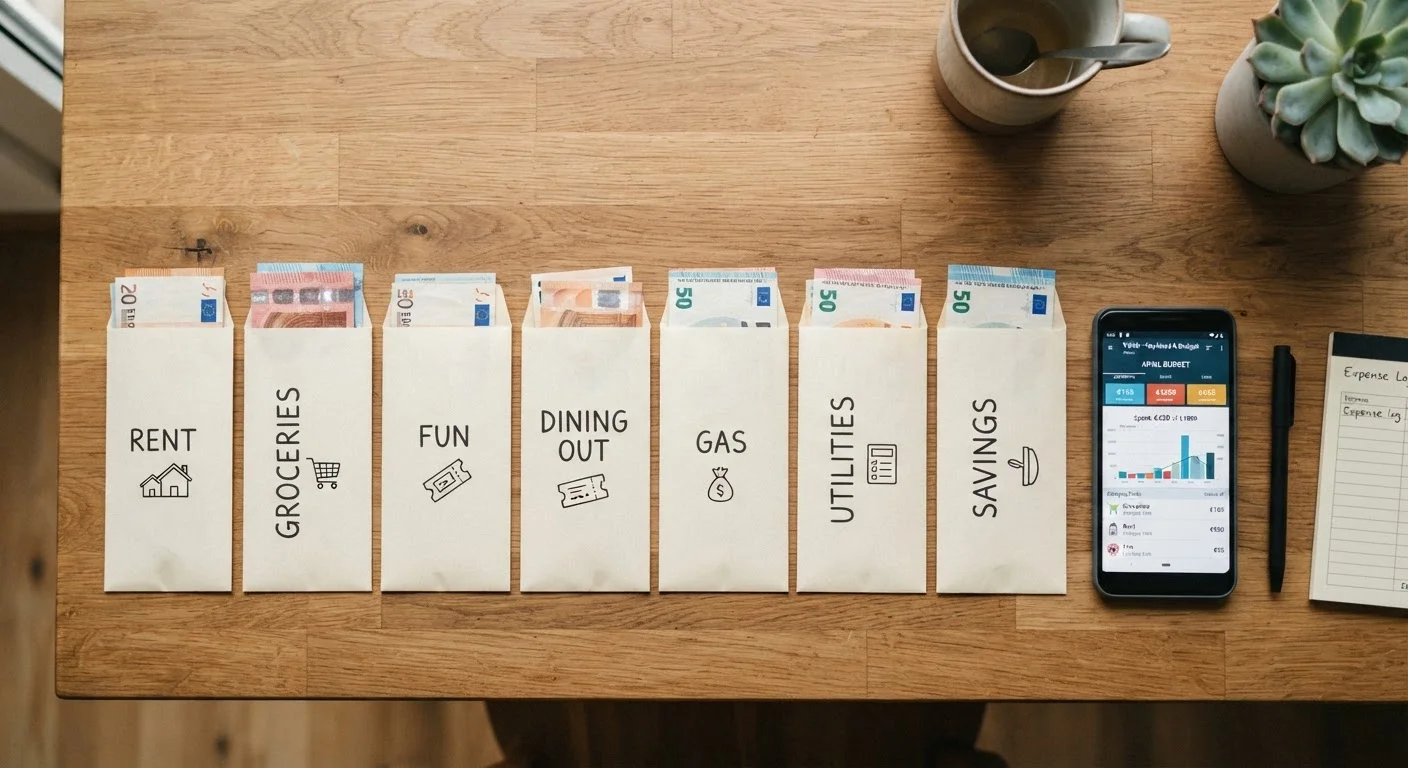
Envelope budgeting is a cash-allocation method where you divide your take-home pay into labeled spending categories - groceries, gas, dining out, clothing - and physically (or digitally) set aside only what you've decided to spend in each area. When an envelope is empty, spending in that category stops until the next pay period.
The method traces back decades, long before smartphones, when families used literal cash-stuffed envelopes. The mechanics haven't changed: you assign every dollar a category before the month starts, rather than tracking what you've already spent. This makes it a close relative of zero-based budgeting. For a side-by-side look at how these approaches compare, see zero-based vs. percentage-based budgeting for families.
Today, several apps replicate the envelope structure digitally, letting you swipe a debit card and watch a virtual envelope balance fall in real time - no trip to the ATM required.
The Real Advantages for Families
Envelope budgeting's staying power comes from a simple psychological truth: seeing a finite balance is more motivating than reading a line on a bank statement after the fact.
Creates a visible spending limit before money is spent
Assigning dollars to categories in advance - rather than tracking after the fact - makes overspending obvious in real time, not at month-end when it's too late to adjust.
Reduces impulse spending in variable categories
Categories like dining out and entertainment tend to balloon without guardrails. A finite envelope balance acts as a natural brake on discretionary purchases.
Forces acknowledgment of irregular expenses
Creating envelopes for annual fees, car maintenance, and seasonal costs means families save for these predictable surprises rather than treating them as budget emergencies.
Digital versions work without carrying cash
Apps that replicate envelope logic let families use debit or credit cards while still seeing real-time category balances, removing a major barrier to adoption.
Encourages shared financial accountability
When both partners can see the same envelope balances on a shared app, it opens natural conversations about spending priorities without one person feeling blamed.
Families who often miss hidden spending categories - school fees, pet costs, car maintenance - find that building dedicated envelopes for irregular expenses forces those line items onto the radar before they become emergencies.
Where the Method Breaks Down
No budgeting approach is perfect, and envelope budgeting carries genuine trade-offs that every family should weigh honestly.
Rigid structure frustrates variable-income households
Freelancers, gig workers, or seasonal employees may find it nearly impossible to confidently pre-fill envelopes when their monthly take-home pay fluctuates significantly.
Requires consistent upkeep to stay accurate
Forgetting to log a purchase - especially a cash transaction - throws off every envelope balance and can erode trust in the system quickly.
Cash-only version is impractical for most modern spending
Online purchases, automatic bill pay, and subscription services don't map cleanly onto physical cash envelopes, forcing workarounds that add complexity.
Category overspending creates a decision bottleneck
When an envelope hits zero mid-month, families must decide whether to pull from another envelope or go without - a friction point that some find stressful rather than motivating.
Initial setup is time-intensive
Identifying all spending categories, setting realistic limits, and agreeing on allocations as a household can take several hours of focused conversation - a barrier for busy families.
Households with irregular or variable income face the biggest hurdle: it's hard to fill envelopes confidently when the paycheck amount itself is uncertain each month. In those cases, a more flexible framework may serve better. See other approaches to family budgeting for alternatives worth considering.
Digital Envelope Apps vs. Cash: Key Difference
With physical cash envelopes, overspending is physically impossible once the envelope is empty. Digital versions rely on the user's discipline to stop spending when the virtual balance hits zero - the app records the overage but won't decline a card. This distinction matters: the psychological guardrail is slightly weaker in digital form, though the visibility benefit remains. Families who know they need hard stops may still prefer a cash-based approach for their highest-risk categories.
Making It Work in Practice
The families who stick with envelope budgeting share a few habits. First, they set up envelopes together - both partners review the category list and agree on allocations, so neither feels policed by the other's spending decisions.
Second, they build a catch-all "buffer" envelope for the unpredictable. Life brings surprise co-pays, school field trips, and car repairs. A small buffer envelope absorbs these without blowing up every other category. This also ties directly into building a savings habit - the buffer is often where families make their first consistent contribution toward an emergency fund.
Third, they review envelopes weekly, not just at month-end. A five-minute check-in on Sunday prevents the shock of discovering the grocery envelope is empty by the 20th.
If debt payments are eating into your available envelope funds, it's worth reading about keeping debt from derailing a family budget before finalizing your category allocations.
~33%
US adults who follow a written or formal budget
Gallup polling has consistently found that roughly one-third of American adults maintain a detailed household budget, suggesting most families use informal or no spending plans.
3-4 months
Typical time before a new budget habit sticks
Behavioral finance research generally suggests it takes multiple months of consistent practice before a new financial routine becomes habitual for most households.
This article is for general informational and educational purposes only and does not constitute personalized financial advice. Consult a qualified financial professional for guidance specific to your household's situation.
The content provided on our blog site traverses numerous categories, offering readers valuable and practical information. Readers can use the editorial team’s research and data to gain more insights into their topics of interest. However, they are requested not to treat the articles as conclusive. The website team cannot be held responsible for differences in data or inaccuracies found across other platforms. Please also note that the site might also miss out on various schemes and offers available that the readers may find more beneficial than the ones we cover.