

Our Verdict
Snacks built around a combination of protein, fiber, and/or healthy fat consistently offer more sustained energy than those dominated by refined carbohydrates and added sugars. For most children, the goal isn't to eliminate all quick-digesting carbs but to pair them with nutrients that moderate the blood sugar response. Small, intentional changes to snack composition can make a meaningful difference in afternoon focus and mood.
| Best for | Recommended |
|---|---|
| After school or between-activity hunger | Balanced combination snacks (e.g., apple slices with nut butter, cheese with whole grain crackers) |
| Quick on-the-go needs with minimal prep | Whole fruit, string cheese, or unsalted nuts - portable, minimally processed options |
| Families focused on reading labels and reducing added sugar | Whole-food snacks with ingredient lists parents can recognize and understand |
| Children with specific dietary needs or health conditions | Guidance from a registered dietitian or pediatrician for personalized snack planning |
Why Children's Energy Levels Are So Sensitive to What They Eat
Children have proportionally smaller glycogen stores and higher metabolic rates relative to their body size than adults. This means the gap between a meal and noticeable hunger - or a noticeable energy dip - is often shorter for kids. What fills that gap matters considerably.
When a child eats a snack consisting mostly of rapidly digested carbohydrates - think sugary juice drinks, white-flour crackers, or candy - glucose enters the bloodstream quickly. The body responds by releasing insulin to manage that rise. For many children, this process can result in a secondary drop in blood sugar that registers as fatigue, irritability, or difficulty focusing. Parents often recognize this as the post-snack slump that makes homework time a struggle.
This isn't cause for alarm - it's basic physiology. Understanding it, however, gives families a practical tool: choosing snacks that slow glucose absorption rather than accelerate it. For a broader look at how nutritional needs vary across family members, see our guide to balanced nutrition across every age group.
This article is for general informational purposes only and does not constitute medical or dietary advice. Always consult a qualified healthcare provider or registered dietitian for guidance specific to your child's needs.
Spike-and-Crash Snacks vs. Sustained-Energy Snacks: What the Difference Looks Like
The distinction between the two snack types comes down to macronutrient composition and how quickly those nutrients are digested and converted to glucose.
| Spike-and-Crash Snacks | Sustained-Energy Snacks | |
|---|---|---|
| Primary nutrients | Refined carbs, added sugar | Protein, fiber, and/or healthy fat paired with carbs |
| Digestion speed | Fast - glucose enters bloodstream quickly | Slower - glucose release is moderated |
| Typical energy effect | Quick rise, followed by potential dip | Gradual rise, more stable plateau |
| Common examples | Fruit snacks, candy, sugary drinks, white crackers alone | Apple + nut butter, cheese + whole grain crackers, veggies + hummus |
| Satiety duration | Short - hunger returns quickly | Longer - delays return of hunger |
| Label red flags | High added sugar, low fiber, low protein | Low added sugar, some fiber and/or protein present |
Spike-prone snacks are typically high in added sugars or refined starches with little accompanying protein, fat, or fiber. Common examples include flavored fruit snacks, regular soda, sugary cereal bars, white-bread crackers alone, and most candy. These foods aren't universally harmful in small amounts, but as a primary snack they offer limited staying power.
Sustained-energy snacks rely on nutrient combinations that moderate digestion speed. Protein and fat slow the release of glucose from food into the bloodstream. Fiber - found in whole fruits, vegetables, legumes, and whole grains - does the same. Research in pediatric nutrition consistently supports this pairing approach as a way to maintain more stable postprandial (after-eating) blood glucose levels in children.
Make Pairing a Habit, Not a Rule
Rather than overhauling your entire snack routine, try a simple default: whenever a carbohydrate-based snack goes out, add one protein or fat alongside it. A handful of crackers becomes more sustaining when paired with a slice of cheese. Over time, this pairing habit becomes second nature for both parents and kids.
When evaluating packaged snacks, the nutrition label is your best starting point. Our field guide to reading nutrition labels with kids explains how to spot added sugars and assess fiber content at a glance.
Practical Snack Combinations That Support Steadier Energy
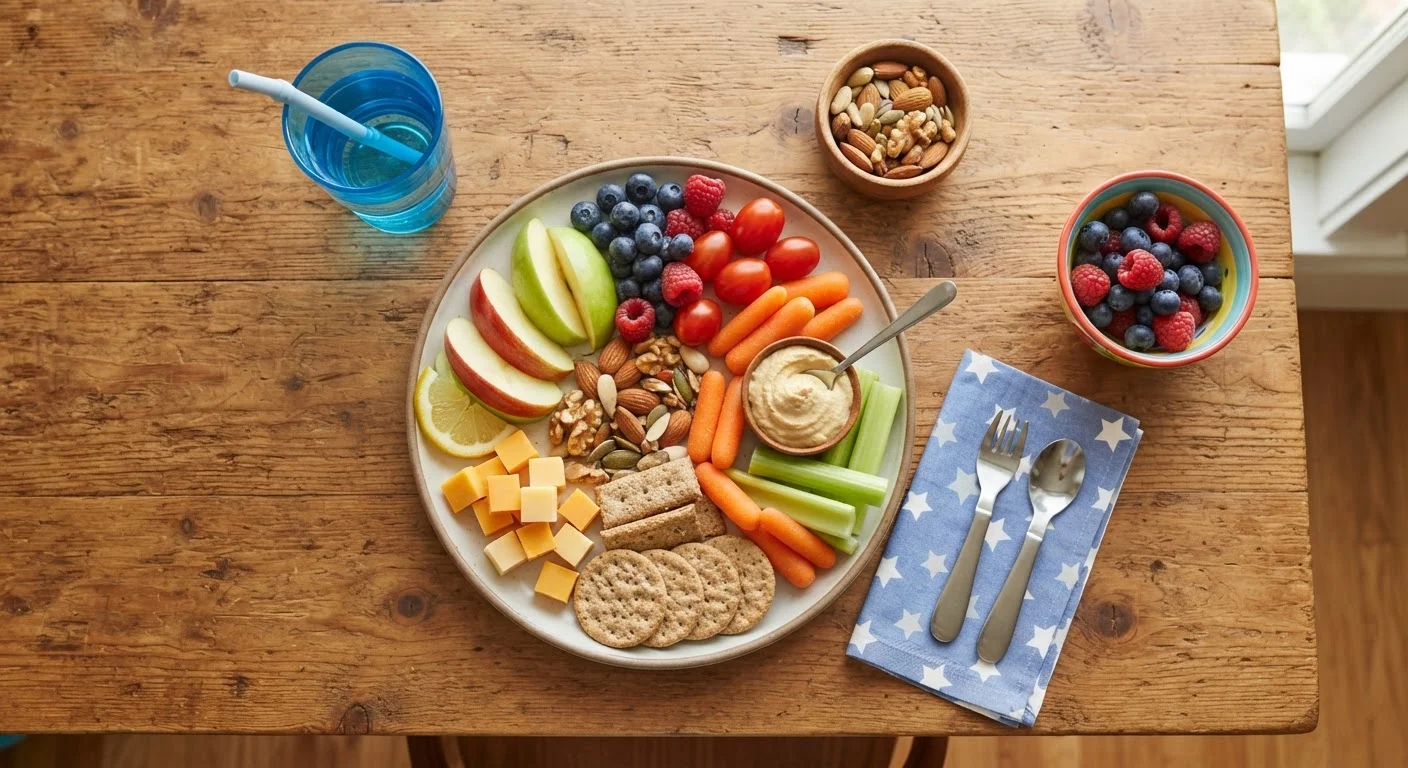
The most effective sustained-energy snacks for children don't require elaborate preparation. The key principle is pairing: a source of carbohydrate with at least one moderating nutrient.
- Whole fruit + protein: Apple slices with nut butter, or a banana with a small serving of cottage cheese. The fruit provides natural sugars alongside fiber; the protein slows digestion.
- Whole grain + fat: Whole grain crackers with avocado or a small piece of cheese. The fiber in whole grains plus the fat content extends satiety.
- Vegetables + dip: Carrot sticks, cucumber rounds, or bell pepper slices with hummus. These offer fiber, micronutrients, and protein from legumes.
- Dairy-based snacks: Plain yogurt (lower in added sugar than most flavored varieties) with a drizzle of honey and some berries provides protein, calcium, and natural fiber.
- Legume-based options: Roasted chickpeas or edamame are fiber- and protein-rich snacks that digest more slowly than refined grain products.
Portion size also matters. A snack intended to bridge the gap between lunch and dinner should be moderate - enough to address hunger without displacing appetite for the next meal. Energy needs vary by age, size, and activity level, so follow your child's hunger cues rather than a fixed quantity.
For context on how physical activity intersects with snack timing and energy needs, movement snacks throughout the day can also influence when and how much children need to eat between meals.
A Note on Context, Flexibility, and When to Seek Guidance
No snack classification is absolute. A child who has just finished a two-hour soccer practice has different immediate needs than one sitting down for quiet reading. After intense activity, faster-digesting carbohydrates can actually serve a legitimate role in replenishing glycogen stores quickly. Context always shapes the right choice.
~65%
US children's calories from ultra-processed foods
Research published in JAMA found that ultra-processed foods accounted for roughly 67% of children's daily caloric intake in US dietary survey data, underscoring the scale of the challenge for families.
2-3x
Faster metabolism rate in children vs. adults
Children's resting metabolic rates relative to body weight are substantially higher than adults', meaning their fuel needs - and sensitivity to snack quality - are proportionally greater.
It's also worth acknowledging that food is social and cultural, not purely metabolic. Occasional sugary treats are a normal part of childhood and don't undermine an otherwise varied diet. The goal is a general pattern of snack choices that support energy and wellbeing - not a rigid rule system that increases stress around eating.
If you notice persistent signs of energy instability, extreme mood swings tied to eating, or signs that your child's relationship with food may be shifting, those are good reasons to loop in a pediatrician or registered dietitian. Knowing when to seek professional guidance is an important part of supporting children's long-term health. Similarly, understanding why breakfast rhythms matter can inform the full-day picture - see why skipping breakfast affects kids differently than adults.
For personalized nutritional guidance for your child, consult a licensed registered dietitian or your child's pediatrician.
The content provided on our blog site traverses numerous categories, offering readers valuable and practical information. Readers can use the editorial team’s research and data to gain more insights into their topics of interest. However, they are requested not to treat the articles as conclusive. The website team cannot be held responsible for differences in data or inaccuracies found across other platforms. Please also note that the site might also miss out on various schemes and offers available that the readers may find more beneficial than the ones we cover.