

Why Movement Snacks Work for Busy Families
The idea of fitting a 30-minute workout into a full family day can feel genuinely impossible - between school runs, work deadlines, meals, and homework, dedicated exercise often falls to the bottom of the list. Movement snacks offer a different framework: short, intentional bouts of physical activity, typically two to ten minutes long, scattered across the day rather than consolidated into a single session.
Emerging research in exercise physiology supports the value of this approach. Studies suggest that accumulated movement throughout the day - even in brief episodes - can contribute to improved cardiovascular markers, better mood regulation, and reduced risks associated with prolonged sedentary behaviour. The key shift is thinking of movement as something woven through daily life, not something scheduled separately from it.
This model suits families particularly well. Children naturally move in bursts rather than sustained efforts, and active play differs meaningfully from structured exercise in how it supports development. Adults, meanwhile, benefit from breaking up desk time with regular micro-movement. A movement snack strategy meets both needs without requiring anyone to overhaul their schedule.
Make It a Family Decision
Let kids vote on the movement snack for the evening - a dance break, a walk around the block, or a round of backyard tag. When children have ownership over the choice, they're far more likely to participate enthusiastically and ask to do it again.
What You'll Need to Get Started
One of the genuine advantages of movement snacks is how little equipment or space they require. Before diving into the steps, gather a few basics and make sure your setup supports consistent follow-through.
What you will need
Timer or phone alarm
Signals when it's time to take a movement snack break during work or school hours.
Comfortable footwear
Supports safe movement whether indoors or outdoors.
Open floor space (approx. 6×6 ft)
Provides enough room for stretches, jumping jacks, or simple bodyweight exercises.
Resistance band or jump rope
Adds variety and light challenge to indoor movement sessions without equipment costs.
Families with members who have specific physical limitations or health conditions should review low-impact exercise options to identify activity types that suit everyone's needs without risk of overexertion.
Movement Is Not a Substitute for Medical Care
This article provides general wellness information, not medical advice. If any family member has a chronic health condition, injury, or mobility limitation, consult a qualified healthcare professional before starting a new physical activity routine. This is especially important for children with developmental conditions and adults managing ongoing health issues.
Step-by-Step: Building Your Family's Movement Snack Routine
Follow these steps in order the first time through. Once the routine feels natural - typically after two to three weeks of consistency - you can adapt each window to suit seasonal changes, energy levels, or family preferences. The goal is sustainability, not perfection.
Map Your Family's Daily Rhythm
Before adding movement, look at what your day already contains. Identify three to five natural pause points - morning wake-up, after school drop-off, the lunch hour, the after-school arrival, and after dinner. These become your movement snack windows. You don't need to carve out extra time; you're anchoring activity to moments that already exist.
Start With a Two-Minute Morning Mover
Before anyone sits down for breakfast, lead the family through two minutes of gentle movement - arm circles, a short walk around the house, or a set of slow jumping jacks. Research consistently shows that breaking sedentary time early in the morning helps establish an active mindset for the rest of the day. Keep it light and fun, not strenuous.
Add a Walk or Active Commute Segment
If you drive children to school, park a block away and walk the remainder. If the school is within safe walking distance, walk together at least a few days per week. For remote or hybrid learners, a short walk before lessons begin replicates the transition effect of a commute and supports focus. See our guide on structuring a learning day for how movement breaks can anchor an at-home schedule.
Use Work and Study Breaks Intentionally
Set a timer for every 45 to 60 minutes during work or homework time. When it goes off, take three to five minutes to move - stand and stretch, do a lap around the house, or try a short set of bodyweight movements like squats or calf raises. These micro-breaks counteract the physiological effects of prolonged sitting and can support concentration when the family returns to tasks.
Build an After-School Active Transition
The window between school pick-up and dinner is often underused. Rather than defaulting straight to screens, make the first 10 minutes after arriving home a movement window. This could be free outdoor play for younger children, a bike ride around the block, or a short walk for the whole family. Active play and structured exercise serve different developmental purposes - unstructured outdoor time in this window is particularly valuable for kids' wellbeing.
Wind Down With an Evening Movement Snack
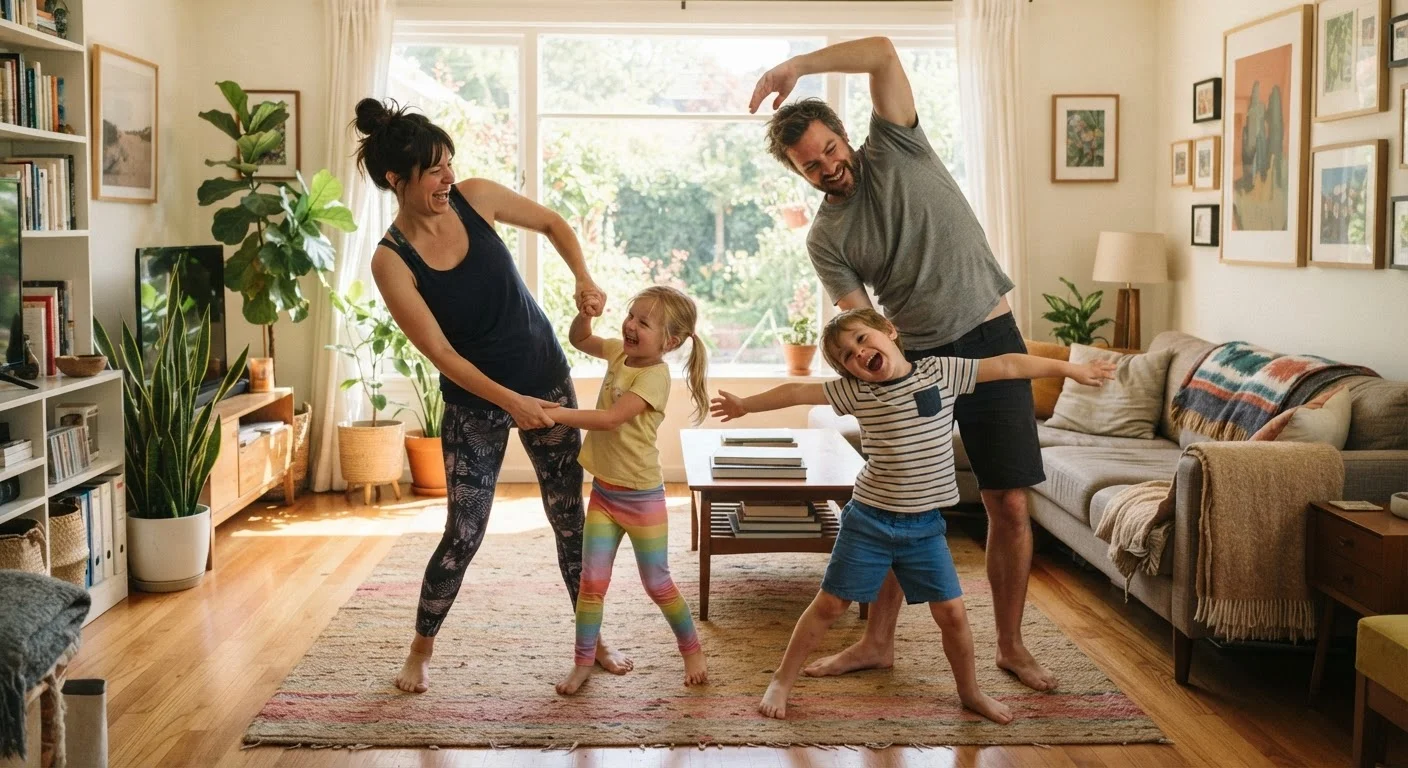
After dinner, resist the pull to go straight to the sofa. A 10-minute family walk, gentle yoga, or a dance session in the living room supports digestion and signals a natural transition between active time and rest. Keep the intensity low - this isn't a workout, it's a wind-down. For families weighing whether to move inside or outside depending on season and weather, our guide on outdoor vs. indoor exercise offers a practical breakdown.
Don't Push Through Pain
Movement snacks should feel energizing, not painful. If a family member experiences joint pain, dizziness, or shortness of breath during activity, stop immediately and seek medical guidance. For those already managing chronic conditions, our article on exercising with chronic pain covers what to consider before getting started.
This article is for general informational and educational purposes only and does not constitute medical advice. Always consult a qualified healthcare professional before beginning a new physical activity program, particularly for children, older adults, or individuals with chronic health conditions.
The content provided on our blog site traverses numerous categories, offering readers valuable and practical information. Readers can use the editorial team’s research and data to gain more insights into their topics of interest. However, they are requested not to treat the articles as conclusive. The website team cannot be held responsible for differences in data or inaccuracies found across other platforms. Please also note that the site might also miss out on various schemes and offers available that the readers may find more beneficial than the ones we cover.