

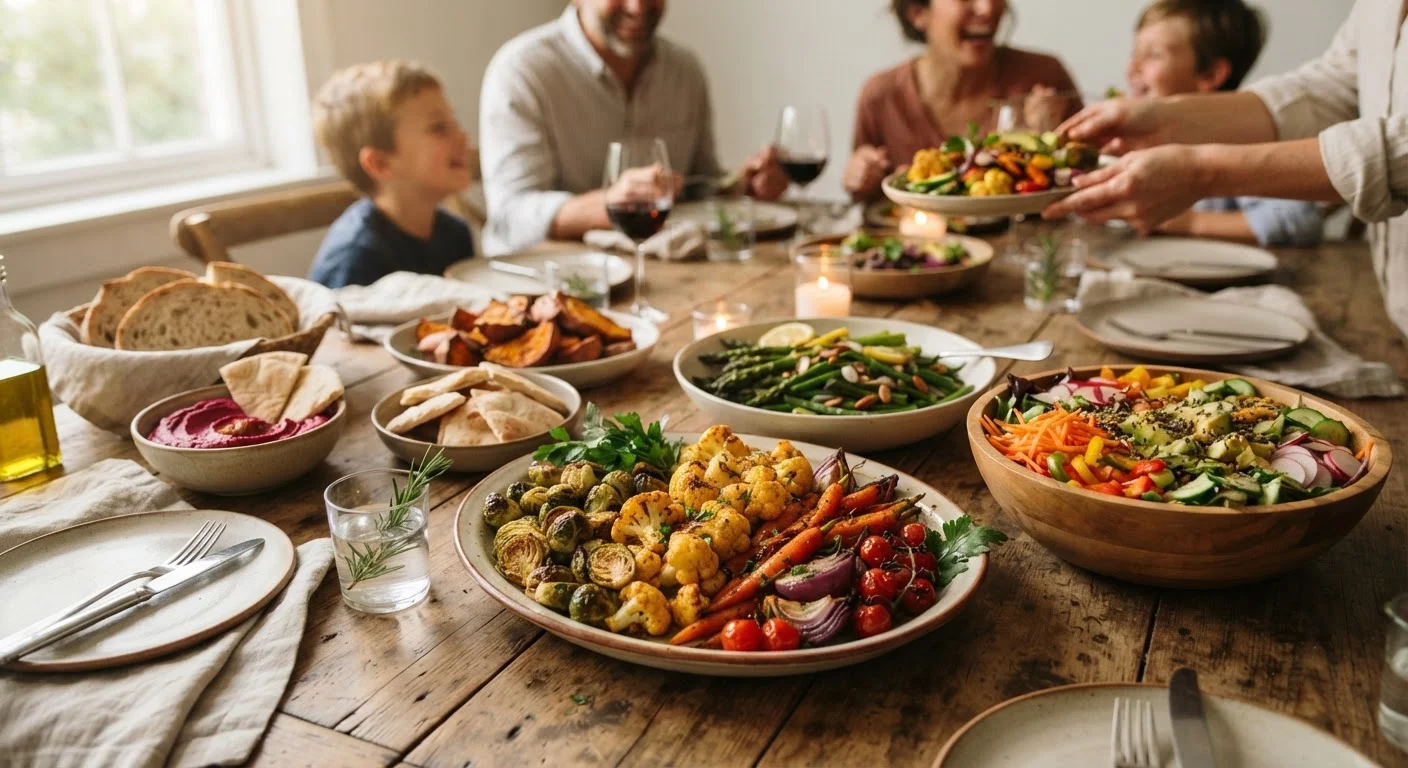
Why Preparation Method Is the Real Game-Changer
Most family vegetable battles are not actually about the vegetable - they are about how it was cooked. Mushy broccoli and perfectly roasted broccoli are biochemically different foods in terms of flavor compounds, texture, and even smell. Understanding why preparation technique matters so much is the first step toward getting more vegetables onto plates without negotiation.
Heat, moisture, and cutting technique all alter the cell structure of vegetables, which changes texture and the release of flavor compounds. Bitter glucosinolates in cruciferous vegetables like Brussels sprouts break down under high, dry heat, which is why roasted versions taste noticeably sweeter than boiled ones. For families trying to eat more plants, these aren't small differences - they can be decisive. See our guide to plant-forward eating for families for practical ways to build on these wins.
Start with the Vegetable's Strongest Feature
Before choosing a preparation method, consider what the vegetable does naturally well - sweetness, crunch, mild flavor, or earthy depth. Roasting amplifies sweetness; raw prep showcases crunch; steaming preserves delicate flavor. Matching the method to the vegetable's best quality gives you the highest chance of a result the table actually accepts. When in doubt, roast first - it wins over the most people across the most vegetables.
Preparation Methods That Actually Work
Roast at High Heat to Unlock Caramelization
Roasting vegetables at temperatures around 400-425°F (roughly 200-220°C) drives off moisture quickly and triggers caramelization - the browning of natural sugars - along with a process called the Maillard reaction on the cut surfaces. The result is concentrated, slightly sweet flavor with crisp edges and a tender interior.
Vegetables that transform most dramatically through roasting include Brussels sprouts, cauliflower, carrots, and beets. Tossing them lightly in oil and spreading them in a single layer (not crowded) on a sheet pan is the key to achieving browning rather than steaming. Even self-described vegetable avoiders often accept roasted versions of vegetables they previously refused.
Roasting concentrates natural sugars, turning bitter vegetables noticeably sweeter with crisp, browned edges.
Steam Briefly to Preserve Mild Flavors and Snap
Steaming is the preparation method most likely to be ruined by overcooking. Done correctly - typically 3 to 5 minutes for most cut vegetables - it yields a bright color and a tender-crisp texture that retains the vegetable's own mild flavor without waterlogging it.
Steaming works especially well for green beans, asparagus, snap peas, and broccoli florets. These vegetables have naturally appealing flavors when their cellular structure is intact. Overcooking collapses that structure and releases sulfur compounds (the source of that unpleasant overcooked smell). Finishing with a little lemon juice or a light seasoning of salt immediately after steaming can make a meaningful sensory difference for family members who are on the fence.
Brief steaming preserves a vegetable's snap and color - the texture that separates acceptable from appealing.
Serve Raw with a Dip or Dressing
For many children - and quite a few adults - the crunch of a raw vegetable is more appealing than any cooked version. Raw carrots, cucumber slices, bell pepper strips, celery, and snap peas offer satisfying texture with none of the softness that can trigger rejection in texture-sensitive eaters.
Pairing raw vegetables with a dipping element - a yogurt-based dip, hummus, or a simple vinaigrette - shifts the eating experience from obligation to interactive snack. Research in pediatric nutrition suggests that pairing a less-preferred food with a preferred one (called flavor-flavor learning) can gradually build positive associations over time without pressure or reward-based tactics.
Raw vegetables with a dip turn a textural objection into a hands-on snacking experience most ages enjoy.
Shave or Slice Thin to Change the Eating Experience
Dense vegetables like raw Brussels sprouts, fennel, cabbage, or beets are often rejected in their whole or chunked form, but shaved thin on a mandoline or sliced paper-thin with a sharp knife, they become tender, almost delicate, and much easier to chew. The surface-area-to-volume ratio also means dressings and seasonings coat every bit.
A shaved Brussels sprout salad dressed with a bright, acidic vinaigrette is a genuinely different dish from roasted whole sprouts - and it reaches a different audience. This approach works particularly well for adults and older children who are open to trying but have a history of disliking the vegetable in its standard form.
Thinly shaving dense vegetables transforms both texture and how well seasoning is absorbed and tasted.
Char Lightly Under a Broiler for Smoky Complexity
The broiler is an underused tool for vegetables. A brief stint under high, direct heat chars the outermost surface while leaving the interior tender, creating a smoky, slightly bitter edge that pairs well with richer sauces or grains. This preparation tends to appeal to older family members and adventurous eaters who find plain steamed or boiled vegetables bland.
Eggplant, zucchini, corn, and cherry tomatoes respond particularly well to broiling. The key is watching carefully - broiling moves fast, and there is a narrow window between appealingly charred and burnt. A two-to-four minute window per side is a reasonable starting point for most cut vegetables, adjusting based on thickness.
A quick broil creates smoky, caramelized surfaces that give vegetables a depth of flavor steaming cannot match.
Massage Leafy Greens to Soften Texture and Reduce Bitterness
Raw kale and other hearty greens are frequently rejected because of their tough, fibrous texture and pronounced bitterness when eaten straight. Massaging cut leaves with a small amount of salt or an acid like lemon juice for 2 to 3 minutes physically breaks down the cell walls, softening the leaf significantly and mellowing bitter flavor compounds.
The result is a green that wilts slightly, becomes easier to chew, and absorbs dressing far more evenly. This technique bridges the gap between raw and cooked for family members who want the texture of a salad but find raw kale too aggressive. It requires no heat, no special equipment, and minimal prep time - making it a realistic option even on busy weeknights.
Massaging kale with salt or lemon breaks down tough cell walls, making it noticeably softer and less bitter.
Nutrient Retention Varies by Method
Cooking method does affect the nutrient content of vegetables. Water-soluble vitamins like vitamin C and B vitamins are more sensitive to heat and leaching into cooking water - boiling causes the most loss, while steaming and roasting are generally better for retention. That said, some nutrients, such as lycopene in tomatoes and beta-carotene in carrots, become more bioavailable after cooking. The most nutritious preparation is often the one the family will actually eat consistently. A registered dietitian can provide personalized guidance if nutrient intake is a specific concern.
Making It Work at the Family Table
No single technique works for every vegetable or every person. The practical approach is to offer the same vegetable in two preparations occasionally - roasted and raw carrots, for instance - without pressure or comment about which is more nutritious. Research on picky eating consistently shows that repeated, low-stress exposure is more effective than coaxing. Our strategies for feeding picky eaters go deeper into this approach.
It also helps to align vegetable selection with what each family member genuinely tolerates well. Understanding how nutritional needs shift from toddlers to older adults can guide which vegetables you prioritize - the Family Plate guide offers a useful framework. With consistent experimentation and a low-pressure environment, most families find at least a handful of preparations that cross generational preferences without anyone having to fight for it.
This article is for general informational and educational purposes only and is not a substitute for professional medical or dietary advice. Consult a qualified healthcare provider or registered dietitian for guidance specific to your family's health needs.
The content provided on our blog site traverses numerous categories, offering readers valuable and practical information. Readers can use the editorial team’s research and data to gain more insights into their topics of interest. However, they are requested not to treat the articles as conclusive. The website team cannot be held responsible for differences in data or inaccuracies found across other platforms. Please also note that the site might also miss out on various schemes and offers available that the readers may find more beneficial than the ones we cover.