

Start here
What Plant-Forward Eating Actually Means
Understand the why
Why the Evidence Points This Direction
Take action
Starting Small: Practical Entry Points for Families
Stay informed
Navigating Nutrition Gaps and Common Concerns
Make it stick
Keeping the Whole Family On Board
What Plant-Forward Eating Actually Means
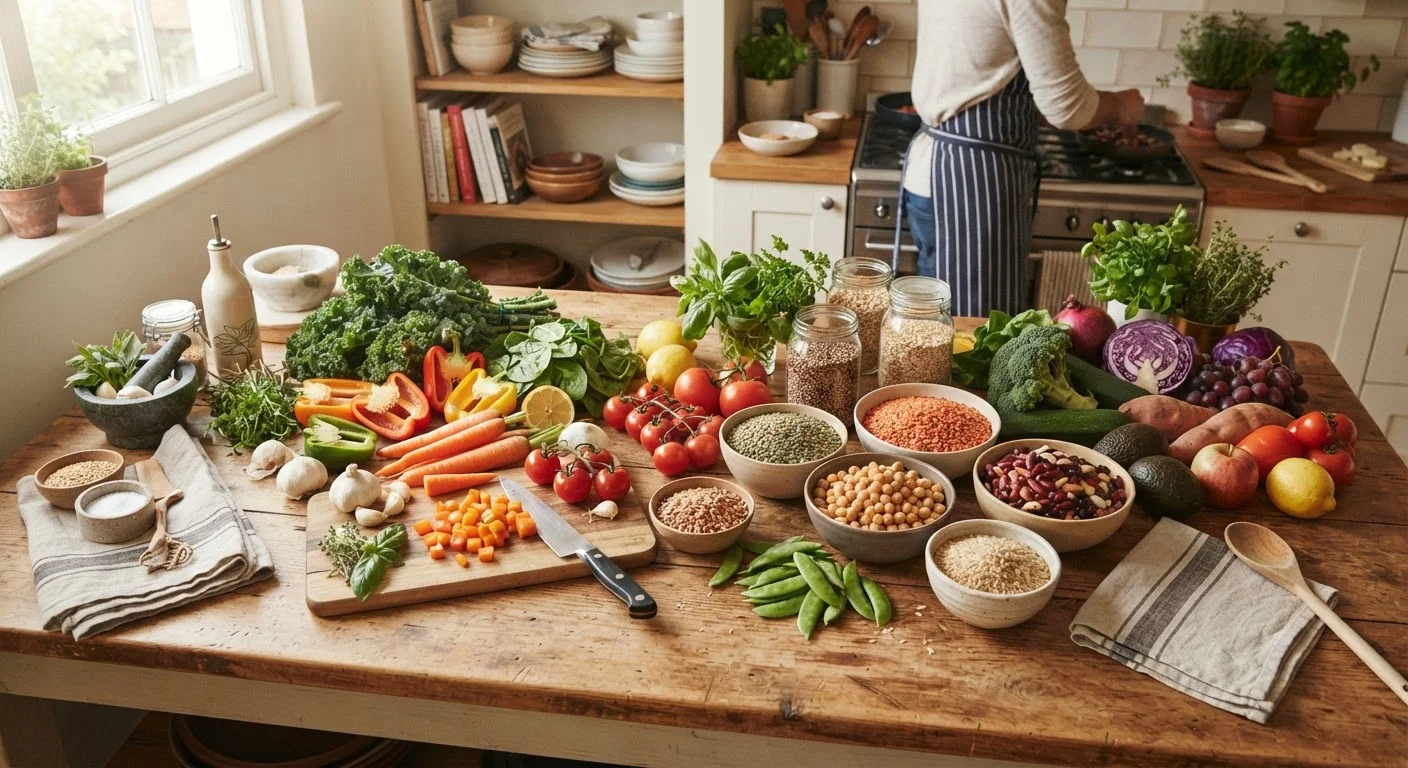
Plant-forward eating is not a rigid diet with strict rules. It is a flexible approach that prioritizes vegetables, fruits, whole grains, legumes, nuts, and seeds as the foundation of meals, while leaving room for animal products based on your family's preferences and needs.
Unlike fully plant-based or vegan diets, plant-forward eating operates on a spectrum. A family might commit to meat-free Mondays, restructure dinner plates so vegetables take up half the space, or simply swap white rice for a grain and legume mix several nights a week. All of these count.
Plant-forward eating
A flexible dietary approach that centers plant foods - vegetables, fruits, whole grains, legumes, nuts, seeds - while not necessarily eliminating animal products.
Legumes
A family of plants that includes beans, lentils, chickpeas, and peas. They are high in protein, fiber, and several key minerals.
Non-heme iron
The form of iron found in plant foods. It is absorbed less efficiently than heme iron from meat, but absorption can be improved by eating it alongside vitamin C.
Whole grains
Grains that retain all three parts of the kernel - bran, germ, and endosperm. Examples include oats, brown rice, quinoa, and whole wheat. They provide more fiber and nutrients than refined grains.
Dietary pattern
The overall combination and frequency of foods a person regularly eats, rather than any single food or nutrient. Research increasingly studies dietary patterns rather than individual foods.
The U.S. Dietary Guidelines for Americans have long emphasized plant-rich eating patterns, including the Mediterranean and DASH dietary patterns, as frameworks associated with positive health outcomes. See our guide to building a week of meals around the Dietary Guidelines for a practical translation of those recommendations.
Why the Evidence Points This Direction
A substantial body of research links higher consumption of plant foods to reduced risk of cardiovascular disease, type 2 diabetes, and certain cancers. Studies published in major nutrition journals consistently show that dietary patterns emphasizing whole plant foods are associated with lower rates of chronic illness across populations.
These benefits do not require perfection. Research suggests that even modest, consistent shifts toward more plant foods - without full elimination of animal products - can meaningfully support long-term health. For families with children, establishing plant-forward habits early may also shape food preferences that carry into adulthood.
Plant-Forward Is a Spectrum, Not a Label
You do not need to identify as vegetarian, vegan, or any particular dietary category to benefit from eating more plants. Most nutrition researchers emphasize that the overall dietary pattern - not adherence to a named diet - is what matters for long-term health. Progress over perfection is a well-supported principle in behavior change research.
Understanding how nutritional needs vary by age helps you apply these principles thoughtfully. Our overview of balanced nutrition across every age group covers what different family members need at each life stage.
Starting Small: Practical Entry Points for Families
The most common mistake families make is attempting to overhaul everything at once. Behavioral research on habit change suggests that small, specific adjustments produce more durable results than broad, sweeping changes.
- Add before you subtract. Rather than removing meat, start by adding a plant protein to dishes you already make - black beans in tacos, lentils in bolognese sauce, chickpeas in soups.
- Anchor meals in familiar flavors. Plant-forward versions of beloved family recipes create less friction than entirely new dishes.
- Batch plant proteins. Cooking a large pot of beans or grains at the start of the week saves time on busy nights. Our batch cooking guide walks through this approach.
- Rethink the plate structure. A practical shift is making vegetables and whole grains the larger portion, with a smaller serving of protein - animal or plant - alongside.
Win Over Reluctant Eaters With How You Cook
Roasting vegetables at high heat caramelizes their natural sugars, producing a flavor profile very different from steamed or boiled preparations. Many children who refuse steamed broccoli will accept it roasted with a light drizzle of olive oil. Experiment with method before assuming a vegetable is off the table.
Preparation method dramatically affects whether kids accept vegetables. See preparation methods that change texture and taste for techniques that tend to win over reluctant eaters.
Navigating Nutrition Gaps and Common Concerns
Families often worry that reducing animal products means missing key nutrients. With some awareness, most gaps are manageable through food choices alone for families making moderate rather than complete shifts.
- Iron
- Plant sources like lentils, spinach, and fortified cereals provide non-heme iron. Pairing these with vitamin C-rich foods (citrus, bell peppers) increases absorption.
- Calcium
- Dairy remains an option for most plant-forward families. Non-dairy sources include fortified plant milks, tofu set with calcium sulfate, and leafy greens like bok choy and kale.
- Vitamin B12
- This nutrient is found almost exclusively in animal products. Families significantly reducing meat and dairy should discuss B12 with their healthcare provider.
- Zinc and Omega-3 fatty acids
- Pumpkin seeds, hemp seeds, and walnuts support both. Eggs and fatty fish remain useful options for plant-forward (but not vegan) families.
Families with young children, pregnant or breastfeeding individuals, or those managing chronic conditions should consult a registered dietitian before making significant dietary changes. Our article on protein myths for kids also addresses common misunderstandings about plant proteins.
This article is for general informational purposes only and is not a substitute for personalized medical or nutrition advice. Always consult a qualified healthcare professional for guidance specific to your family's health needs.
Keeping the Whole Family On Board
Resistance from family members - especially children - is one of the most common barriers families cite. The good news is that the same evidence-based strategies that work for picky eaters broadly apply here.
Involve children in the process. Research on food acceptance in children consistently shows that participation in shopping, choosing, or preparing food increases willingness to try it. Let kids pick a vegetable to include in the week's meals, or help them rinse and sort lentils.
Avoid labeling meals. Announcing that tonight's dinner is "healthy" or "vegetarian" can trigger resistance before anyone tastes anything. Simply serve the food.
Manage your own expectations around timelines. Food preference development in children is slow and nonlinear. Repeated low-pressure exposure - without pressure to eat - is more effective than negotiation or reward systems.
If dinnertime tension is a persistent challenge in your household, our article on feeding picky eaters without turning dinner into a battleground offers evidence-informed strategies. For those also thinking about the financial dimension of shifting family food habits, the family budgeting hub provides complementary planning tools.
Frequently Asked Questions
No. Plant-forward simply means making plants the centerpiece of most meals while allowing flexibility with meat, dairy, or fish. Many families reduce animal products gradually without eliminating them entirely.
Yes, with variety. Legumes, tofu, eggs, dairy, nuts, seeds, and whole grains all contribute protein. Research shows that children meeting their calorie needs through varied whole foods rarely fall short on protein.
Try one plant-centered meal per week to start - something familiar like pasta with a lentil-based sauce or tacos with black beans. Familiarity lowers resistance and builds momentum gradually.
Not necessarily. Staple plant proteins like dried beans, lentils, and canned chickpeas are among the most affordable foods available. Savings on meat can offset the cost of adding more produce.
It depends on the degree of shift. Families reducing but not eliminating animal products usually cover key nutrients through diet alone. Speak with your family's healthcare provider if you're making significant dietary changes, especially for young children.
Preparation method matters enormously - roasted vegetables taste very different from steamed ones. Repeated low-pressure exposure and involving kids in choosing or preparing foods are evidence-backed strategies.
The content provided on our blog site traverses numerous categories, offering readers valuable and practical information. Readers can use the editorial team’s research and data to gain more insights into their topics of interest. However, they are requested not to treat the articles as conclusive. The website team cannot be held responsible for differences in data or inaccuracies found across other platforms. Please also note that the site might also miss out on various schemes and offers available that the readers may find more beneficial than the ones we cover.