

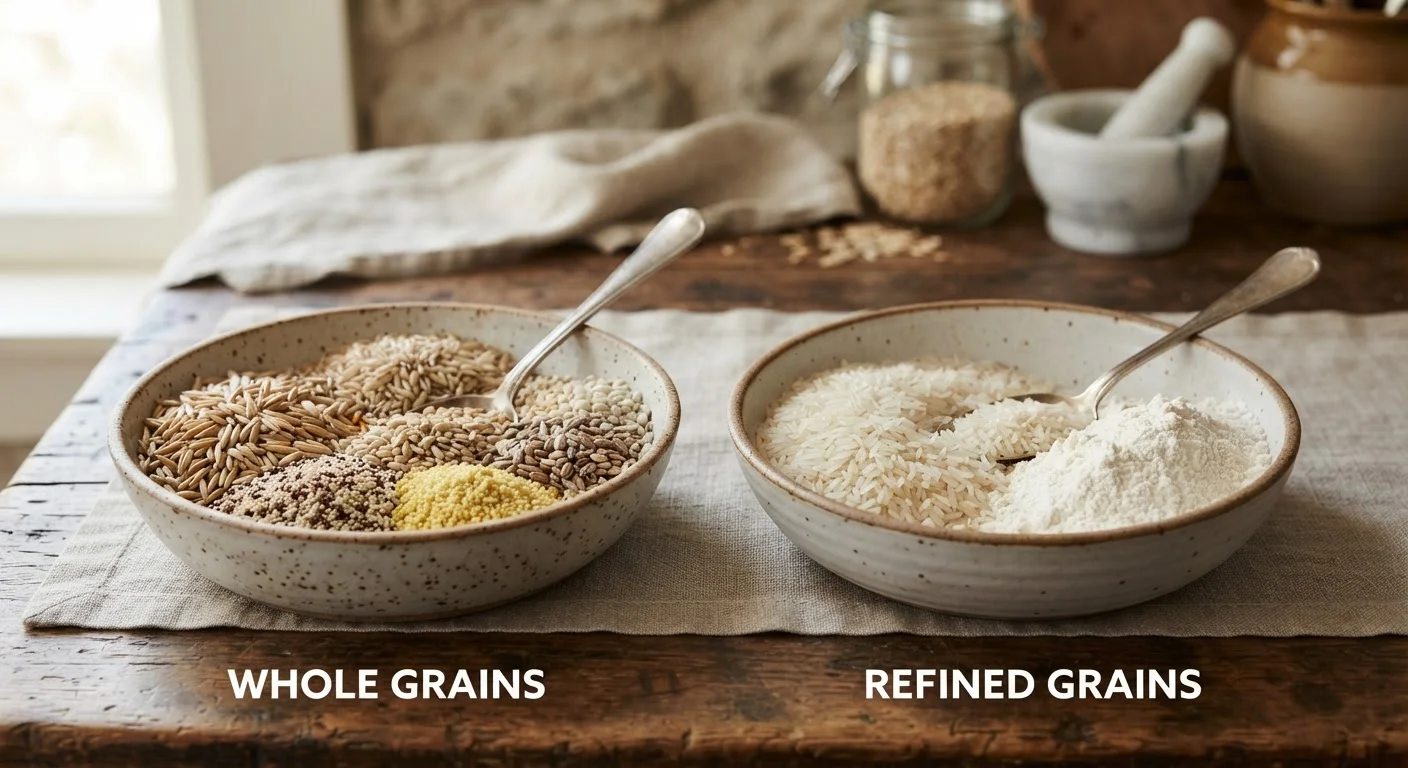
Option A
Whole Grains
The complete, minimally processed option.
Best for: Families looking to maximize fiber, vitamins, and long-lasting energy from everyday carbohydrates.
Option B
Refined Grains
The streamlined, widely available staple.
Best for: Situations requiring quick energy, fortified nutrients, or easier digestibility for certain household members.
What Actually Distinguishes a Whole Grain from a Refined One
Every grain kernel is made up of three layers: the bran (the fiber-rich outer shell), the germ (the nutrient-dense core), and the endosperm (the starchy inner layer). A whole grain keeps all three intact. A refined grain has been milled to remove the bran and germ, leaving primarily the endosperm.
That processing step is where the meaningful nutritional gap opens up. The bran provides dietary fiber and antioxidants. The germ contains B vitamins, vitamin E, and healthy fats. Strip those away, and you're left with a product that has a longer shelf life and softer texture - but significantly fewer naturally occurring nutrients.
Common whole grain examples include whole wheat, oats, brown rice, quinoa, barley, and popcorn. Refined grain examples include white flour, white rice, and most standard pasta. Many refined grain products in the US are labeled enriched, meaning some B vitamins and iron are added back after milling - but dietary fiber, which plays a central role in digestive health and satiety, is generally not restored.
| Criterion | Whole Grains | Refined Grains |
|---|---|---|
| Grain layers retained | Bran, germ, and endosperm | Endosperm only |
| Dietary fiber | Naturally high | Largely removed; not restored |
| B vitamins & minerals | Naturally present | Partially added back (enriched) |
| Glycemic response | Slower, more gradual | Faster blood glucose rise |
| Texture & palatability | Denser, chewier | Lighter, softer |
| Shelf life | Shorter (oils in germ can go rancid) | Longer |
| Common examples | Oats, brown rice, whole wheat, quinoa | White bread, white rice, standard pasta |
| US Dietary Guideline recommendation | At least half of daily grain servings | No more than half of daily grain servings |
What the Research Says About Health Outcomes
Decades of nutritional research have consistently linked higher whole grain intake to meaningful health benefits. Studies published in major epidemiological journals associate regular whole grain consumption with reduced risk of cardiovascular disease, type 2 diabetes, and certain digestive conditions. The fiber content is widely credited as a major driver, supporting healthy gut bacteria, moderating the glycemic response to carbohydrates, and contributing to a feeling of fullness after meals.
3+ servings/day
Whole grain intake linked to heart health benefits
Multiple large cohort studies, including analyses cited by the American Heart Association, associate this level of whole grain consumption with lower cardiovascular disease risk.
~5%
US adults meeting whole grain recommendations
Research based on national dietary survey data suggests a significant gap between recommended and actual whole grain intake among American adults.
25g
Daily fiber target for average adult women (per US guidelines)
The 2020-2025 US Dietary Guidelines for Americans recommend 22-34g of dietary fiber per day for adults, varying by age and sex - whole grains are a primary contributor.
Refined grains, by contrast, tend to be digested more rapidly, producing a faster rise in blood glucose. For most healthy adults and children, this is not inherently dangerous in moderate amounts, but a diet dominated by refined grains - particularly those also high in added sugar and sodium - is associated with less favorable long-term health patterns. For more on how added sugar interacts with grain choices in packaged foods, see our explainer on added sugar in the family diet.
It's worth noting that not all refined grain products are equal. Enriched white bread fortified with folic acid, for instance, has played a documented public health role in reducing neural tube defects during pregnancy. Context and overall dietary pattern matter alongside individual food choices.
How Grain Needs Differ Across Family Members
Nutritional needs vary considerably by age, development stage, and health status - which matters when you're feeding a household with different members at the same table. For a deeper look at how balanced nutrition shifts across life stages, see our guide to family nutrition across every age group.
- Young children: Toddlers transitioning to solid foods may tolerate refined grain textures more easily. Gradually introducing whole grain options is generally encouraged, but very high-fiber diets are not appropriate for very young children. Consult your pediatrician for age-specific guidance.
- School-age kids and teens: Whole grains can support sustained energy and concentration. Whole grain breakfast cereals, whole wheat wraps, and oatmeal are practical entry points that don't require significant meal changes.
- Adults: Current US Dietary Guidelines recommend making at least half of all grain servings whole grains. For adults managing blood sugar, cholesterol, or digestive health, prioritizing whole grains is often specifically advised - again, with personalized direction from a clinician.
- Older adults: Fiber remains important for digestive regularity and cardiovascular health, but swallowing or chewing difficulties may require textural adjustments. A registered dietitian can help balance these needs.
A Note on Gluten and Grain Sensitivities
Some family members may have celiac disease, non-celiac gluten sensitivity, or wheat allergies - conditions that require avoiding certain grain types regardless of whether they are whole or refined. Gluten-free whole grain options such as oats (certified gluten-free), brown rice, and quinoa are available. If you suspect a grain-related sensitivity in your household, consult a physician before making dietary changes. Self-diagnosis and unnecessary grain restriction can lead to nutritional gaps.
This article provides general nutrition information and is not a substitute for personalized medical or dietary advice. Please consult a qualified healthcare provider or registered dietitian for guidance specific to your family's needs.
Practical Ways Families Can Shift the Balance
The goal isn't to eliminate refined grains entirely - it's to make whole grains the default where it counts, without turning family meals into a point of conflict. Gradual, consistent changes tend to stick better than dramatic overhauls. Common missteps in this area are worth being aware of; our article on where family nutrition efforts go wrong outlines several patterns to watch for.
A few approaches that work well in real households:
- Blend gradually: Mix whole grain and refined versions of pasta or rice to soften the texture transition for reluctant eaters.
- Read labels actively: Look for "whole wheat" or "whole grain" as the first ingredient, not just a secondary listing. The word "multigrain" does not mean whole grain.
- Lean on oats: Oatmeal and overnight oats are among the most accessible, affordable, and family-friendly whole grain options available.
- Don't overlook popcorn: Air-popped popcorn is a whole grain snack that most children already enjoy.
- Check your cereals: Many breakfast cereals marketed to children are refined grain products with significant added sugar. Whole grain, lower-sugar options are increasingly available.
Making whole grains a consistent part of your household's meals is a realistic, evidence-supported goal - one meal swap at a time.
The content provided on our blog site traverses numerous categories, offering readers valuable and practical information. Readers can use the editorial team’s research and data to gain more insights into their topics of interest. However, they are requested not to treat the articles as conclusive. The website team cannot be held responsible for differences in data or inaccuracies found across other platforms. Please also note that the site might also miss out on various schemes and offers available that the readers may find more beneficial than the ones we cover.