

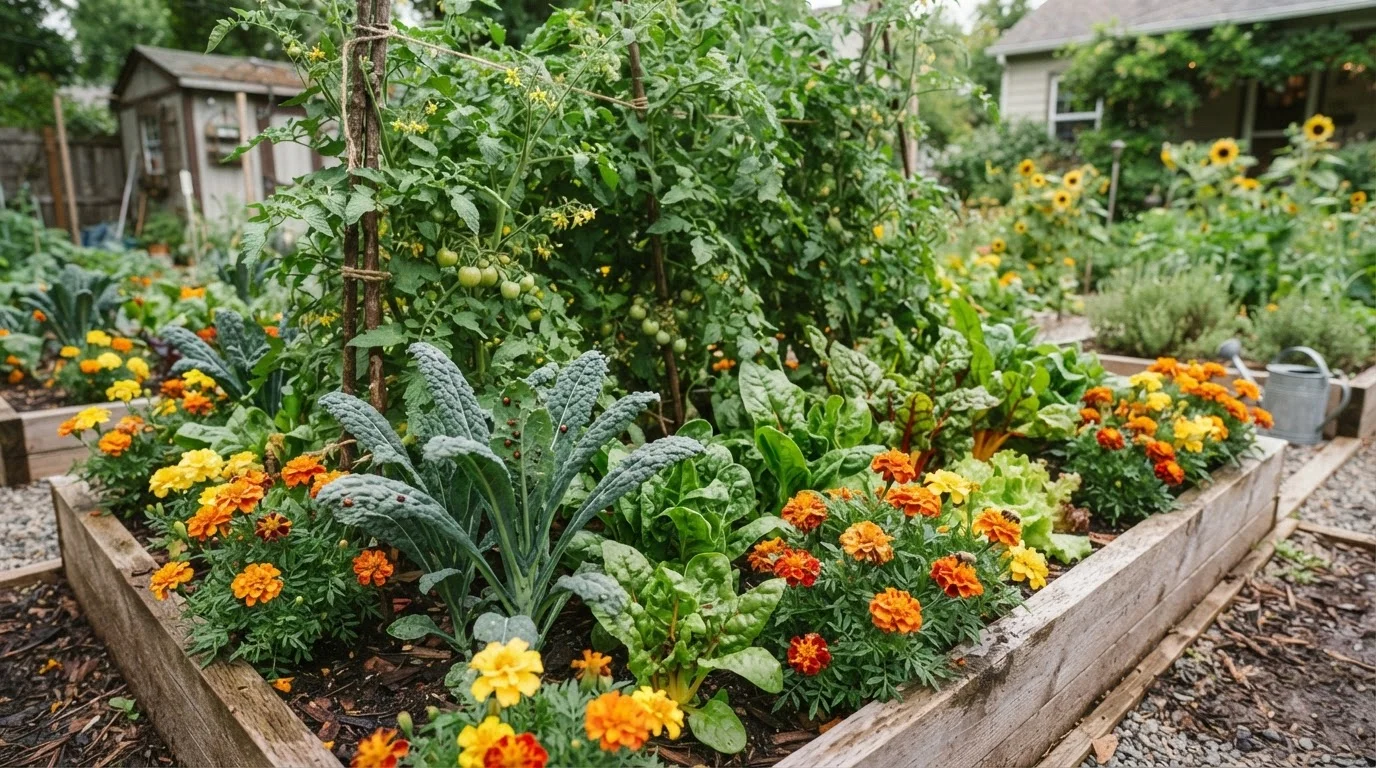
Why Natural Pest Control Deserves a Serious Look
Reaching for a chemical spray can feel like the fastest fix when you spot holes in your cabbage leaves or aphids massing on a rose stem. But synthetic pesticides often kill beneficial insects alongside the pests, disrupt soil health, and may pose risks to children, pets, and pollinators. The good news: a range of natural, non-toxic strategies genuinely work - provided they're applied correctly and consistently.
The methods below draw on integrated pest management (IPM) principles, a science-based framework that emphasizes prevention, monitoring, and low-impact interventions before escalating to stronger measures. Whether you're growing tomatoes in raised beds or tending a container patio garden, these approaches can be adapted to fit your setup. For a broader view of how pest control fits into the gardening calendar, the seasonal garden checklist is a useful companion resource.
Use companion planting to confuse and deter pests
Companion planting means growing certain plants in proximity because they benefit one another - including by repelling pests or masking the scent of vulnerable crops. Classic pairings include:
- Marigolds near tomatoes and squash - their root secretions deter nematodes, and their scent can confuse aphids and whiteflies.
- Basil alongside peppers - thought to repel thrips and aphids.
- Nasturtiums as trap crops - aphids are strongly attracted to nasturtiums, drawing them away from food crops where you can then remove them manually.
Companion planting is a supportive strategy rather than a guaranteed solution, but when combined with other methods it consistently reduces pest loads in home gardens.
Nasturtiums act as a trap crop, luring aphids away from your food plants.
Attract and support beneficial insects
Not every insect in your garden is a problem. Ladybugs, lacewings, parasitic wasps, and ground beetles all prey on common garden pests. Attracting them requires providing what they need: nectar, shelter, and a pesticide-free environment.
To encourage beneficial insects:
- Plant small-flowered herbs like dill, fennel, cilantro, and yarrow, which provide nectar and pollen that adult beneficials feed on.
- Leave some leaf litter or a small brush pile as overwintering habitat.
- Avoid broad-spectrum pesticides, even organic ones like pyrethrin, which can harm beneficial populations.
Lacewing larvae alone can consume hundreds of aphids, mites, and small caterpillars per week - a powerful, self-renewing pest control workforce.
A pesticide-free yard with flowering herbs can host a self-renewing pest control workforce.
Apply physical barriers before pests arrive
Prevention is almost always easier than treatment. Physical barriers stop pests from reaching plants in the first place, requiring no chemicals at all.
- Floating row cover (spunbonded fabric) - drape loosely over crops and secure the edges. It blocks cabbage moths, flea beetles, and many other flying insects while allowing light and rain to pass through. Remove it during flowering if your crops require pollination.
- Copper tape around containers - slugs and snails are deterred by copper, which delivers a mild electrical charge when they contact it. Apply tape around the rim of pots.
- Collars around transplant stems - a toilet-paper-roll collar pushed an inch into the soil around young seedlings prevents cutworms from severing stems at ground level.
A floating row cover is one of the most reliable physical barriers against flying insect pests.
Make targeted use of neem oil and insecticidal soap
When monitoring reveals a pest problem that physical removal can't resolve, neem oil and insecticidal soap are among the most widely recommended low-toxicity options. Both are generally considered safe for use around humans and pets when used as directed, though they can harm some beneficial insects if applied carelessly.
- Neem oil is derived from the seeds of the neem tree. It disrupts the life cycle of soft-bodied insects like aphids, mites, and whiteflies. It works best as a preventive or early-intervention spray, not a knockdown cure.
- Insecticidal soap works by disrupting the cell membranes of soft-bodied insects on contact. It has no residual effect once dry, so timing and thorough coverage matter.
Always follow label directions, spray in early morning or evening to avoid harming pollinators, and test on a small leaf area first to check for plant sensitivity.
Neem oil works best as a preventive measure - apply early, before infestations take hold.
Hand-pick and monitor regularly
It sounds simple because it is - and it works. Regular visual inspection of your plants (aim for at least twice a week during peak growing season) allows you to catch problems before they escalate into full infestations.
- Check the undersides of leaves, where aphids, spider mites, and caterpillar eggs frequently hide.
- Hand-pick caterpillars, beetles, and slugs directly into a bucket of soapy water.
- Knock aphid colonies off stems with a firm stream of water from a hose - most won't climb back.
Keeping a simple garden journal noting which pests appear and when helps you anticipate problems in future seasons and time interventions more precisely. This monitoring habit is at the heart of integrated pest management. For more on vegetable garden management overall, see the complete vegetable garden guide.
Twice-weekly plant inspections are the single most effective early warning system you have.
Manage soil health and plant spacing to reduce stress
Plants growing in poor, compacted, or nutrient-imbalanced soil are under chronic stress - and stressed plants attract pests. Improving soil health addresses pest vulnerability at the root level, literally.
- Amend beds annually with finished compost to support soil biology and improve drainage.
- Avoid overcrowding plants; good air circulation reduces fungal disease (which weakens plants and invites secondary pest problems) and makes it harder for pests to spread from plant to plant undetected.
- Practice crop rotation each season so that pests and pathogens that overwinter in soil don't find their preferred host plant in the same spot the following year.
These foundational practices apply whether you're working in a raised bed, a traditional in-ground plot, or a container garden on a balcony.
Healthy soil and proper plant spacing address pest vulnerability before a single bug appears.
Building a Pest-Resistant Garden From the Ground Up
No single method eliminates all pest pressure, but combining several of the strategies above creates overlapping layers of protection. Healthy, well-fed plants grown in quality soil are also significantly more resilient - pests tend to target stressed or weakened specimens first. Enriching your beds with compost is one of the most cost-effective ways to strengthen plant immunity; the composting guide walks through exactly how to get started.
If you're newer to gardening, it's also worth checking out common gardening myths - some pest problems are actually rooted in misunderstood practices like overwatering or poor plant spacing. With observation, patience, and the right toolkit, keeping your garden healthy without harsh chemicals is a realistic and rewarding goal.
Start a Simple Garden Pest Log
Keep a small notebook or a notes app entry for each garden visit. Record what pests you find, on which plants, and at what stage of growth. Over one or two seasons, patterns emerge that help you intervene earlier and more precisely - often before a minor issue becomes a damaging infestation.
The content provided on our blog site traverses numerous categories, offering readers valuable and practical information. Readers can use the editorial team’s research and data to gain more insights into their topics of interest. However, they are requested not to treat the articles as conclusive. The website team cannot be held responsible for differences in data or inaccuracies found across other platforms. Please also note that the site might also miss out on various schemes and offers available that the readers may find more beneficial than the ones we cover.