

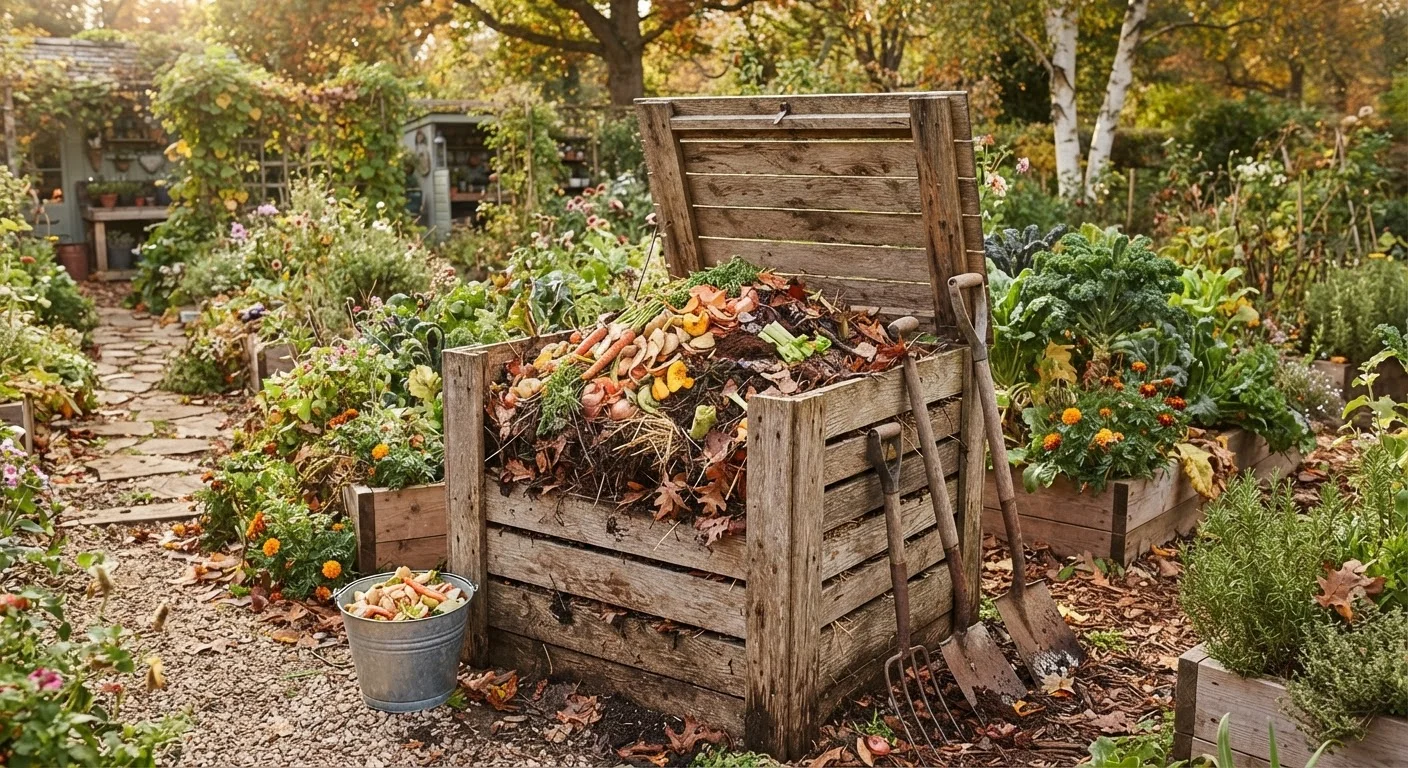
Why Composting Is Worth Your Time
Home composting is one of the simplest ways to reduce household waste and give your garden a meaningful, free upgrade. The average US household discards a significant amount of food scraps each week - peels, cores, coffee grounds, eggshells - material that can be redirected from the landfill and turned into a dark, crumbly soil amendment called finished compost.
Finished compost improves soil in multiple ways: it loosens compacted clay, helps sandy soil retain moisture, introduces beneficial microbial life, and slowly releases nutrients plants can use. If you're curious how compost fits into your broader soil strategy, see our soil type guide for context on amendments and soil structure.
You don't need a large yard, expensive equipment, or prior gardening experience to start composting. A modest pile in a corner of your yard - or even a contained bin on a patio - is enough to get started.
What you will need
What to Add (and What to Leave Out)
Composting works through microbial decomposition, and those microbes need two categories of material to thrive:
- Greens (nitrogen-rich): Fruit and vegetable scraps, coffee grounds and paper filters, tea bags (without staples), fresh grass clippings, and plant trimmings.
- Browns (carbon-rich): Dry leaves, cardboard torn into small pieces, newspaper, paper bags, straw, and wood chips.
A healthy pile aims for roughly two to three parts browns for every one part greens by volume. Too many greens and the pile turns slimy and smells; too many browns and decomposition slows noticeably.
Never Compost These Materials
Meat, fish, dairy, and oily foods break down slowly, create strong odours, and attract rodents and other wildlife to your pile. Pet waste and human waste can introduce harmful pathogens that home composting temperatures may not reliably eliminate. Diseased plant material can spread pathogens back to your garden when compost is applied - dispose of it in the trash instead.
Keep these materials out entirely: meat, fish, and bones; dairy products; oily or greasy foods; pet waste; diseased plants; and anything treated with pesticides. These materials either attract pests, introduce pathogens, or impede decomposition.
How to Set Up and Manage Your Pile
Choose a location that gets partial shade - a spot in full sun dries out too quickly in summer - and is reasonably accessible from your kitchen door. You'll want to drop scraps frequently, so convenience matters.
Choose or build a compost bin
A simple open pile works, but a contained bin retains moisture and heat more efficiently - both of which speed decomposition. Wire mesh formed into a cylinder, a wooden pallet structure, or a plastic tumbler bin all work well. Aim for a minimum volume of about one cubic yard (3 ft × 3 ft × 3 ft), which is large enough to generate meaningful heat.
Layer your materials
Start with a 3-4 inch layer of coarse browns (dry leaves, straw, small sticks) at the base to allow airflow from below. Add a 2-inch layer of greens on top, then alternate browns and greens as you add new material. Burying fresh food scraps under a layer of browns discourages flies and odours.
Maintain moisture and aeration
Your pile should feel about as moist as a wrung-out sponge - damp but not dripping. If it dries out, add water or more green material. If it's waterlogged, mix in dry browns and consider covering during heavy rain. Turn the pile every one to two weeks using a fork, moving outer material toward the centre to expose it to heat and microbes.
Monitor pile temperature
An active compost pile generates heat - often between 130°F and 160°F (54°C-71°C) at its core. This warmth is a sign that microbial activity is high and decomposition is proceeding well. If you reach into the pile and it feels distinctly warm, that's a good sign. A compost thermometer gives a more precise reading and takes the guesswork out of monitoring.
Harvest and use your finished compost
Compost is ready when it is uniformly dark brown, has an earthy smell (similar to forest soil), and you can no longer identify any original input materials. If the pile still has partially broken-down chunks, screen them out with a piece of wire mesh and return them to the active pile. Apply finished compost 1-2 inches deep to garden beds, or blend it into planting soil at a ratio of roughly one part compost to three parts existing soil. For a full picture of how compost supports food growing, see our vegetable garden guide.
Once your compost is finished - dark brown, crumbly, and earthy-smelling - mix it into garden beds before planting, use it as a mulch layer, or blend it into potting mix for containers. Our container gardening guide covers how to use homemade compost in pots and planters effectively.
Speed Things Up With a Starter
If your pile seems slow to get going, add a thin layer of finished compost or garden soil - both introduce the microbial communities that drive decomposition. Keeping a steady supply of both greens and browns on hand, rather than adding large batches of one type at once, also helps maintain consistent activity throughout the season.
Troubleshooting Common Compost Problems
Even well-managed piles occasionally run into issues. Here's how to diagnose and fix the most common ones:
| Problem | Likely Cause | Fix |
|---|---|---|
| Bad odour (ammonia) | Too many greens | Add more browns; turn the pile |
| Rotten egg smell | Too wet, lacks oxygen | Turn pile; add dry browns |
| Pile not heating up | Too dry or too small | Add water or more greens; build pile larger |
| Pests or rodents | Food scraps exposed on surface | Bury scraps; use a bin with a lid |
Composting integrates naturally with a broader organic garden approach. If you're also managing pest pressure without chemicals, our natural pest control guide pairs well with the soil-health benefits compost provides.
The content provided on our blog site traverses numerous categories, offering readers valuable and practical information. Readers can use the editorial team’s research and data to gain more insights into their topics of interest. However, they are requested not to treat the articles as conclusive. The website team cannot be held responsible for differences in data or inaccuracies found across other platforms. Please also note that the site might also miss out on various schemes and offers available that the readers may find more beneficial than the ones we cover.