

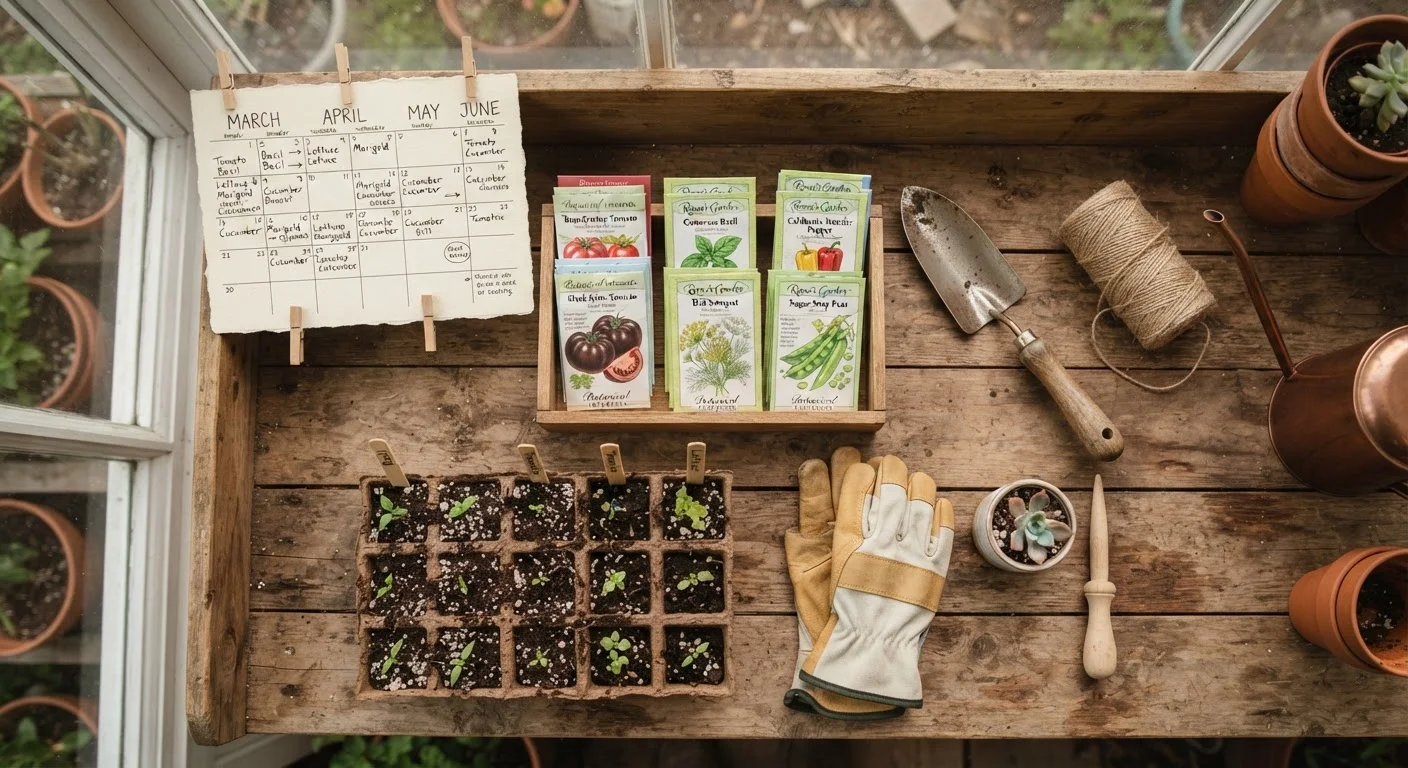
Why a Monthly Calendar Beats Guesswork
Timing is the single variable that separates a productive garden from a frustrating one. Sow tomatoes too early in cold soil and seeds rot; wait too long and your harvest window shrinks. A monthly planting reference - calibrated to your region - solves this problem before it starts.
The US spans USDA Plant Hardiness Zones 1 through 13, which means a gardener in Maine and one in Florida are essentially gardening on different planets. This calendar organizes guidance by broad climate band: Northern/Cool (Zones 3-5), Transitional/Temperate (Zones 6-7), and Southern/Warm (Zones 8-10). Use it alongside your seed packets for precise local timing - see our guide on reading a seed packet for help decoding days-to-maturity and zone guidance.
| USDA Hardiness Zones in the US | Zones 1-13 (USDA Agricultural Research Service) |
| Minimum soil temperature for warm-season seeds | 60°F (15.5°C) (University cooperative extension guidelines) |
| Typical last frost window, Northern zones (4-5) | Mid-April to mid-May (USDA Plant Hardiness Zone Map) |
| Garlic planting window (all zones) | 4-6 weeks before ground freeze (General extension service guidance) |
| Cool-season crop germination temp range | 45-75°F (University extension vegetable guides) |
If you're just getting started, our first-timer's introduction to gardening covers soil prep, seed selection, and what to realistically expect in year one.
Month-by-Month Planting Reference
January - March: Planning and Early Starts
Northern zones: These months are for indoor seed starting. In late February, begin brassicas (broccoli, cabbage, kale) and onions under grow lights, 8-10 weeks before your last frost date. Outdoors, nothing goes in frozen ground.
Transitional zones: Start peppers and tomatoes indoors in late January. By mid-March, direct-sow cool-season crops - spinach, peas, lettuce - into beds once soil is workable above 40°F.
Southern zones: Winter is prime planting season. Direct-sow carrots, beets, radishes, and leafy greens. Set out transplants of broccoli and cauliflower. Plant cool-season annual flowers like snapdragons and pansies.
Last frost date
The average date after which freezing temperatures are unlikely in spring. Used as the anchor point for scheduling warm-season transplants and direct-sowing outdoors.
Direct sow
Planting seeds directly into garden soil rather than starting them indoors and transplanting. Best for crops that don't tolerate root disturbance, like carrots, beets, and beans.
Bolting
When a cool-season plant prematurely sends up a flower stalk in response to heat or long days, causing leaves to turn bitter. Common in lettuce, spinach, and cilantro.
Succession sowing
Planting the same crop every two to three weeks instead of all at once, so harvests are staggered over a longer period rather than arriving all at the same time.
Row cover
A lightweight fabric laid over crops to trap warmth and protect plants from frost, wind, and insects. Allows light and water through while extending the growing season.
April - June: Prime Planting Season
Northern zones: After the last frost (typically mid-May in Zone 4-5), transplant tomatoes, peppers, squash, and cucumbers outdoors. Direct-sow beans and corn once soil hits 60°F. Herbs like basil go out last - they're frost-sensitive.
Transitional zones: April is ideal for direct-sowing warm-season crops. Transplant tomatoes and peppers after mid-April. By June, succession-sow green beans every two weeks to extend harvest.
Southern zones: Switch to heat-tolerant herbs (rosemary, thyme, lemongrass) and warm-season vegetables. Plant sweet potatoes in May. Cool-season crops that haven't been harvested should be pulled before summer heat causes bolting.
July - September: Summer Harvests and Fall Planning
All zones: July and August are harvest-heavy months for summer crops. In late July, begin planning the fall garden. Count backwards from your first expected frost to determine transplant dates for fall brassicas.
Northern zones: Direct-sow fast-maturing crops (radishes, spinach, arugula) by mid-August for a fall harvest before frost.
Southern zones: Start warm-season crops again in September as temperatures moderate. Fall tomatoes and peppers thrive in Zones 8-10.
October - December: Winding Down and Winter Prep
Northern zones: After the first frost, clear spent plants and compost healthy material. Plant garlic in October for next year's crop - it's one of the most rewarding fall tasks. Mulch beds to protect soil structure.
Transitional zones: Plant garlic and onion sets. Direct-sow spinach and cold-hardy lettuces under row cover for extended harvest into December.
Southern zones: October through December mirrors the early-spring window. Replant cool-season vegetables and herbs. This is also the time to start perennial herbs from seed or division.
For a full task breakdown beyond planting, pair this calendar with our seasonal garden checklist, which covers watering, fertilizing, and cleanup month by month. And because a productive garden pairs with a well-maintained home, our home maintenance calendar keeps both your house and yard on track together.
The content provided on our blog site traverses numerous categories, offering readers valuable and practical information. Readers can use the editorial team’s research and data to gain more insights into their topics of interest. However, they are requested not to treat the articles as conclusive. The website team cannot be held responsible for differences in data or inaccuracies found across other platforms. Please also note that the site might also miss out on various schemes and offers available that the readers may find more beneficial than the ones we cover.