

Why the Seed Packet Is Your First Garden Tool
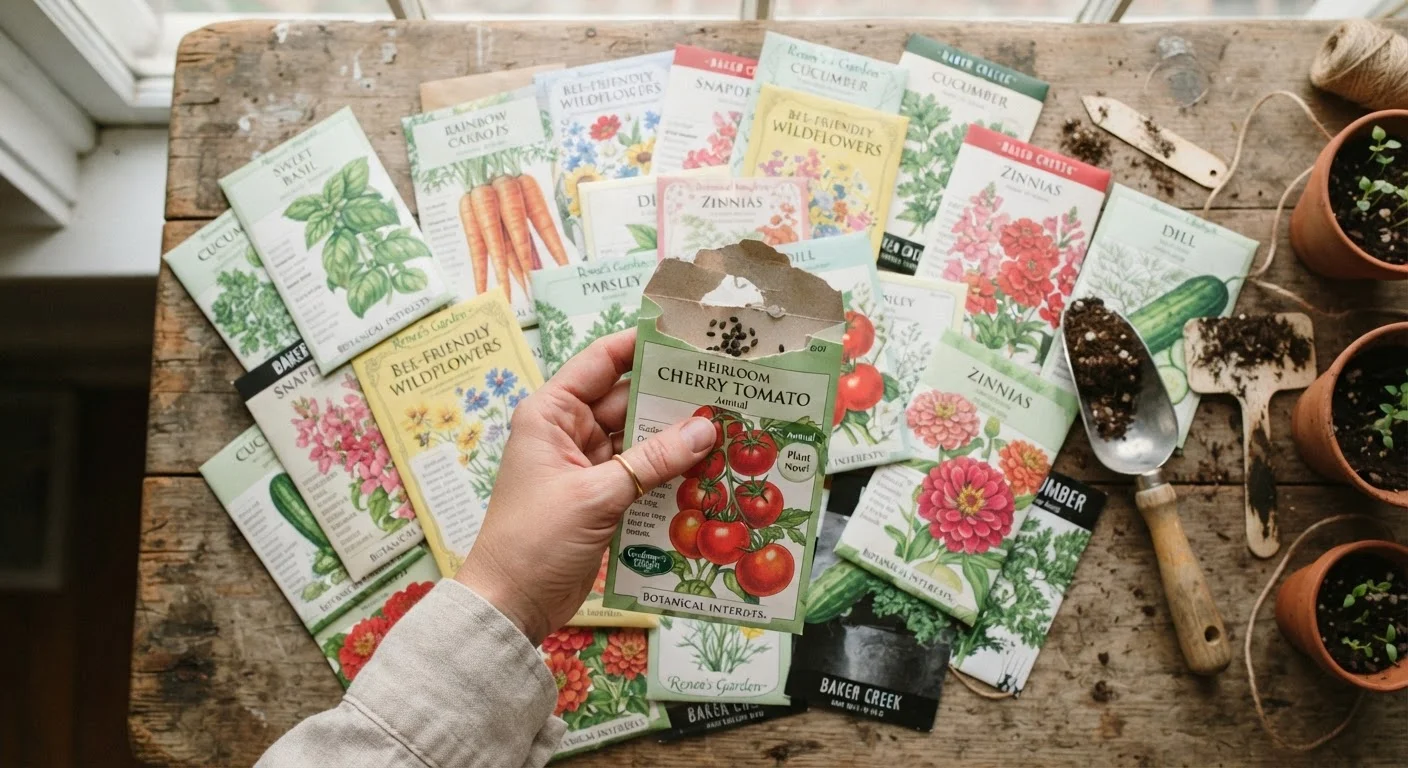
Most beginners scan a seed packet for the photo and the plant name, then set it aside. That's a missed opportunity. A well-printed seed packet functions as a condensed growing guide - one written specifically for that variety, not gardening in general. If you're just getting started, learning to read these labels will save you from the most common planting mistakes before they happen.
The information is standardized enough to follow a predictable layout once you've read a few packets. Here's what each section means and how to use it.
| Days to Germination | Time from sowing until seedlings emerge (range, e.g. 7-14 days) |
| Days to Maturity (DTM) | Days from transplant or direct sow to harvest-ready |
| Planting Depth | How deep to place seeds in soil; small seeds often need surface light |
| Spacing | Distance between plants and between rows after thinning |
| Sun Requirement | Full sun (6+ hrs), Partial shade (3-6 hrs), Full shade (<3 hrs) |
| Hardiness Zone | USDA zone range for perennials; annuals typically list none (USDA Plant Hardiness Zone Map) |
| Packed For / Sell-By | Season or year seeds were packed; guides storage and viability expectations |
Decoding the Key Label Fields
Days to Germination
This tells you how long to expect before seedlings emerge from the soil - typically a range like 7-14 days. Temperature, soil moisture, and seed freshness all affect this. If nothing has sprouted by the outer end of the range, check your soil temperature before assuming the seeds failed.
Days to Maturity
Often labeled DTM, this figure counts the days from transplanting (for crops started indoors) or from direct sowing (for crops sown outside) until harvest. A tomato marked 75 days is not ready 75 days after you buy the packet - it's 75 days from when a transplant goes in the ground. Misreading DTM is one of the most common reasons gardeners run out of season before their crops finish. Cross-reference your last expected frost date with your local monthly planting calendar to confirm the math works for your region.
Planting Depth
Depth is not a suggestion. Seeds germinate best when their seed coat is at the right distance from soil warmth and moisture. Tiny seeds like lettuce may be pressed just to the surface; large seeds like squash are typically sown 1 inch deep. Planting too deep starves small seeds of the light some require to trigger germination.
Spacing and Thinning
Two numbers appear here: seed spacing (how far apart to sow) and row spacing (distance between rows). When direct sowing, you may sow more densely and then thin - removing weaker seedlings - to reach the final recommended spacing. Crowded plants compete for water, light, and nutrients, which reduces yield and invites disease.
Sun Requirements
Packets use three standard categories: full sun (6+ hours of direct sun daily), partial shade (3-6 hours), and full shade (fewer than 3 hours). Matching your planting site to this requirement is one of the most reliable predictors of success. If you're unsure how much sun your yard gets, observe the spot across a full day before planting.
USDA Hardiness Zone
Annual vegetables don't always list zones because they're replanted each season regardless. But perennial flowers, herbs, and some vegetables will note a zone range. The USDA Plant Hardiness Zone Map divides the US by average annual minimum winter temperatures. A perennial listed for zones 5-9 won't reliably survive winters in zone 4. The USDA makes its zone map freely available online.
Days to Maturity (DTM)
The number of days from transplanting or direct sowing until a crop is ready to harvest. This figure is variety-specific and assumes reasonably optimal growing conditions.
Germination
The process by which a seed sprouts and begins to grow. Successful germination depends on adequate moisture, appropriate temperature, and correct planting depth.
Thinning
Removing extra seedlings after germination so remaining plants are spaced at the recommended distance. Thinning improves airflow, reduces competition, and typically increases yield.
USDA Hardiness Zone
A geographic designation based on average annual minimum winter temperatures, used to indicate whether a perennial plant can survive the winter in a given region. Zones range from 1 (coldest) to 13 (warmest) across the US.
Direct Sow
Planting seeds directly into outdoor garden soil rather than starting them indoors in containers. Many root vegetables and fast-maturing crops perform best when direct sown.
Seed Viability
The ability of a seed to germinate successfully. Viability declines over time and varies by species; proper cool, dry storage can extend the usable life of many seeds.
Packed For / Sell-By Date
Seeds lose viability over time. Most packets display the year they were packed or a "plant by" season. Viability varies widely by species - onion seeds decline quickly, while tomato and squash seeds often remain usable for several years when stored cool and dry. If you're working with older seeds, sow more densely to account for lower germination rates. For details on what happens when seedlings do emerge but struggle, see why seedlings fail before reaching the garden.
Putting the Information to Work
Once you can parse a seed packet fluently, planning a garden becomes considerably more logical. You'll know which crops need to be started indoors weeks before your last frost (look for long DTM combined with "start indoors X weeks before transplanting" instructions), which can be directly sown, and which are too cold-sensitive to plant until soil temperatures rise. If you're weighing whether to start from seed at all, our guide on seeds versus transplants walks through the trade-offs clearly.
Keep a simple notebook or phone note with each variety you plant, the packet's key figures, and your actual sow date. Comparing that record to your results at season's end - what germinated well, what ran long, what underperformed - turns each growing season into useful data for the next.
For a broader look at building out a productive plot using all of this knowledge, the complete vegetable garden guide is a thorough next step.
The content provided on our blog site traverses numerous categories, offering readers valuable and practical information. Readers can use the editorial team’s research and data to gain more insights into their topics of interest. However, they are requested not to treat the articles as conclusive. The website team cannot be held responsible for differences in data or inaccuracies found across other platforms. Please also note that the site might also miss out on various schemes and offers available that the readers may find more beneficial than the ones we cover.