

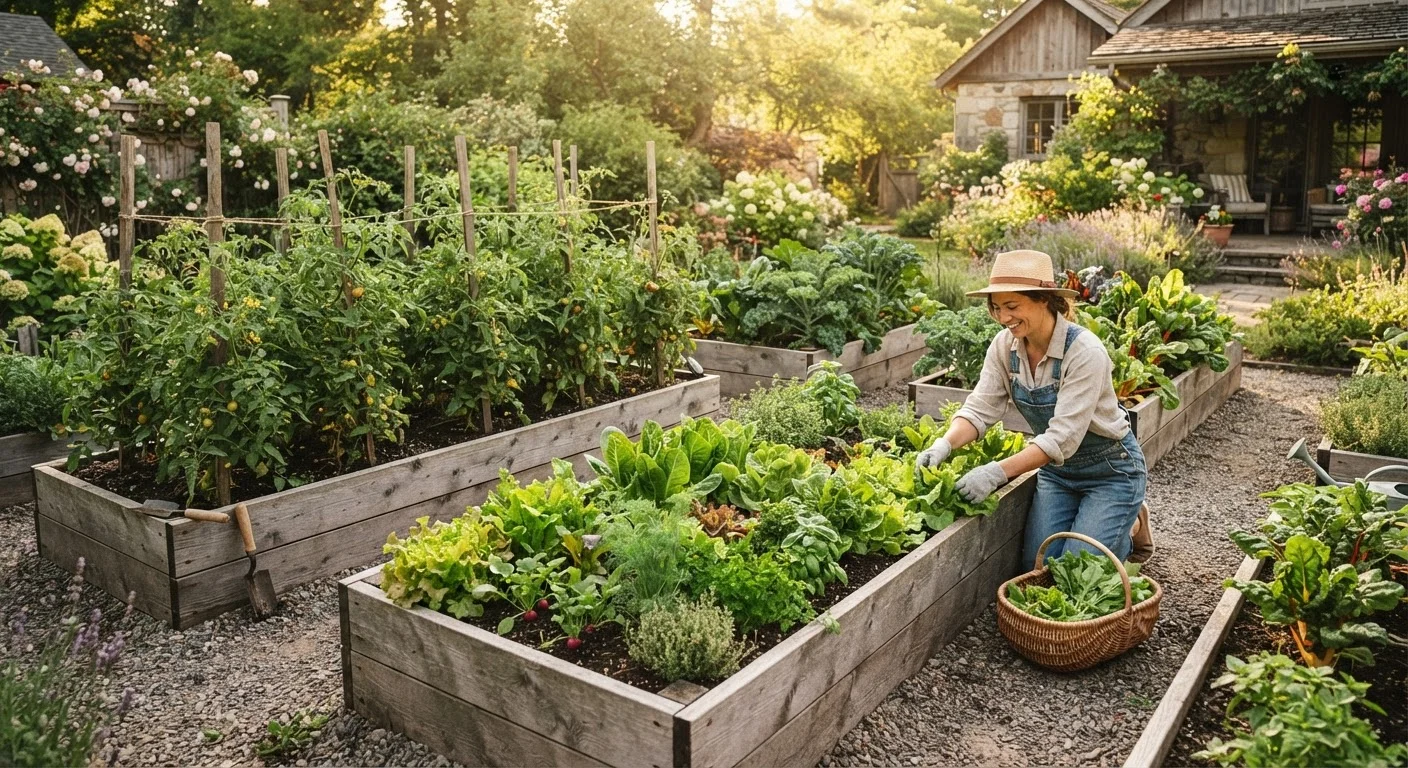
Choosing the Right Site
The single biggest factor in vegetable garden success is sunlight. Most food crops - tomatoes, peppers, squash, beans, and root vegetables - need a minimum of six hours of direct sun per day, and eight hours is better. Walk your yard at midday and note where shadows fall from trees, fences, and the house itself; that observation will save you from planting in the wrong spot.
Beyond light, consider proximity to a water source. Running a hose 100 feet every day is a chore that eventually gets skipped. Siting the garden near an outdoor spigot - or planning a simple drip-irrigation setup - turns watering into a five-minute task rather than a workout.
Drainage matters too. Vegetables grown in soil that stays waterlogged will rot at the roots. If your yard has a low-lying, puddle-prone area, either choose a different spot or plan to build raised beds (see below) to lift roots above the wet zone.
Before you break ground, observe your site across a full day - not just at noon. Morning shade from a fence can disappear by 10 a.m., giving you more usable sun than a quick glance suggests.
Many gardeners underestimate available light by checking only once; a full-day observation gives an accurate picture and prevents poor site selection.
When building a raised bed, fill the bottom 4-6 inches with coarse wood chips or straw before adding soil mix. As the organic matter breaks down, it feeds the bed from below - a technique called hugelkultur.
This approach improves drainage, adds long-term fertility, and reduces the volume of expensive soil mix required to fill a deep bed.
If your outdoor space is limited, the principles here still apply - our guide to container gardening shows how to adapt them for patios and balconies.
Planning Your Garden Layout
Resist the urge to go big in year one. A 4×8-foot or 4×12-foot raised bed - or an equivalent in-ground plot - is genuinely manageable and will produce more food than many beginners expect. You can always expand once you've learned the rhythms of your particular yard and climate.
When deciding what to grow, prioritize vegetables your family actually eats and that offer good value compared to store prices. Tomatoes, lettuces, cucumbers, green beans, and herbs such as basil and parsley are perennial beginner favorites because they're productive in limited space and respond visibly to good care.
Pair tall crops (corn, indeterminate tomatoes, trellised cucumbers) on the north side of the bed so they don't shade shorter plants. Group plants with similar water needs together. For a season-by-season planting reference tailored to your region, bookmark our month-by-month planting calendar so you're never guessing when to sow.
Start with a Garden Map on Paper
Sketch your beds to scale before buying a single seed packet. Mark compass directions so you can position tall plants correctly, and note which beds you'll rotate crops through each year. Crop rotation - moving plant families to different beds annually - reduces the buildup of soil-borne pests and diseases without any chemical intervention.
Building and Amending Your Soil
Soil is where most gardens succeed or fail. Before adding anything, purchase an inexpensive soil test kit from a garden center or send a sample to your local cooperative extension service (most land-grant universities operate one). The test tells you your soil's pH and major nutrient levels so you amend with purpose rather than guessing.
Most vegetables thrive in soil with a pH between 6.0 and 7.0. If your soil is too acidic (below 6.0), ground limestone raises pH. If it's too alkaline, elemental sulfur lowers it. Work amendments in several weeks before planting so they have time to integrate.
Regardless of your native soil type, adding 2-4 inches of finished compost and working it into the top 12 inches dramatically improves structure, drainage, and fertility. Making your own compost is straightforward and cost-effective - our companion piece on composting at home walks through exactly what to add and how to manage a pile.
6.0-7.0
Ideal soil pH range for most vegetables
Cooperative extension soil guides across the US consistently identify this range as optimal for nutrient availability in vegetable crops.
1 inch
Weekly water needed by most vegetable crops
The National Gardening Association cites approximately one inch per week as the standard guideline for vegetable garden irrigation.
2-3 inches
Recommended mulch depth around vegetable plants
University extension research shows this depth suppresses the majority of annual weed germination while retaining meaningful soil moisture.
Planting: Seeds vs. Transplants
Some crops are best started directly in the ground from seed: carrots, beets, beans, peas, and radishes resent root disturbance and are quick enough that a head start isn't needed. Others - tomatoes, peppers, eggplant, and many brassicas - require a long growing season and benefit from being started indoors 6-10 weeks before your last frost date, or purchased as transplants from a nursery.
When transplanting starts, water the cell pack thoroughly before removing plants, and set them in the ground at the same depth they grew in the container (tomatoes are an exception - burying the stem deeper encourages additional root growth). Water in immediately after planting and provide shade for a day or two if temperatures are high.
Watch for Late-Frost Dates Before Transplanting
Warm-season crops like tomatoes, peppers, and basil are killed by frost. Check your local last-frost date through your state's cooperative extension service before moving transplants outdoors. Hardening off - gradually exposing seedlings to outdoor conditions over 7-10 days - reduces transplant shock and improves survival rates significantly.
Direct-sow seeds at the depth indicated on the seed packet - typically two to three times the seed's diameter. Label rows immediately; small seedlings are nearly indistinguishable, and unlabeled beds cause confusion later.
Watering, Feeding, and Ongoing Care
Most vegetables need roughly one inch of water per week from rain or irrigation combined. The key is to water deeply and less frequently rather than shallowly every day. Deep watering pushes moisture 6-8 inches into the soil, encouraging roots to follow it downward, which makes plants more drought-tolerant between sessions. A simple rain gauge helps you track what nature provides so you supplement only as needed.
Drip irrigation or soaker hoses deliver water directly to the root zone and keep foliage dry - a meaningful advantage because wet leaves invite fungal diseases. If you hand-water, water in the morning so the soil surface dries by afternoon.
For feeding, a balanced granular fertilizer worked in at planting, followed by a side-dressing of compost or a diluted liquid fertilizer mid-season, supports most vegetable crops without overcomplicating the routine. Heavy feeders like tomatoes and corn may benefit from additional nitrogen applications; light feeders like beans and peas often need nothing extra.
Mulching - applying 2-3 inches of straw, shredded leaves, or untreated wood chips around plants - suppresses weeds, retains moisture, and moderates soil temperature. It is one of the highest-return tasks in the garden.
Harvesting and End-of-Season Cleanup
Harvest regularly. Many vegetables - zucchini, beans, cucumbers, and summer squash - slow or stop production if ripe fruit is left on the plant. Check the garden every two to three days during peak season. Harvesting in the morning, when produce is coolest and firmest, extends its refrigerator life.
When the growing season ends, remove spent plant material promptly. Diseased tissue should go into the trash, not the compost pile, to avoid spreading pathogens. Healthy debris - non-diseased stems, roots, and leaves - can be chopped and composted. Use our seasonal garden checklist to guide fall cleanup, cover-crop planting, and bed preparation so next spring's garden starts from a stronger foundation.
End-of-season is also the time to note what worked, what underperformed, and what you'd plant differently. A simple journal or photo record of each bed pays dividends when planning next year's layout.
Permits Are Rarely Required for Garden Beds
Standard in-ground or raised vegetable garden beds generally don't require building permits. However, if you plan to install a permanent irrigation system connected to your home's water supply, or construct a tall trellis structure, check your local municipality's guidelines. Some HOA communities also have rules about front-yard food gardens - confirm before you dig.
Growing your own food is one of the most tangible connections between household effort and household savings. For more ideas on stretching your family's resources, explore our family budgeting hub.
The content provided on our blog site traverses numerous categories, offering readers valuable and practical information. Readers can use the editorial team’s research and data to gain more insights into their topics of interest. However, they are requested not to treat the articles as conclusive. The website team cannot be held responsible for differences in data or inaccuracies found across other platforms. Please also note that the site might also miss out on various schemes and offers available that the readers may find more beneficial than the ones we cover.