

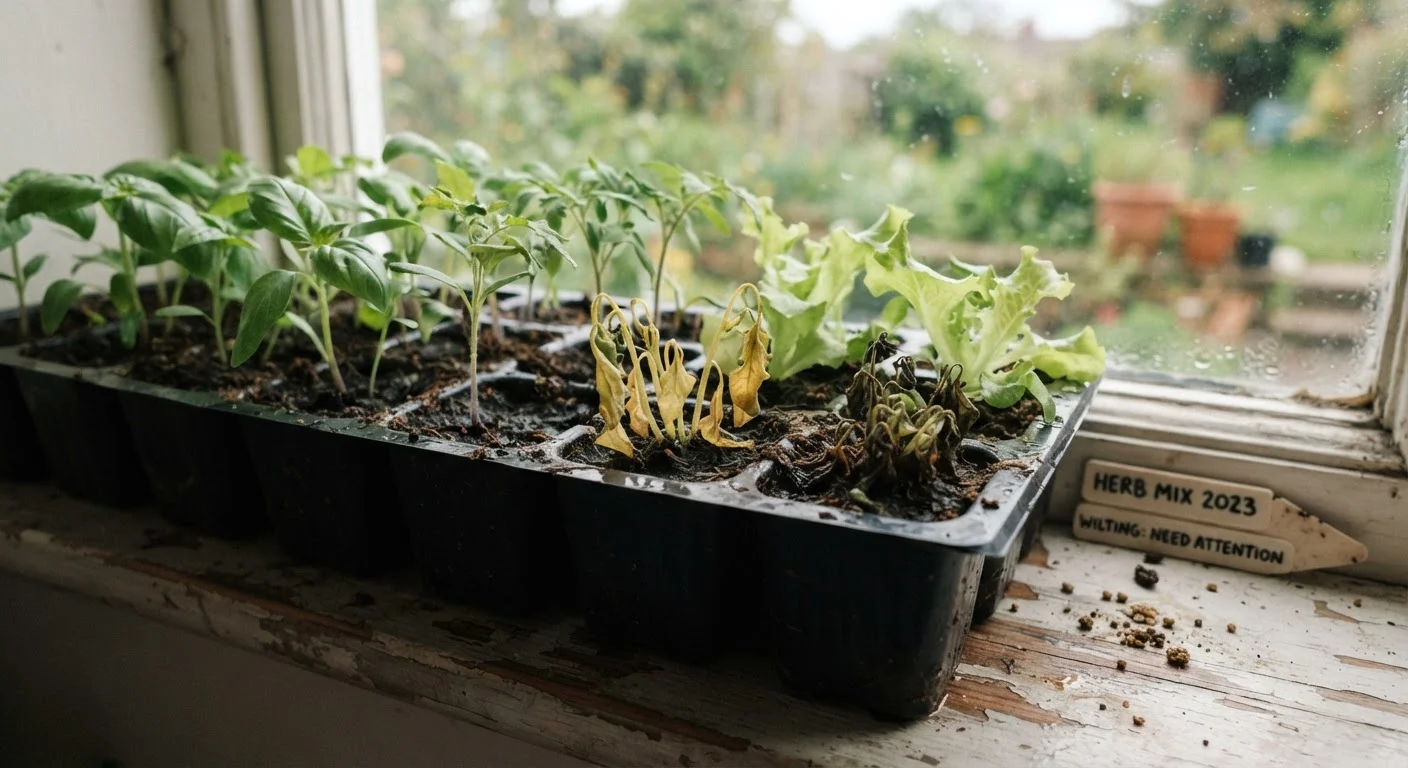
Why Seedlings Are More Fragile Than They Look
Starting seeds indoors feels like a head start on the growing season - and it is. But the gap between a sprouted seed and a garden-ready transplant is where most beginners lose momentum. The good news: seedling failure is rarely mysterious. The causes are consistent, well-understood, and fixable once you know what to look for.
If you're new to growing from seed, understanding why seedlings fail is just as important as knowing what they need to thrive. This article walks through the most common mistakes - and how to correct each one before your next tray hits the potting bench.
Starting seeds in regular potting mix or garden soil instead of a dedicated seed-starting medium.
Why it happens: Many beginners assume any soil will work, or they reuse soil from last season's containers to save money.
Providing too little light, leading to leggy, weak seedlings that can't support themselves.
Why it happens: A sunny windowsill seems like enough light, but even south-facing windows typically deliver far less intensity than seedlings need, especially in late winter and early spring.
Overwatering - keeping the growing medium constantly saturated rather than evenly moist.
Why it happens: Attentive new growers check on seedlings frequently and water on a schedule rather than in response to actual soil conditions.
Skipping or rushing the hardening-off process before transplanting seedlings outdoors.
Why it happens: Gardeners are eager to get plants in the ground, especially after a long indoor growing season, and don't realize that indoor seedlings are genuinely unprepared for outdoor conditions.
Planting seedlings too deeply or too shallowly when transplanting into the garden.
Why it happens: Without clear guidance, many gardeners guess at planting depth - burying stems completely to stabilize plants, or setting rootballs too high above the soil surface.
Sowing seeds too early, producing oversized seedlings that struggle in the transition to the garden.
Why it happens: Eager gardeners start seeds weeks ahead of the recommended schedule, believing bigger seedlings will perform better.
Light, Watering, and Timing: The Variables That Matter Most
Three environmental factors account for the majority of seedling losses: light intensity, moisture levels, and transition timing. Each one is easy to misjudge, especially when growing indoors where conditions feel controlled but are rarely ideal.
~80%
of indoor seedling failures linked to light or water
Cooperative extension programs across the US consistently identify inadequate light and improper watering as the dominant causes of failed seed starts among home gardeners.
7-10 days
minimum hardening-off period recommended
University extension guidelines for vegetable and flower transplants recommend at least one week of gradual outdoor exposure before full transplant into the garden.
On watering specifically, the instinct to keep soil visibly moist is understandable but counterproductive. Roots need oxygen as much as water, and perpetually wet soil deprives them of both while creating ideal conditions for fungal disease. Our guide on how much water is actually enough explains the soil-moisture balance in practical terms.
Timing matters at the sowing stage, too. Reading your seed packet carefully tells you exactly how many weeks before your last frost date to start each variety - information that directly affects whether seedlings are the right size and maturity for transplant.
Damping Off Can Wipe Out an Entire Tray Overnight
Damping off is a fungal condition that causes seedlings to collapse at the soil line, often spreading rapidly across a whole tray. It thrives in wet, poorly ventilated conditions. To reduce risk, use sterile seed-starting mix, avoid overwatering, ensure good air circulation (a small fan on low works well), and don't crowd seedlings. Once damping off takes hold, affected seedlings cannot be saved - prevention is the only reliable strategy.
For a broader look at what catches first-time growers off guard, the gardening truths that surprise most beginners addresses some of the most persistent misconceptions about seedling care.
The content provided on our blog site traverses numerous categories, offering readers valuable and practical information. Readers can use the editorial team’s research and data to gain more insights into their topics of interest. However, they are requested not to treat the articles as conclusive. The website team cannot be held responsible for differences in data or inaccuracies found across other platforms. Please also note that the site might also miss out on various schemes and offers available that the readers may find more beneficial than the ones we cover.