

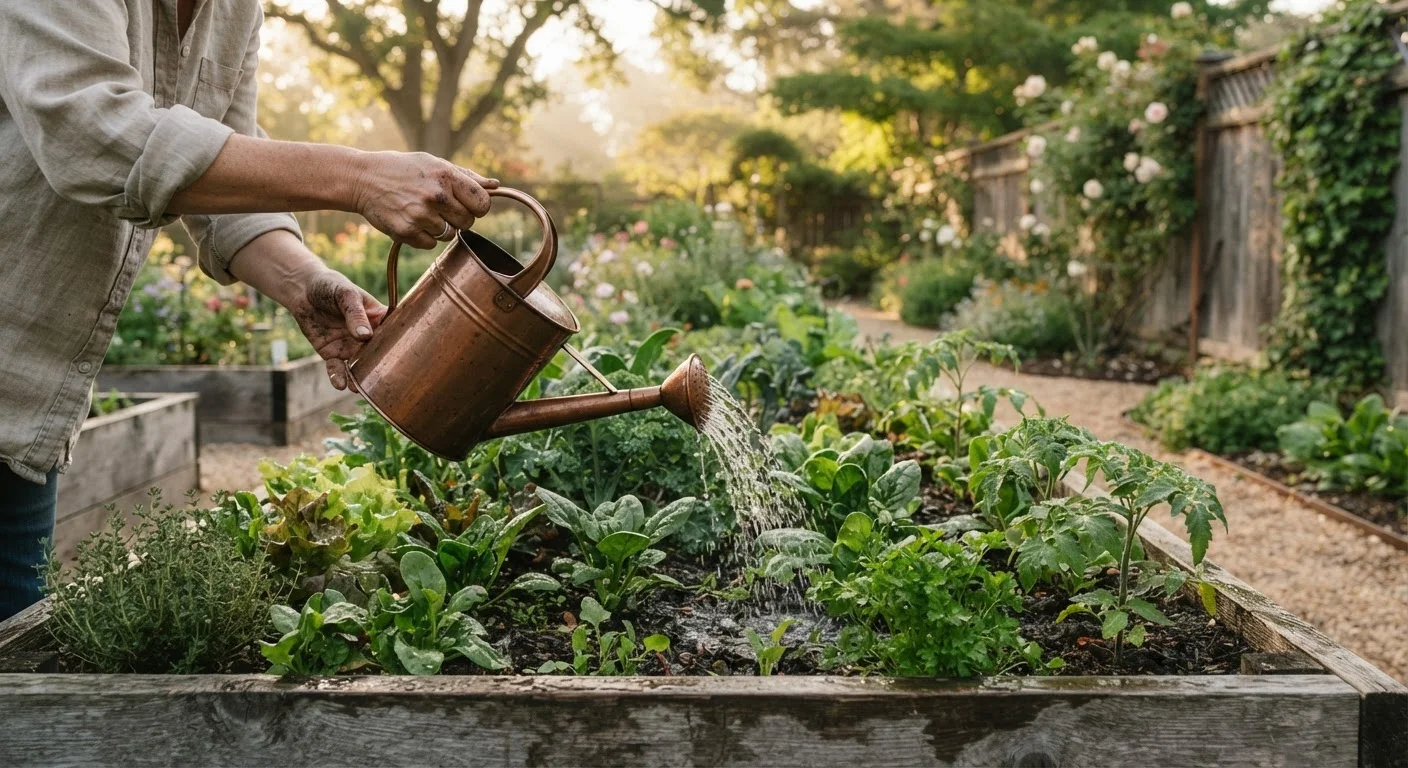
Why Watering Is the Most Misunderstood Garden Task
Ask most beginning gardeners what killed their plants, and the honest answer is often water - too much, too little, or at the wrong time. Watering feels intuitive, but it is actually one of the most variable and nuanced skills in gardening. There is no universal answer to "how much is enough" because the right amount depends on your soil, your climate, what you're growing, and the time of year.
The reassuring news is that once you understand the key variables, you can read your garden's signals rather than guessing. That shift - from schedule-following to observation - is what separates thriving gardens from struggling ones. For a broader look at the fundamentals, see our introduction for first-time gardeners.
Use the Screwdriver Test for Quick Depth Checks
After watering, push a long screwdriver straight into the soil. It should slide in easily to 6 inches or more if your watering was deep enough. Resistance indicates dry, compacted soil that hasn't been reached yet. This takes 5 seconds and gives you immediate feedback on your technique.
How Soil Type Shapes Your Watering Needs
Soil is the single biggest factor controlling how water behaves in your garden. Sandy soils drain quickly - water moves through in minutes - so plants growing in them need more frequent, smaller applications. Clay soils hold moisture for much longer but can become waterlogged if overwatered, cutting off oxygen to roots. Loamy soils, which are a balanced mix of sand, silt, and organic matter, drain at a moderate rate and are generally the easiest to manage.
Improving your soil structure is one of the most effective long-term investments you can make in your garden's water efficiency. Adding compost to sandy soils increases water retention; adding it to clay soils improves drainage. For a deeper look at identifying and amending your soil, see what soil type your garden actually needs.
~1 inch
Weekly water most vegetables need
The USDA and most university extension programs cite approximately 1 inch per week as a general baseline for vegetable gardens, combining rainfall and supplemental irrigation.
50%+
Water lost to surface evaporation without mulch
Studies from state agricultural extension services suggest bare soil can lose more than half its surface moisture to evaporation during hot summer days, underscoring the value of mulching.
6-12 in
Recommended watering depth for root zones
Extension horticulturists recommend watering to 6 inches for vegetables and annuals, and up to 12 inches for established shrubs, to encourage deep, drought-resistant root growth.
Reading Your Plants and Soil Before You Water
The most reliable watering tool in any garden is a finger. Press your index finger about 2 inches into the soil near the plant's root zone. If the soil feels cool and slightly moist, hold off. If it feels dry and crumbly, it's time to water. This simple check takes 10 seconds and beats any app or fixed timer.
Watch your plants too. Slight wilting in the afternoon heat on a very hot day is not always a crisis - some plants temporarily droop when transpiration exceeds water uptake, and they recover by evening. Wilting that persists into the cool morning, however, usually indicates genuine drought stress. Conversely, yellowing lower leaves, especially combined with soil that never seems to dry out, often point to overwatering. Common gardening myths include the idea that wilting always means a plant needs water - checking the soil first prevents a well-meaning overwatering mistake.
Applying Water the Right Way
Where and how you apply water matters almost as much as how much you use. Aim water at the soil at the base of plants rather than overhead on leaves whenever possible. Wet foliage, especially overnight, creates conditions favorable for fungal diseases like powdery mildew and blight. Drip irrigation and soaker hoses are practical solutions that deliver water directly to the root zone at a slow, consistent rate that allows soil absorption.
When you do water, water deeply. A thorough, slow application that saturates the root zone is far more beneficial than a quick daily splash. For most garden beds, this means running a soaker hose or watering slowly by hand until you can confirm moisture 6 inches down. For vegetable gardens specifically, consistent deep moisture during fruiting stages directly affects yield quality - more detail on that is covered in our complete vegetable garden guide.
Mulch Dramatically Reduces Watering Frequency
Applying a 2-3 inch layer of organic mulch - such as shredded bark, straw, or wood chips - around plants significantly slows surface evaporation. Mulched beds can retain moisture 50% longer than bare soil in summer heat, reducing how often you need to water without sacrificing plant health.
Special Cases: Containers, Seedlings, and Drought Periods
Container plants operate by different rules. Their root zone is restricted and exposed to heat on all sides, so they dry out far faster than in-ground beds - often daily in summer. Check them every morning and water until it runs freely from drainage holes. Never let containers sit in standing water in saucers for more than an hour.
Seedlings have shallow, delicate root systems that need more frequent light moisture rather than deep infrequent watering. Once they establish and roots extend deeper, gradually shift to a deeper, less frequent schedule. Inconsistent moisture during early seedling stages is a leading cause of failure - our article on why seedlings fail before reaching the garden covers this in more detail. During extended drought, deep watering every 3-4 days is generally more effective than daily light sprinkling.
Frequently Asked Questions
Most vegetable gardens need about 1 inch of water per week, from rain or irrigation combined. During hot, dry stretches that may mean watering every 2-3 days. Always check soil moisture 2 inches down before watering - if it feels moist, wait.
Yellow or mushy lower leaves, a sour or musty soil smell, and standing water that doesn't drain within an hour are common overwatering signs. Wilting can indicate both over- and underwatering, so always check soil moisture before adding more water.
Morning is generally best. Watering early allows foliage to dry before nightfall, reducing fungal disease risk. Evaporation is also lower in the morning than at midday, so more water reaches the roots.
Yes. Container plants lose moisture through drainage holes and through the pot walls if using porous materials like terracotta. In warm weather, containers may need daily watering. Check soil moisture every morning during summer.
Fixed schedules are a useful starting point, but they rarely stay accurate across the season. Temperature spikes, rainfall, plant growth stages, and soil type all shift how much water is actually needed. Use schedules as a baseline, then adjust based on what you observe in the soil.
The content provided on our blog site traverses numerous categories, offering readers valuable and practical information. Readers can use the editorial team’s research and data to gain more insights into their topics of interest. However, they are requested not to treat the articles as conclusive. The website team cannot be held responsible for differences in data or inaccuracies found across other platforms. Please also note that the site might also miss out on various schemes and offers available that the readers may find more beneficial than the ones we cover.