

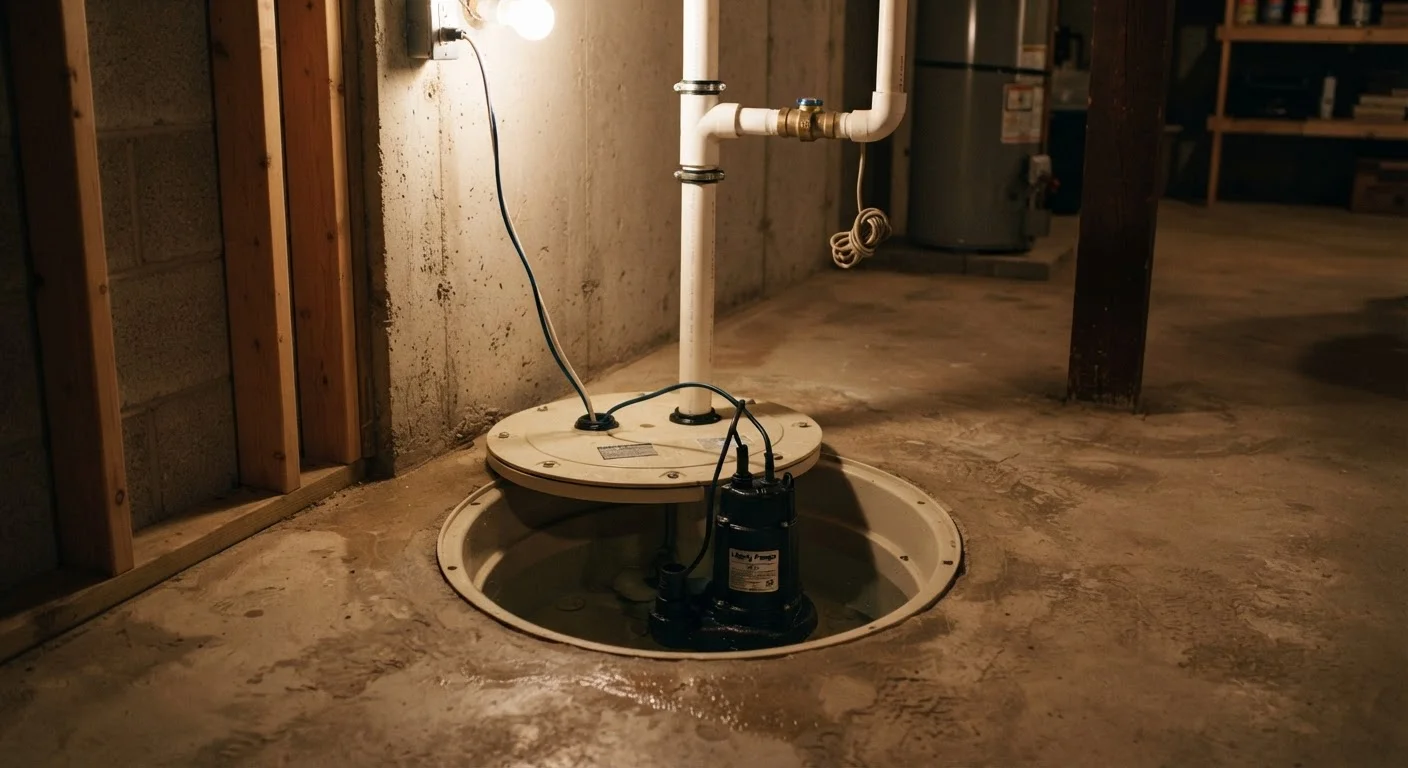
What a Sump Pump Does and How It Works
A sump pump is a device installed in the lowest point of a basement or crawl space - typically inside a dug-out pit called a sump basin or sump pit. As groundwater rises around the foundation (from rain, snowmelt, or a high water table), it drains into this pit rather than seeping across your floor. When the water level reaches a set point, a float switch triggers the pump, which pushes water through a discharge pipe that carries it away from the house - usually to a storm drain, dry well, or a sloped area of the yard.
The system is largely automatic. You won't usually notice it running unless you listen for it during a heavy storm. But that invisible reliability depends on the pump, float switch, and discharge line all functioning correctly - which is why periodic checks matter. For a broader view of how exterior drainage issues compound basement problems, see our guide to gutter failure and prevention.
Types of Sump Pumps
Understanding which type of pump you have helps you maintain and troubleshoot it correctly.
- Submersible pumps: The motor and pump mechanism sit together inside the pit, submerged in water. They are quieter, less likely to clog with debris, and generally preferred for finished basements. The trade-off is a shorter typical lifespan because the motor operates in a wet environment.
- Pedestal pumps: The motor sits on a column above the pit, keeping it dry and accessible. They tend to last longer and are easier to service, but they're noisier and more visually obtrusive.
- Battery backup systems: These are secondary pumps powered by a rechargeable battery. They activate when the primary pump fails or when a power outage knocks out electricity - the exact scenario during a severe storm when you need protection most.
- Water-powered backup pumps: These use municipal water pressure to remove sump water without electricity, but they consume significant water and are not suitable in areas with water restrictions or low water pressure.
Never Discharge Into the Sanitary Sewer
In many US municipalities, it is illegal to connect a sump pump discharge line to the sanitary sewer system. Doing so can overwhelm wastewater treatment capacity and result in fines. Always direct discharge to an appropriate outdoor location - such as a storm drain (where permitted), a dry well, or a graded area of the yard at least ten feet from the foundation. Verify the rules with your local municipality before installation.
How to Test Your Sump Pump
Testing takes about five minutes and should be done at least twice a year - before the spring rainy season and again before fall. Here's how:
- Locate the discharge pipe outlet outside and confirm it isn't blocked by debris, ice, or soil.
- Remove the pit cover (if present) and check that the float switch moves freely and isn't tangled or resting against the pump body.
- Pour water slowly into the pit using a bucket - roughly five gallons - until the float rises enough to trigger the pump. The pump should activate promptly, drain the water, then shut off automatically.
- Observe the discharge outside to confirm water is flowing and exiting away from the foundation.
If the pump doesn't activate, runs continuously, or makes grinding or rattling noises, investigate further before the next rainstorm arrives.
Schedule Your Test Before Storm Season
Mark your calendar to test the sump pump in early March and again in early September. Running the test while the weather is calm gives you time to address any issues before heavy rain arrives. A simple bucket of water and five minutes of attention can prevent thousands of dollars in water damage.
Routine Maintenance You Can Do Yourself
Most sump pump upkeep is straightforward and doesn't require special tools. Add these tasks to your seasonal home checklist - the Seasonal Home Maintenance Checklist for US Families is a useful reference for timing these alongside other household tasks.
- Clean the pit: Remove the pump, rinse the basin, and clear out any silt, gravel, or debris that could clog the intake screen.
- Inspect and clean the intake screen: The small screen or grate at the pump's base prevents debris from entering the mechanism. Rinse it with water; replace it if damaged.
- Check the discharge pipe: Walk the pipe's path and confirm no joints have separated, no sections are sagging, and the outdoor outlet is clear and pointed away from the foundation.
- Test the backup battery: If you have a battery backup system, check the battery charge indicator. Most batteries need replacement every three to five years.
- Confirm the check valve: A check valve on the discharge line prevents pumped water from flowing back into the pit when the pump shuts off. Verify it is oriented correctly (arrow pointing away from the pump) and isn't leaking.
Wrap the discharge pipe outlet with a mesh screen or install a freeze-resistant outlet cover to prevent small animals from nesting inside during dry months - a surprisingly common cause of blocked discharge lines.
Blocked discharge lines are one of the leading causes of pump failure during storms; the blockage prevents water from exiting even when the pump is running perfectly.
Keep a written log of each test date, any issues noticed, and when the pump was last serviced. This record is valuable both for your own planning and for disclosure if you sell the home.
Documentation helps homeowners track the pump's age and service history accurately, reducing the risk of being caught off guard by an aging or neglected system.
When to Call a Professional
Sump pump work intersects with both plumbing and electrical systems. While testing and basic cleaning are DIY-appropriate, certain situations call for a licensed professional:
- Electrical wiring: Sump pumps must be on a dedicated, properly grounded circuit. If your pump is sharing a circuit, tripping breakers, or showing any sign of electrical trouble, contact a licensed electrician. Do not attempt to rewire the circuit yourself.
- Installing a new pump or backup system: Proper installation requires correct pipe sizing, check valve placement, and basin depth. Errors here can create flooding rather than prevent it.
- Persistent or unexplained cycling: If the pump runs constantly or cycles on and off rapidly without heavy rainfall, this may indicate a failed check valve, a plumbing leak feeding the pit, or an incorrectly positioned float - issues that benefit from professional diagnosis.
- Permits and inspections: Some municipalities require permits for sump pit installation or significant plumbing modifications. Check with your local building department before beginning any installation work.
For help deciding which home tasks are safe to handle yourself, our DIY vs. Pro framework offers practical guidance.
Power Outages Are the Greatest Risk
Sump pumps run on electricity, but severe storms - the most common cause of basement flooding - frequently knock out power. A primary pump with no backup is effectively useless during the worst conditions. Consider a battery backup pump or, where feasible, a water-powered backup as an additional layer of protection. Discuss options with a licensed plumber who can assess your pit size and household water pressure.
Signs Your Sump Pump Needs Replacement
Most submersible pumps last roughly seven to ten years under normal conditions; pedestal pumps can last longer. Watch for these signs that replacement may be warranted:
- Age: If your pump is approaching or past ten years old and hasn't been inspected recently, have it evaluated - especially before a wet season.
- Visible rust or corrosion: Surface rust on the housing or connections can indicate internal deterioration.
- Unusual noises: Grinding, rattling, or loud vibration during operation often signals worn bearings or a damaged impeller (the rotating component that moves water).
- Slow drainage: If the pump runs longer than usual to clear the pit, the motor may be losing power or the impeller may be partially blocked.
- Frequent cycling: A pump that turns on and off rapidly - known as short cycling - stresses the motor and shortens its life.
Sump pump replacement is a good time to reassess whether a battery backup system is in place. Investing in redundancy now is considerably less costly than water damage remediation later. This topic fits naturally alongside broader upkeep education covered in our Home Maintenance for First-Time Owners guide.
98%
Basements that experience some water damage
According to figures widely cited in the home inspection industry, nearly all below-grade spaces will encounter some form of water intrusion over their lifetime.
7-10 years
Typical submersible sump pump lifespan
This range is commonly cited by plumbing professionals and reflects average residential use under normal conditions; heavy use or poor maintenance can shorten it.
$10,000+
Average basement flood remediation cost
Water damage restoration costs vary widely based on extent and material affected; industry estimates frequently place average basement flooding remediation in the five-to-ten-thousand-dollar range or higher.
The content provided on our blog site traverses numerous categories, offering readers valuable and practical information. Readers can use the editorial team’s research and data to gain more insights into their topics of interest. However, they are requested not to treat the articles as conclusive. The website team cannot be held responsible for differences in data or inaccuracies found across other platforms. Please also note that the site might also miss out on various schemes and offers available that the readers may find more beneficial than the ones we cover.