

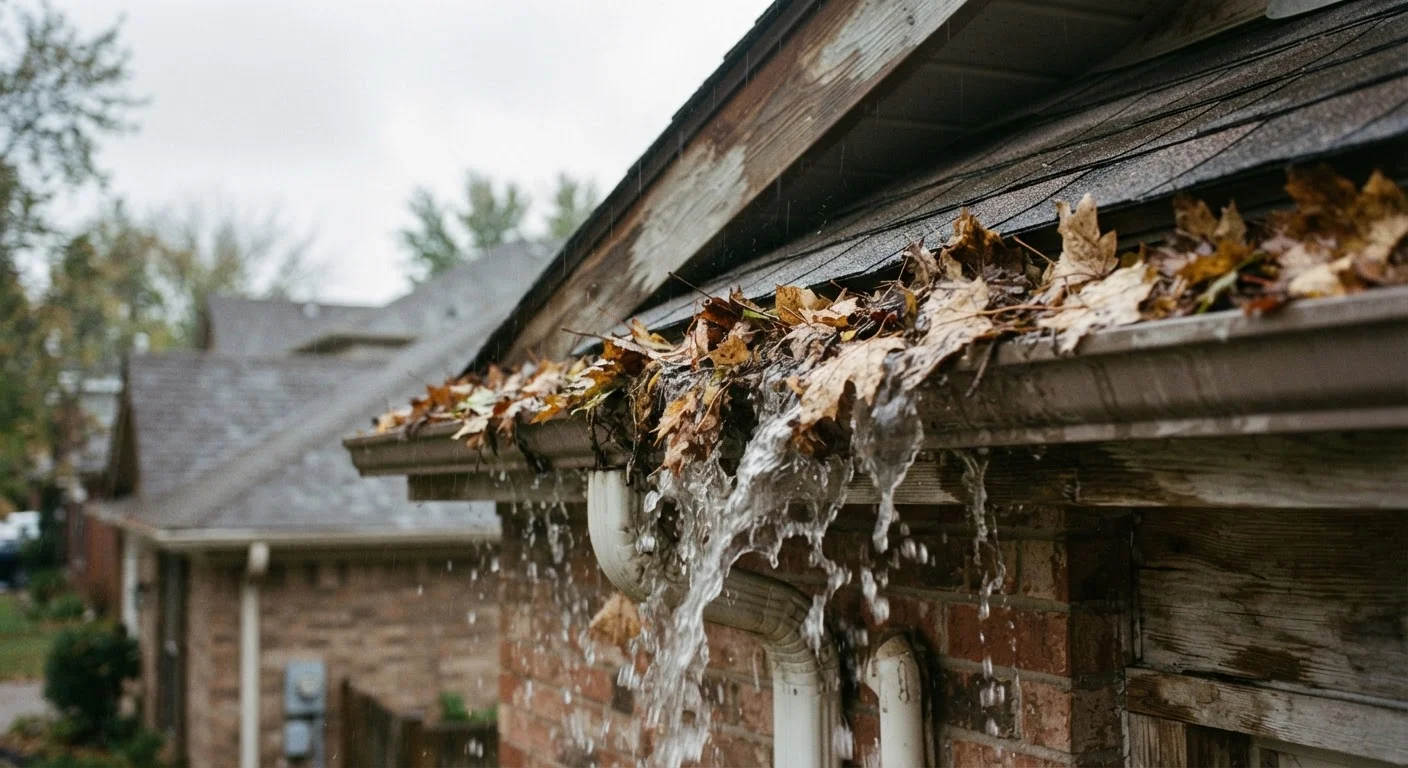
How Gutters Actually Protect Your Home
Gutters do one job: channel rainwater and snowmelt away from your roof edge, walls, and foundation. When they work, you never think about them. When they fail, water finds every vulnerable seam - behind fascia boards, into soffits, along foundation footings, and eventually into basements or crawl spaces.
The signs of moisture intrusion often appear well before a homeowner connects them to a gutter problem. A damp basement corner, paint bubbling on an exterior wall, or soil erosion along the house perimeter can all trace back to a gutter that stopped doing its job months earlier.
Understanding where gutters fail - and why - puts you in a position to catch problems early, before repair bills grow.
Common Gutter Mistakes Homeowners Make
Most gutter failures are predictable and preventable. The mistakes below account for the majority of cases where gutters stop functioning properly.
Cleaning gutters only once a year, or skipping it entirely for multiple seasons.
Why it happens: It's an out-of-sight task - if water appears to drain during rain, homeowners assume the gutters are fine.
Ignoring downspout drainage - gutters flow freely, but water dumps directly against the foundation.
Why it happens: Attention naturally goes to the gutter channel itself; downspout extensions and grading are easy to overlook.
Letting small leaks at joints or end caps go unrepaired season after season.
Why it happens: Minor drips seem insignificant, especially when visible only during rain. Homeowners often plan to fix them "eventually."
Using the wrong hanger spacing, or not replacing failed hangers when gutters start to sag.
Why it happens: Original installation may have used inadequate hanger spacing, or hangers have corroded over time - issues that aren't obvious until a sag appears.
Installing gutter guards and assuming no further maintenance is needed.
Why it happens: Gutter guards are often marketed as a maintenance-free solution, which leads homeowners to stop inspecting gutters altogether.
If you're also addressing water intrusion around windows or tile, our guide on keeping wet areas watertight covers complementary maintenance steps worth pairing with gutter upkeep.
What to Inspect - and When
~$10,000+
Average foundation repair cost
Foundation repairs caused by poor water drainage can run into five figures, according to general contractor cost data - a stark contrast to the low cost of regular gutter maintenance.
2x/year
Minimum recommended cleaning frequency
Most home maintenance authorities recommend cleaning gutters at least twice annually, with additional cleanings for heavily wooded properties.
Inspect gutters at least twice a year: once in late fall after leaves have dropped, and once in early spring before heavy rain season. Walk the perimeter of your home and look for:
- Sagging or pulling away from fascia - indicates failing hangers or rotted wood behind the gutter.
- Rust stains or peeling paint on the exterior wall below the gutter line - a sign of chronic overflow or leaking joints.
- Pooling water or erosion at the base of downspouts - the water is discharging too close to the foundation.
- Plant growth inside the gutter - a reliable indicator of long-standing debris buildup and standing water.
Pair gutter inspections with a broader roof check. Our roof maintenance guide outlines which inspection steps are safe for homeowners to perform from the ground or a low ladder.
Ladder Safety on Single-Story Gutters
Most gutter cleaning on single-story homes can be done safely from a stable extension ladder. Always have a spotter, keep three points of contact, and never lean the ladder against the gutter channel itself - it can bend or pull away. For two-story homes or steep rooflines, consider hiring a professional rather than working at unsafe heights.
Building It Into Your Routine
Gutter maintenance is easiest when it becomes part of a larger seasonal rhythm. Adding it to a seasonal home maintenance checklist ensures it doesn't get skipped during busy stretches.
A few practical habits make a meaningful difference:
- Clean gutters within two weeks of your last local leaf fall.
- Run a garden hose from the far end of each gutter toward the downspout to confirm flow and identify slow drains.
- Check downspout extensions - they should direct water at least four to six feet from the foundation.
- After any major storm, do a quick visual scan for dislodged sections, debris dams, or standing water.
Homes in flood-risk areas should also consider how gutter drainage interacts with basement water management. See our overview of how sump pumps work for context on managing groundwater near the foundation.
Fascia Rot Changes the Repair Scope
If gutters have been overflowing against fascia boards for more than one season, check for rot before simply rehanging the gutter. Soft, discolored, or spongey fascia wood can no longer hold hangers securely and must be replaced first. This work involves carpentry and, on older homes, may reveal additional damage behind the trim - at that point, a licensed contractor should assess the extent of the repair.
The content provided on our blog site traverses numerous categories, offering readers valuable and practical information. Readers can use the editorial team’s research and data to gain more insights into their topics of interest. However, they are requested not to treat the articles as conclusive. The website team cannot be held responsible for differences in data or inaccuracies found across other platforms. Please also note that the site might also miss out on various schemes and offers available that the readers may find more beneficial than the ones we cover.