

Why Catching Moisture Early Matters
Water is patient. It seeps through hairline cracks, condenses behind drywall, and pools invisibly beneath flooring - often for months before anything visibly alarming appears. By the time mold is growing, structural materials may already be compromised and remediation costs can climb significantly.
The good news: moisture rarely arrives without sending advance signals. Learning to read those signals - in your walls, ceilings, basement, and crawl spaces - gives your household a genuine window to act before a manageable problem becomes an expensive one. Poor gutter performance is one of the most common external contributors; our guide on why gutters fail and how to address the problem explains how water at the roofline eventually reaches interior spaces.
The warning signs below are organized to help busy families do a focused walkthrough of their home - no specialized equipment required for most of them.
A Persistent Musty or Earthy Odor
One of the earliest and most reliable moisture indicators is smell, not sight. A musty, earthy, or damp-basement odor - particularly in enclosed spaces like closets, utility rooms, or crawl spaces - suggests microbial activity that precedes visible mold. The smell is caused by volatile organic compounds (VOCs) released by mold and bacteria as they begin breaking down organic materials.
If the odor intensifies after rain, after running the HVAC, or when doors and windows are closed, take it seriously. Open the space up, look for condensation on pipes or walls, and check whether the area has adequate ventilation.
A musty smell is often your home's first warning that moisture has already found a foothold.
Peeling, Bubbling, or Stained Paint
Paint bonds to dry surfaces. When moisture migrates through a wall or ceiling, it disrupts that bond - causing paint to bubble, peel, or form yellowish-brown stains. These stains (sometimes called water rings) are left behind as water evaporates and mineral deposits remain.
On ceilings, stains directly below a bathroom or roof surface suggest a plumbing leak or roof penetration issue. On exterior walls, peeling may indicate inadequate vapor barrier installation or water infiltrating behind siding. Either way, the paint damage itself is not the problem - it's a symptom.
Bubbling or stained paint is a symptom of moisture behind the surface, not just a cosmetic issue.
Warped, Buckled, or Soft Flooring
Wood and laminate flooring absorb moisture over time. If floorboards are cupping (edges curling upward), buckling along seams, or feel soft and spongy underfoot, moisture is likely present - either from below (a damp subfloor or slab) or above (an appliance leak or plumbing issue).
Tile floors can also reveal trouble: grout that crumbles, tiles that have become loose or hollow-sounding when tapped, and caulk that has cracked or separated around tubs and toilets all suggest water is getting beneath the surface layer.
Soft spots and buckling in flooring often mean moisture has already reached the subfloor layer beneath.
Efflorescence on Basement or Foundation Walls
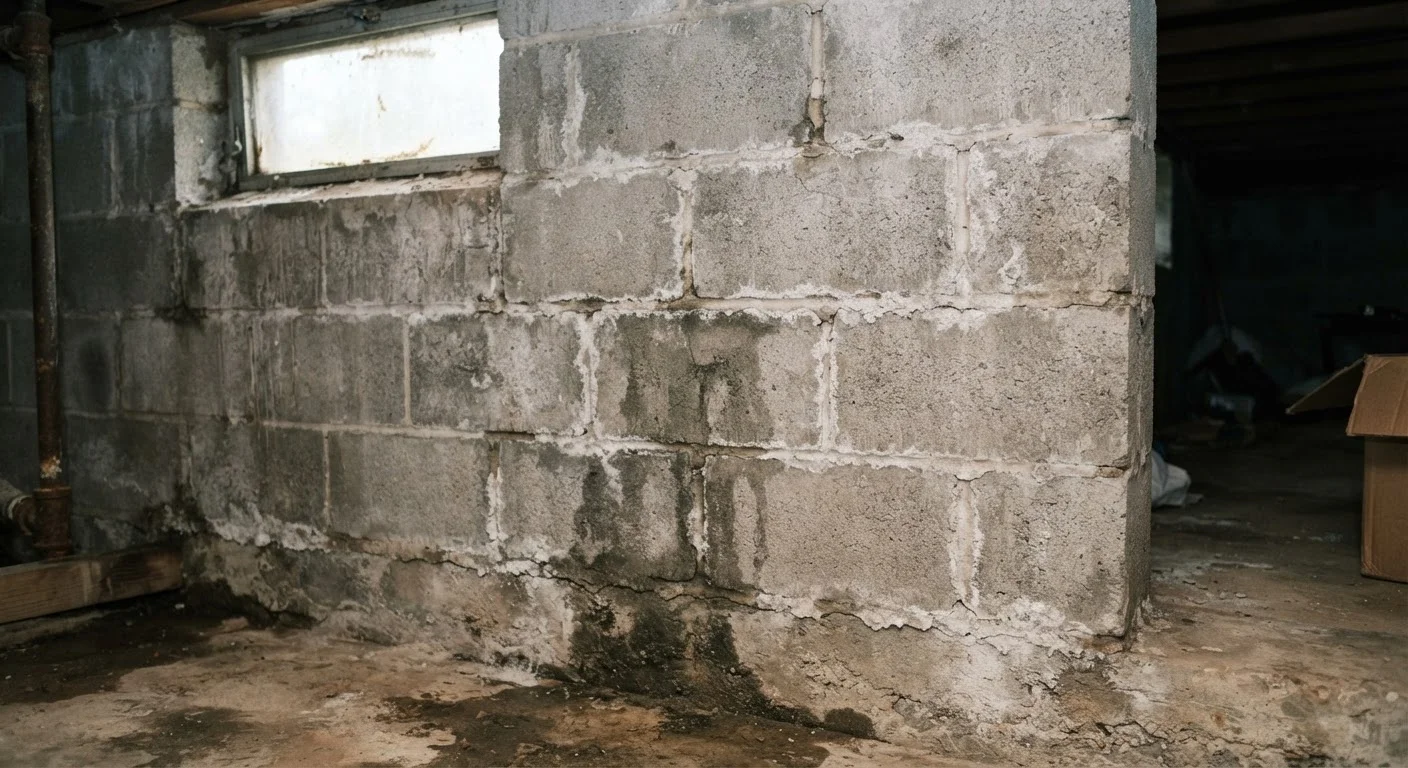
Efflorescence (pronounced ef-loh-RES-ents) refers to the white, chalky, crystalline deposits that appear on concrete or masonry surfaces. It forms when water moves through the material, dissolves soluble salts, and then deposits them on the surface as the water evaporates.
While efflorescence itself is not mold and is not a health hazard, it is a reliable signal that water is regularly moving through your foundation walls. Left unaddressed, that pattern of water infiltration can weaken the masonry over time and create ideal conditions for mold growth.
White chalky deposits on foundation walls confirm that water is regularly passing through the masonry.
Condensation on Windows, Pipes, or Walls
Condensation forms when warm, humid air contacts a cooler surface. Occasional window condensation on cold mornings is normal. But persistent condensation - on interior walls, cold-water pipes, or the interior side of windows throughout the day - points to elevated indoor humidity levels that invite mold and can damage insulation and framing over time.
In crawl spaces and basements, sweating pipes and damp insulation are particularly concerning. A relative humidity above 60% consistently in these spaces creates conditions where mold can develop within days given the right organic material to grow on.
Persistent condensation throughout the day signals indoor humidity levels that actively support mold development.
Visible Rust on Metal Fasteners or HVAC Components
Rust on exposed metal - nail heads popping through drywall, HVAC duct flanges, joist hangers, or water heater fittings - indicates sustained moisture exposure in that area. Metal corrodes only when humidity is consistently high or liquid water is present periodically.
Check your utility room, basement mechanical area, and any exposed framing near exterior walls. Rust on fasteners holding structural elements together can compromise those connections over time, so this sign warrants prompt investigation rather than a cosmetic fix.
Rust on structural fasteners means moisture has been present long enough to begin degrading metal components.
What to Do After You Spot a Warning Sign
Identifying a sign of moisture is only valuable if it leads to action. Start by documenting what you found - photograph stains, note locations, and check whether the issue worsens after rain or during humid seasons. This information helps contractors diagnose the source accurately.
Do a Post-Rain Walkthrough
One of the most effective moisture-detection habits costs nothing: inspect your basement, crawl space, and window wells within 24-48 hours after significant rainfall. Water entry is easiest to spot when it's fresh. Look for damp patches, standing water, and newly appearing stains. Making this a seasonal routine - particularly in spring and fall - helps you catch problems while they're still minor.
Once the source is located, sealing and waterproofing wet areas is a practical next step. Bathrooms and kitchens deserve particular attention - our article on keeping tile and grout watertight covers what to inspect and reseal before problems escalate. Similarly, the roof is a major entry point; roof maintenance tasks families can do safely outlines which inspections are homeowner-friendly and which require a licensed professional.
When in doubt about the extent of moisture damage - particularly in walls, subfloor, or structural framing - consult a licensed home inspector or waterproofing professional. Moisture meters and thermal imaging cameras can reveal what the eye cannot, and a professional assessment can prevent costly guesswork.
The content provided on our blog site traverses numerous categories, offering readers valuable and practical information. Readers can use the editorial team’s research and data to gain more insights into their topics of interest. However, they are requested not to treat the articles as conclusive. The website team cannot be held responsible for differences in data or inaccuracies found across other platforms. Please also note that the site might also miss out on various schemes and offers available that the readers may find more beneficial than the ones we cover.