

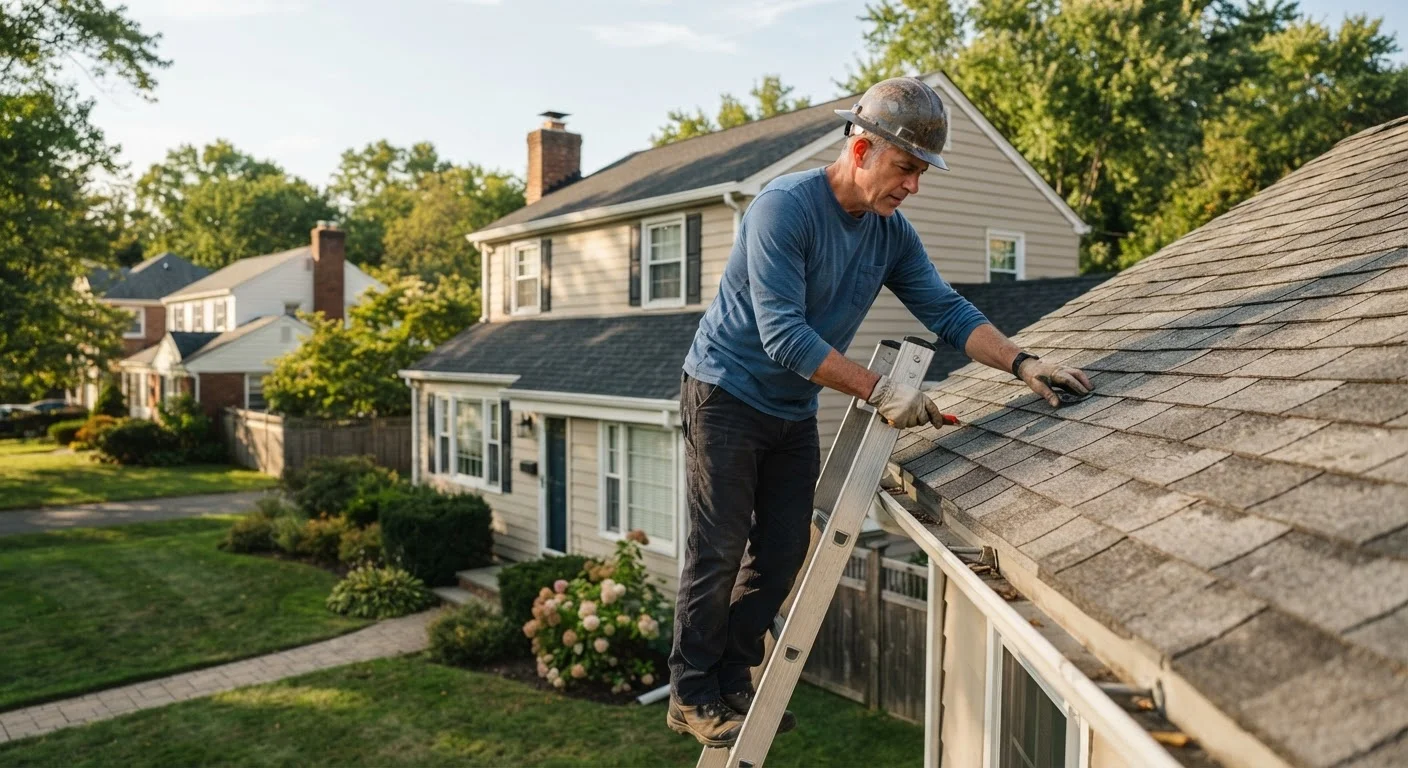
Why Routine Roof Maintenance Matters
A roof is one of a home's most critical systems, yet it's easy to ignore until a leak appears on the ceiling. By that point, water may have already traveled through underlayment, insulation, and framing - turning a minor repair into a major project. The good news is that consistent, low-effort maintenance can catch problems early, when they're still inexpensive to address.
Many families assume all roof work requires a contractor. In reality, a meaningful portion of roof upkeep - visual inspection, gutter clearing, minor caulk touch-ups - is well within reach of careful, safety-minded homeowners. The key is knowing exactly where the safe boundary lies. See our practical framework for deciding when to call a pro to help you make that judgment confidently.
Roof maintenance also connects directly to moisture control indoors. Unaddressed gaps or damaged shingles allow water pathways that can silently affect walls and ceilings. For related warning signs, read about early indicators of a home moisture problem.
Safe Roof Maintenance Practices for Homeowners
The practices below focus on tasks that don't require walking on the roof surface or working near electrical components - both of which carry serious risk and are best left to trained professionals.
Conduct a ground-level visual inspection twice a year - once in spring and once in fall.
Biannual inspections allow you to catch shingle damage, moss growth, and debris accumulation before they escalate. Spring checks catch winter damage; fall checks prepare the roof for wet and freezing weather ahead.
Keep gutters and downspouts clean and free of debris.
Clogged gutters cause water to back up under roofing material, leading to rot, mold, and structural damage. This is one of the most preventable roof-adjacent problems homeowners face.
Inspect and reapply caulk around accessible, low-risk penetrations from the ground or a stable ladder.
Caulk around pipe boots, vents, and chimney bases can crack or separate over time, creating entry points for water. Catching dry or missing caulk early is a simple, low-cost fix.
Trim overhanging tree branches that extend over the roof.
Branches rubbing on shingles wear away protective granules. Fallen limbs during storms cause impact damage. Overhanging canopy also promotes moss and algae growth by keeping the roof shaded and damp.
Check the attic after heavy rain or snow for signs of water intrusion.
The attic is often where roof leaks first become detectable, before stains appear on finished ceilings. Early detection means a smaller, less expensive repair.
Safety note: Any task involving roof-surface access, ridge lines, steep pitches, or proximity to power lines should be performed only by a licensed roofing contractor. Never work on a wet or frost-covered roof surface.
Quick Wins You Can Do This Weekend
If you've been putting off roof upkeep, the following actions offer immediate, meaningful protection with minimal time investment. These are practical starting points - not a substitute for a full seasonal inspection, but a solid first step.
For a more complete seasonal checklist that includes roof, HVAC, gutters, and more, see the Seasonal Home Maintenance Checklist for US Families.
When to Call a Licensed Roofer
Even diligent homeowners will encounter situations that require a professional. Recognizing those boundaries is just as important as knowing what you can handle yourself.
Permits and Professional Licensing Matter
In most US jurisdictions, roofing repairs beyond minor maintenance require a licensed contractor and may require a building permit. Working with unlicensed contractors or skipping permits can void your homeowner's insurance and complicate future home sales. Always verify contractor licensing through your state's contractor licensing board before hiring.
As a general rule, contact a licensed roofer when you observe: missing or extensively damaged shingles across multiple areas; sagging or soft spots on the roof deck; any damage near chimneys, skylights, or vent boots that involves flashing displacement; signs of interior water intrusion such as stained ceilings or attic moisture. Permits and inspections may also be required for repair work that exceeds minor maintenance - check with your local building department before beginning any significant repair.
Roofing involves serious fall risk. The U.S. Occupational Safety and Health Administration (OSHA) consistently identifies falls from roofs as a leading cause of serious injury in residential settings. No maintenance task is worth compromising your safety.
For a broader look at home maintenance fundamentals, the Home Maintenance for First-Time Owners guide covers essential systems every homeowner should understand.
40%
Of building-related problems linked to water intrusion
The Building Science Corporation estimates that a significant share of building failures involve water - much of it entering through roof and envelope defects that routine maintenance could address.
2x/year
Recommended roof inspection frequency
Roofing industry guidance consistently recommends spring and fall inspections as the minimum cadence for catching seasonal damage before it worsens.
The content provided on our blog site traverses numerous categories, offering readers valuable and practical information. Readers can use the editorial team’s research and data to gain more insights into their topics of interest. However, they are requested not to treat the articles as conclusive. The website team cannot be held responsible for differences in data or inaccuracies found across other platforms. Please also note that the site might also miss out on various schemes and offers available that the readers may find more beneficial than the ones we cover.