

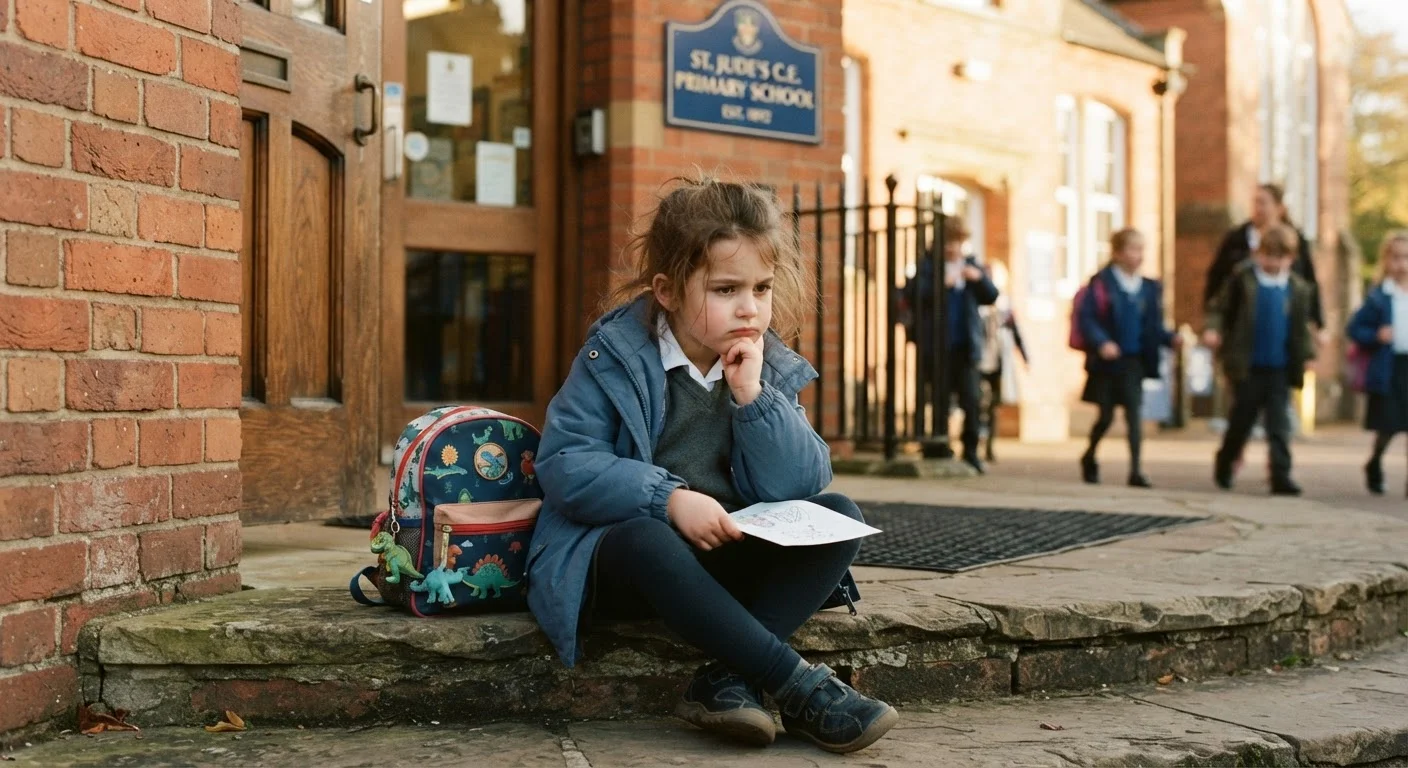
Option A
Occasional Reluctance
A normal, passing resistance to school that most children experience.
Best for: Understanding typical developmental pushback that resolves with routine and reassurance.
Option B
School Refusal
A persistent, anxiety-driven pattern that significantly disrupts attendance.
Best for: Recognizing when a child's avoidance signals emotional distress requiring professional support.
What Each Pattern Actually Looks Like
Almost every parent has heard it: "I don't want to go." The challenge is figuring out whether that sentence means "I'm tired and it's Monday" or "I'm genuinely struggling and need help." These two situations look similar on the surface but require very different responses.
Occasional reluctance is common across all ages. A child drags their feet after a long weekend, resists returning after a holiday break, or balks on the morning of a big test. The resistance is situational - tied to a specific event or feeling - and typically fades once the child is at school. Parents can usually identify a cause, and the behavior doesn't repeat daily.
School refusal, by contrast, is a pattern. Researchers and clinicians describe it as emotionally driven school non-attendance in which a child experiences significant distress before or during school - distress that may include panic, crying, anger, or physical symptoms - and actively avoids attendance over an extended period. It is not truancy (which is covert and without parental knowledge); school refusal happens openly and is often deeply distressing for the whole family.
| Criterion | Occasional Reluctance | School Refusal |
|---|---|---|
| Duration | Hours to one or two days | Weeks or longer, recurring |
| Trigger | Identifiable event or transition | Often unclear or anxiety-based |
| Physical complaints | Rare or absent | Common; disappear after school time |
| Behavior at school | Settles quickly once there | Ongoing distress or avoidance attempts |
| Impact on family | Minor friction, resolves easily | Significant stress, missed attendance |
| Response needed | Routine, calm reassurance | School counselor and/or professional support |
If your child has recently started at a new school, some resistance is expected. Our guide on helping kids adjust to a new school explores practical ways to support that transition without forcing it.
Warning Signs That Point Toward School Refusal
The clearest signal is persistence. If a child's avoidance lasts more than a week or two - especially when it follows weekends, school breaks, or illness - it deserves closer attention. Other signs include:
- Somatic complaints that appear on school mornings and resolve by afternoon: stomachaches, headaches, nausea, or dizziness that have no confirmed medical cause.
- Emotional escalation that is disproportionate to the situation - full meltdowns, prolonged crying, or panic at the thought of leaving home.
- Clinging behavior or extreme separation anxiety, particularly in younger children.
- Difficulty identifying what is wrong - the child is distressed but cannot articulate a specific reason to avoid school.
- Normal functioning on weekends or during school holidays, with distress resuming as the school week approaches.
School Refusal Is Not Defiance
It's important to understand that school refusal is not a discipline issue or a choice a child makes to be difficult. Child development researchers broadly recognize it as an anxiety-related behavior - the child is experiencing genuine distress, even when the source is hard to name. Responding with punishment or forced attendance alone can worsen underlying anxiety. A collaborative approach involving the family, school, and where needed a mental health professional tends to produce better results.
Social struggles are frequently a hidden driver of school refusal. If you suspect peer dynamics are involved, signs your child is thriving or struggling socially can help you read the behavioral cues more clearly.
How Families and Schools Can Respond
For occasional reluctance, consistent routines and calm, matter-of-fact responses tend to be most effective. Acknowledge the feeling without amplifying it: "I hear you - sometimes school feels hard. Let's get ready and I'll see you this afternoon." Avoid extensive negotiation or letting the child stay home without a clear reason, as this can inadvertently reinforce avoidance patterns.
For school refusal, gradual reintegration - not forced, abrupt return - is generally recommended by child psychology frameworks. Key steps include:
- Contacting the school's counselor to share what you're observing and coordinate a plan.
- Consulting a pediatrician to rule out underlying medical causes for physical complaints.
- Seeking an evaluation from a licensed child psychologist or therapist, particularly one familiar with anxiety or cognitive-behavioral approaches.
- Keeping communication open with your child, focusing on feelings rather than attendance numbers.
Early action matters. Research consistently suggests that the longer school refusal continues, the harder it becomes to reverse, as avoidance patterns can become self-reinforcing over time.
If you've also noticed your child's learning engagement at home declining, the signs described in when home learning stops working may offer additional context.
This article is for general informational purposes only and does not constitute medical or psychological advice. If you have concerns about your child's emotional wellbeing or school attendance, please consult a qualified healthcare or mental health professional.
The content provided on our blog site traverses numerous categories, offering readers valuable and practical information. Readers can use the editorial team’s research and data to gain more insights into their topics of interest. However, they are requested not to treat the articles as conclusive. The website team cannot be held responsible for differences in data or inaccuracies found across other platforms. Please also note that the site might also miss out on various schemes and offers available that the readers may find more beneficial than the ones we cover.