

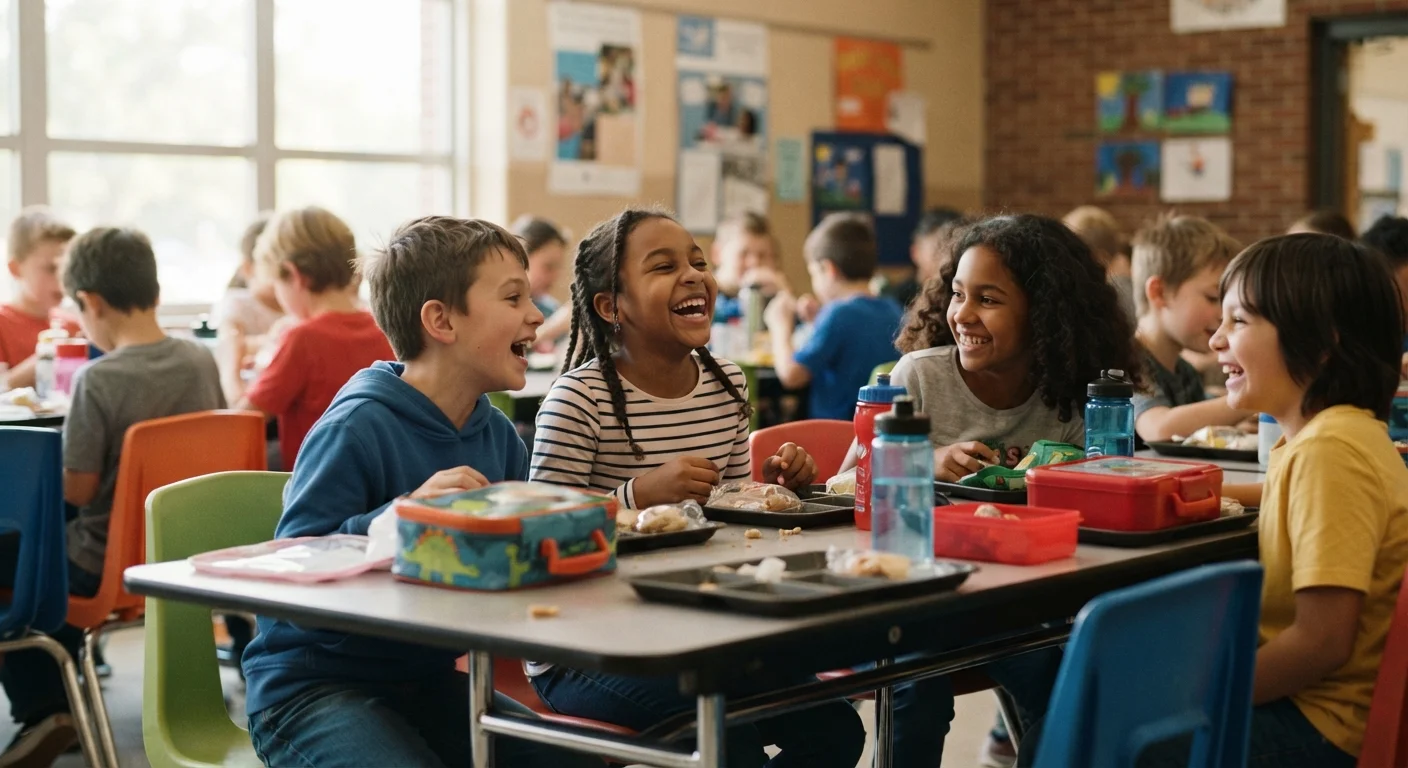
Why Social Wellbeing at School Matters
Academic skills get most of the spotlight in school conversations, but research in child development consistently links social belonging to stronger engagement, better attendance, and higher academic motivation. When children feel connected to peers and safe in their school environment, they are more willing to take intellectual risks, ask questions, and persist through challenges.
The flip side is equally important. Children who feel excluded or invisible at school may carry that stress into every subject and homework session. As one framework widely used in school counseling puts it, belonging is not a soft extra - it is a foundational condition for learning.
The signs of social thriving - and social struggle - are rarely dramatic. Most show up in small daily behaviors: what a child says at the dinner table, how they talk about Monday morning, whether they mention names. The eight indicators below help families read those signals more clearly. Keep in mind that no single sign is definitive; look for consistent patterns rather than isolated moments. And if what you observe involves persistent school avoidance, that deserves its own closer look.
They mention specific names - and those names change over time
One of the clearest signs of healthy social development is a child who talks about classmates by name. It signals that they have formed identifiable relationships rather than moving through the school day anonymously. Even more telling: the roster of names shifts gradually as friendships deepen or evolve. This fluidity is normal and healthy, especially in elementary school.
By contrast, a child who never mentions anyone by name - or who repeatedly names only one person they once knew - may not be building new connections. This is worth noting, though not panicking over, particularly after transitions like a new school year or a move. See helping kids adjust to a new school for context on those specific situations.
A child who names their classmates has made real social contact - anonymity is the warning sign.
They look forward to school most mornings
Occasional reluctance on Monday mornings is completely normal across all ages. But a child who generally wakes up ready to go - who mentions something they are looking forward to, whether a project, a game at recess, or seeing a friend - is showing that school feels like a place that belongs to them.
Persistent dread, stomach aches that appear only on school days, or tearful Sunday evenings are a different matter. These patterns may indicate social anxiety, exclusion, or bullying rather than ordinary school fatigue. Physical complaints without a clear medical cause that cluster around school days are worth discussing with a pediatrician and a school counselor.
Consistent morning dread - especially physical complaints on school days - warrants a closer conversation.
They talk about school events in the first person plural
Pay attention to pronouns. A child who says "We played this game at recess" or "Our team won" is placing themselves inside a social group. That sense of we reflects belonging. Children who describe school almost entirely in the third person - "The other kids did..." - may be observing from the outside more than participating.
This is a subtle but meaningful cue, and it tends to be more reliable than directly asking "do you have friends?" - a question children often answer defensively or inaccurately.
"We" and "our" are small words that signal a child feels part of something at school.
Their mood after school is generally stable
Every child has rough days, and the after-school slump - tiredness, irritability, a need to decompress - is developmentally normal, especially for younger children who have been regulating their behavior all day. What matters is the baseline. A child who recovers within an hour and is willing to talk or play is showing reasonable emotional regulation.
A child who comes home consistently withdrawn, angry without a clear reason, or distressed several days a week may be carrying something heavier. Sudden changes in after-school mood that persist for two weeks or more are worth exploring, particularly if paired with other signs on this list.
The after-school slump is normal; persistent distress several days a week is worth exploring.
They can describe what happens at lunch and recess
Unstructured time - lunch, recess, free periods - is where social hierarchies are most visible and where exclusion most often occurs. Children who are thriving can usually describe what they did during these times, even briefly. They have a place to be, people to be with, or activities they gravitate toward.
Children who consistently say "nothing" or "I just walked around" when asked about free time may be struggling to find belonging in the spaces that feel most socially charged. This is especially relevant for middle schoolers, where lunch seating can carry significant social weight.
Unstructured time reveals the most about a child's social world - ask about lunch, not just class.
Their social behavior at home mirrors - or sharply contradicts - school reports
When a child's teachers describe them as engaged, cooperative, and connected and parents see a similar child at home, it is a reassuring consistency. But a sharp mismatch - a child who is confident and socially skilled at home yet described as isolated or disruptive at school - is informative in its own way.
It may mean the child has the social skills but is encountering specific obstacles at school: a difficult peer dynamic, a social group that has already closed ranks, or anxiety that activates only in larger group settings. Reading teacher comments carefully can help parents understand what school staff are actually observing.
A sharp gap between how a child acts at home versus school is worth discussing with their teacher.
They show curiosity about other people
Socially thriving children tend to be genuinely curious about the people around them. They ask questions, remember details about classmates' lives, and show interest in others' experiences. This is both a sign of good social health and a predictor of continued connection - curiosity is one of the most reliable friendship-building behaviors at any age.
A child who has become increasingly self-focused, indifferent to others, or who expresses predominantly negative views about peers ("Everyone at school is annoying") may be protecting themselves from a social environment that has felt unrewarding or painful.
Genuine curiosity about classmates is one of the most reliable signs of healthy social development.
Changes in appetite or sleep align with the school week
Stress related to social experiences at school can manifest physically. Children who are anxious about peer relationships may show reduced appetite before school, disrupted sleep on school nights, or a return to appetite and energy on weekends and holidays. These are not universal indicators - there are many reasons a child's sleep or eating might shift - but when they cluster with other behavioral signs, the pattern is meaningful.
If changes in eating patterns become a persistent concern, that warrants a conversation with a pediatrician. For families already navigating concerns about a child's relationship with food, social stress at school is one context worth raising with a professional.
Sleep and appetite changes that cluster around school days - and ease on weekends - may reflect social stress.
How to Respond to What You Notice
Observing these signs is only the first step. If your child shows several thriving indicators, the best thing you can do is reinforce the conditions that are working - maintain predictable routines, keep communication open, and stay engaged with their school life at an age-appropriate level. The road map to school involvement shifts considerably from kindergarten through high school, so revisit your approach as your child grows.
If you notice several warning signs, resist the urge to immediately problem-solve or minimize. Start with curiosity: "Who did you sit with today?" or "What was the best and worst part of lunch?" are lower-pressure entry points than "Are you being bullied?" If concerns persist, a conversation with the classroom teacher or school counselor can surface information you may not have access to at home. Teachers often notice social dynamics that children never mention to parents.
Social struggles at school can also ripple into home learning. If you are noticing stalled motivation alongside the social signs above, recognizing the early warning signs can help you separate academic disengagement from social-emotional stress - they sometimes overlap but call for different responses.
Start with curiosity, not diagnosis
When you notice potential warning signs, open a conversation before drawing conclusions. Questions like "What was the most awkward part of today?" or "Is there anyone at school you wish you knew better?" invite honesty without alarm. Children are more likely to open up when they sense you are genuinely curious rather than worried or looking for a problem to solve. If your child does disclose something difficult, thank them for telling you before moving into action mode.
The content provided on our blog site traverses numerous categories, offering readers valuable and practical information. Readers can use the editorial team’s research and data to gain more insights into their topics of interest. However, they are requested not to treat the articles as conclusive. The website team cannot be held responsible for differences in data or inaccuracies found across other platforms. Please also note that the site might also miss out on various schemes and offers available that the readers may find more beneficial than the ones we cover.