

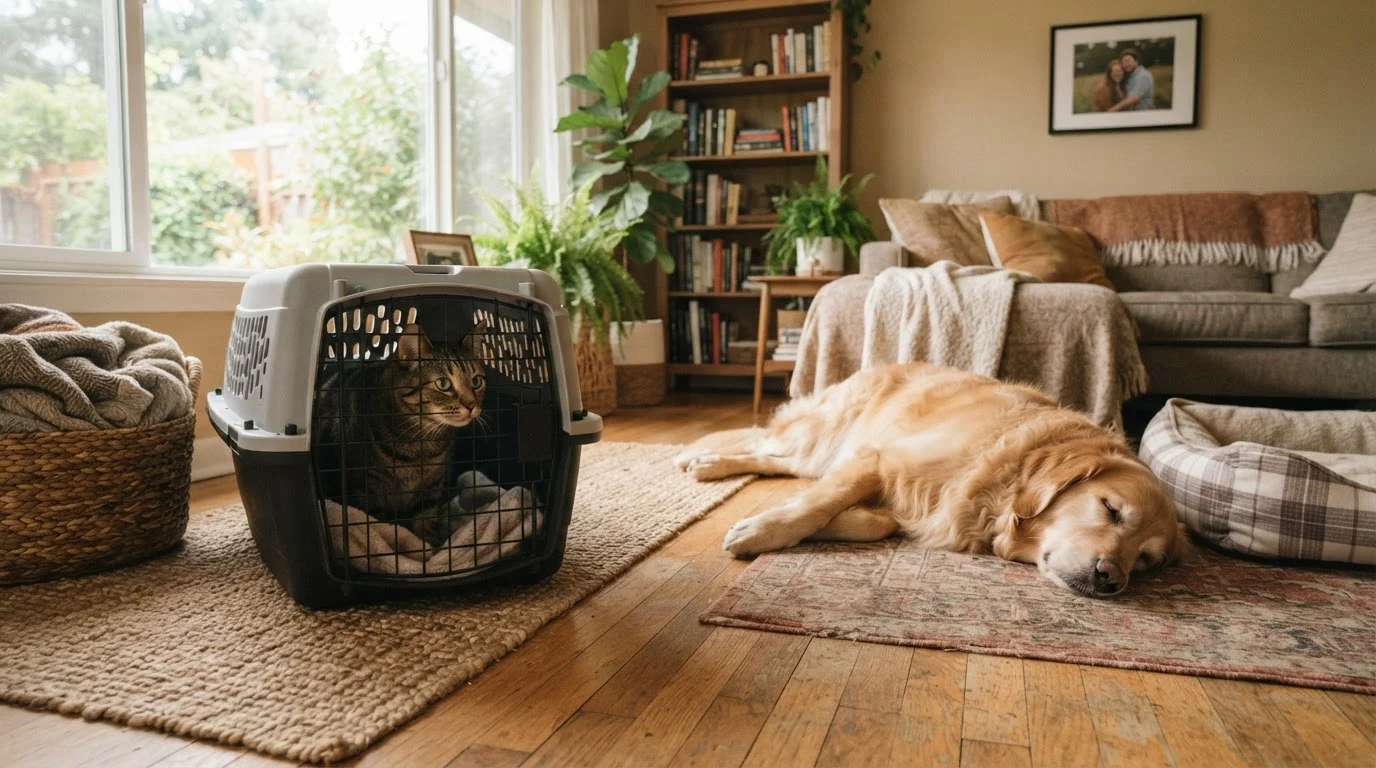
Why Introductions Require Structure
Cats are territorial by nature. Unlike dogs, which are social pack animals, cats evolved as solitary hunters who maintain defined home ranges. When a new cat enters a space that another animal already claims, both animals experience genuine stress - and without structured management, that stress can escalate into sustained conflict, injury, or lasting anxiety.
The same applies when introducing a cat into a home with a resident dog. Dogs with strong prey drives may see a fleeing cat as something to chase, even when the dog is otherwise well-mannered. Structure and pacing allow both animals to habituate to each other's presence gradually rather than through a startling or threatening encounter.
If you're still in the planning stage, our guide to preparing for a first cat covers the broader setup considerations that apply here too.
What you will need
Step-by-Step Introduction Process
The process below applies broadly to cat-to-cat and cat-to-dog introductions. Adjust the pace based on the temperament of the animals involved - senior pets, rescues with trauma histories, or pets that have had negative prior experiences with other animals may need more time at each stage.
Baby gate or pet gate
Creates a physical barrier that allows visual and olfactory contact without direct access between pets.
Separate food bowls
Feeding pets on opposite sides of a closed door helps build positive scent associations without competition.
Interactive wand toy
Redirects the new cat's energy and helps build trust with the owner during the isolation phase.
Treat pouch or reward treats
Used to reinforce calm, non-reactive behavior in both the new cat and resident pets during shared sessions.
Set up a dedicated safe room
Before the new cat arrives, prepare a quiet room - a spare bedroom or bathroom works well - with everything it needs: litter box, food, water, a scratching post, and a hiding spot such as an open carrier or cardboard box. This space lets the cat decompress after the stress of transport and a new environment without any pressure from resident pets.
Allow scent exchange through the door
With the safe-room door closed, let resident pets sniff the door at will. After 24-48 hours, swap bedding: bring a blanket from the new cat's room into the main living area, and place something carrying the resident pet's scent near the new cat's sleeping area. This scent introduction is the most critical step - it allows familiarity to develop before any visual contact.
Let the new cat explore while residents are secured
Once the new cat appears relaxed and is eating and using the litter box reliably - usually after two to four days - allow it to explore the broader home for short sessions while your resident dog or cat is confined to another room. This lets the new cat learn the territory's layout and leave its own scent without confrontation.
Introduce visual contact with a barrier
Use a baby gate, cracked door, or a door with a screen to allow the pets to see and smell each other simultaneously. Keep sessions brief - five to ten minutes - and monitor body language closely. Calm curiosity is a good sign. Hissing from the cat or intense staring and whining from a dog should be noted but is not necessarily a reason to stop; redirect and reward calm behavior with treats.
Progress to supervised face-to-face meetings
When barrier sessions consistently remain calm across multiple days, allow shared space under close supervision. Keep the dog leashed. Ensure the cat always has an accessible high perch or escape route - it must never feel cornered. Keep initial sessions under ten minutes and end on a positive note before any tension peaks. Gradually increase duration as tolerance builds.
Maintain separate resources long-term
Even after successful integration, each cat in the home should have its own litter box (the general guideline is one per cat plus one extra), its own feeding station, and private resting areas. Resource competition is a leading cause of chronic stress and behavioral problems in multi-pet households. Separate spaces preserve peace well beyond the introduction period.
Patience Is the Most Effective Tool
The introduction timeline varies widely - some cats and dogs reach comfortable coexistence within two weeks; others take two to three months. Moving too quickly is the most common mistake owners make. If any stage produces persistent aggression or extreme stress, return to the previous stage and slow the pace. Consulting a veterinary behaviorist is a reasonable option if progress stalls entirely.
Watch for Stress Signals in All Pets
Stress in cats can manifest as hiding, reduced appetite, over-grooming, or eliminating outside the litter box. In dogs, watch for fixation, raised hackles, or refusal to settle. These signals mean the current stage is moving too fast - not that coexistence is impossible. Addressing stress early prevents entrenched fear and aggression from developing.
Ensure All Pets Are Vaccinated and Healthy First
Before bringing a new cat home to a multi-pet household, confirm the new cat has been examined by a veterinarian, is current on core vaccinations, and has been tested for contagious conditions such as feline upper respiratory infections or parasites. Your resident pets should also be up to date on their preventive care. Introducing a sick animal - even one that appears healthy - carries real health risk for every pet in the home. Consult your veterinarian before the introduction if you have any doubts.
When Progress Stalls or Setbacks Occur
Not every introduction moves in a straight line. A hissing match or a dog lunge can set things back even after days of calm progress. When this happens, return to the previous stage without frustration - regression is a normal part of the process, not a sign of failure.
If a resident cat is showing signs of chronic stress such as hiding consistently, eliminating outside the litter box, or dramatically changing eating habits, talk to your veterinarian. These behaviors can have medical causes as well as behavioral ones, and a vet can help differentiate. For long-term household harmony, enrichment strategies for indoor cats become especially important in multi-pet homes, where access to resources and territory can feel more constrained.
Households that also include small animals - rabbits, hamsters, guinea pigs - require a separate layer of management. See our small pet preparation checklist for housing and safety considerations that keep prey-species pets protected in a home with cats.
The content provided on our blog site traverses numerous categories, offering readers valuable and practical information. Readers can use the editorial team’s research and data to gain more insights into their topics of interest. However, they are requested not to treat the articles as conclusive. The website team cannot be held responsible for differences in data or inaccuracies found across other platforms. Please also note that the site might also miss out on various schemes and offers available that the readers may find more beneficial than the ones we cover.