

Why Indoor Cats Need Active Enrichment
An indoor lifestyle protects cats from traffic, predators, parasites, and disease - but it comes with a trade-off. Without intentional enrichment, cats lose access to the sensory complexity and physical challenges that wild and free-roaming cats encounter naturally every day. The result is often boredom, stress, or behavioral problems that owners misread as personality quirks.
Veterinary behaviorists widely recognize that environmental enrichment is not optional for indoor cats - it's a core component of responsible care. Cats are predators with hardwired needs to stalk, pounce, scratch, climb, and patrol territory. When those drives go unmet, the frustration tends to surface as over-grooming, inter-cat aggression, house soiling, or excessive vocalization.
Understanding this is the first step. Enrichment isn't about expensive gear - it's about designing daily life to match what a cat's brain and body are built to do. For a broader look at the lifestyle trade-offs involved, see our article on indoor vs. outdoor cats.
Signs Your Cat May Be Under-Stimulated
Watch for excessive sleeping beyond 16 hours a day, over-grooming leading to hair loss, repetitive pacing, or sudden increases in aggression or vocalization. These can all indicate boredom or chronic stress rather than illness. If behavioral changes appear suddenly or are severe, a veterinary consultation is the appropriate first step to rule out underlying medical causes.
Best Practices for Keeping Your Indoor Cat Engaged
The following practices reflect veterinary consensus and behavioral research on feline wellbeing. Apply them consistently rather than occasionally - cats benefit most from enrichment woven into their daily routine.
Create vertical space throughout your home using cat trees, shelves, or wall-mounted perches.
Cats instinctively seek elevated positions for safety, observation, and territory. Vertical space significantly expands a cat's perceived territory without requiring more floor area, reducing stress in multi-cat homes.
Rotate toys every few days rather than leaving the same ones out permanently.
Cats habituate quickly to familiar objects and stop engaging with them. Rotation restores novelty and reactivates predatory curiosity, keeping toys feeling like new prey items.
Schedule at least two dedicated interactive play sessions daily, each lasting 10-15 minutes.
Human-led play mimics the full predatory sequence - stalk, chase, pounce, catch - in a way solo toys rarely achieve. Regular sessions reduce excess energy and strengthen the human-cat bond.
Use food puzzles or foraging toys to replace at least one standard meal per day.
Foraging engages problem-solving cognition and extends mealtime from seconds to minutes, addressing both mental stimulation and the natural hunting drive. It also helps manage weight in less active indoor cats.
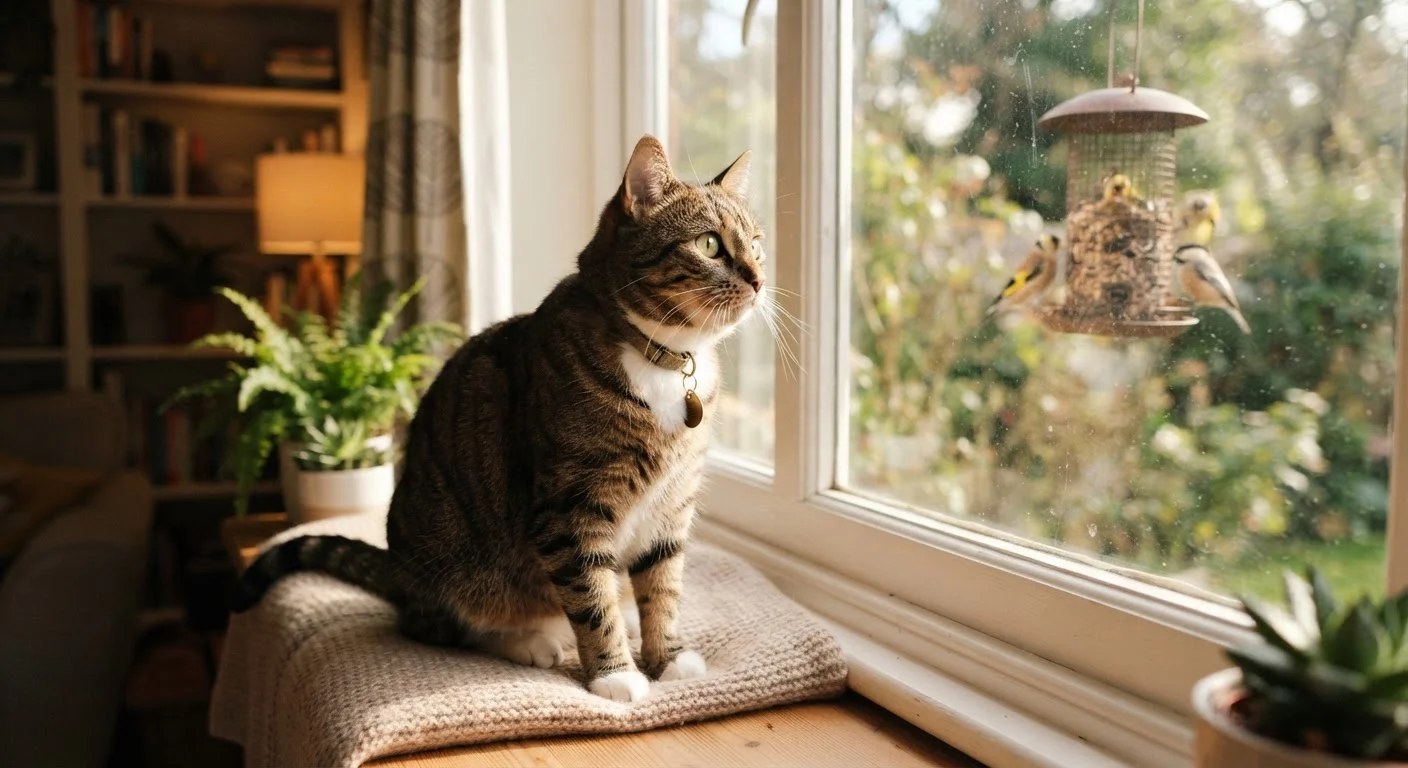
Provide access to a secure window perch with an outdoor view, ideally near bird activity.
Visual stimulation from wildlife, moving objects, and changing light conditions engages a cat's predatory attention without physical risk. Birdfeeders placed near windows create a dynamic, self-refreshing enrichment source.
Offer appropriate scratching surfaces in multiple locations and in both horizontal and vertical orientations.
Scratching fulfills marking, stretching, and claw-conditioning needs simultaneously. Providing inadequate outlets doesn't stop scratching - it redirects it to furniture or carpet instead.
Quick Wins You Can Try Today
Enrichment doesn't require a major home renovation. These immediate steps can meaningfully improve your cat's daily experience right away.
Keep in mind that cats are highly individual. What captivates one cat may bore another. Observe your cat's response to new activities and adjust accordingly. Some cats are intensely food-motivated; others respond more strongly to movement or texture. Behavior that seems destructive - like knocking objects off surfaces - often signals unmet needs. Our guide on why cats knock things off shelves explains what those signals usually mean.
40%
Indoor cats showing signs of boredom-related behavior
Veterinary behaviorists estimate that a significant proportion of indoor cats display redirected or compulsive behaviors linked to inadequate environmental stimulation.
2×
Longer engagement with rotated vs. static toys
Behavioral studies on feline habituation consistently show that novelty substantially extends the duration and intensity of predatory play behavior in domestic cats.
Feeding as Enrichment and the Bigger Picture
One of the highest-impact changes any indoor cat owner can make is transforming mealtime into an enrichment opportunity. Placing food in a bowl is convenient, but it eliminates the seeking and hunting sequence that cats are neurologically wired to perform. Puzzle feeders, snuffle mats, or simply hiding small portions around the home can dramatically increase daily mental engagement.
Nutrition itself also plays a role in how alert and active a cat feels. A diet appropriate to your cat's life stage supports energy levels and cognitive function. Our companion article on what cats need from their diet at every life stage offers a thorough breakdown by age and condition.
If you have multiple cats or plan to add another, enrichment becomes even more important as a buffer against territorial tension. A well-stimulated cat is less reactive to change. See our resource on introducing a new cat to a multi-pet home for guidance on managing that transition.
This article is for general informational purposes only. For concerns about your cat's behavior or health, consult a licensed veterinarian or certified animal behaviorist.
The content provided on our blog site traverses numerous categories, offering readers valuable and practical information. Readers can use the editorial team’s research and data to gain more insights into their topics of interest. However, they are requested not to treat the articles as conclusive. The website team cannot be held responsible for differences in data or inaccuracies found across other platforms. Please also note that the site might also miss out on various schemes and offers available that the readers may find more beneficial than the ones we cover.