

Our Verdict
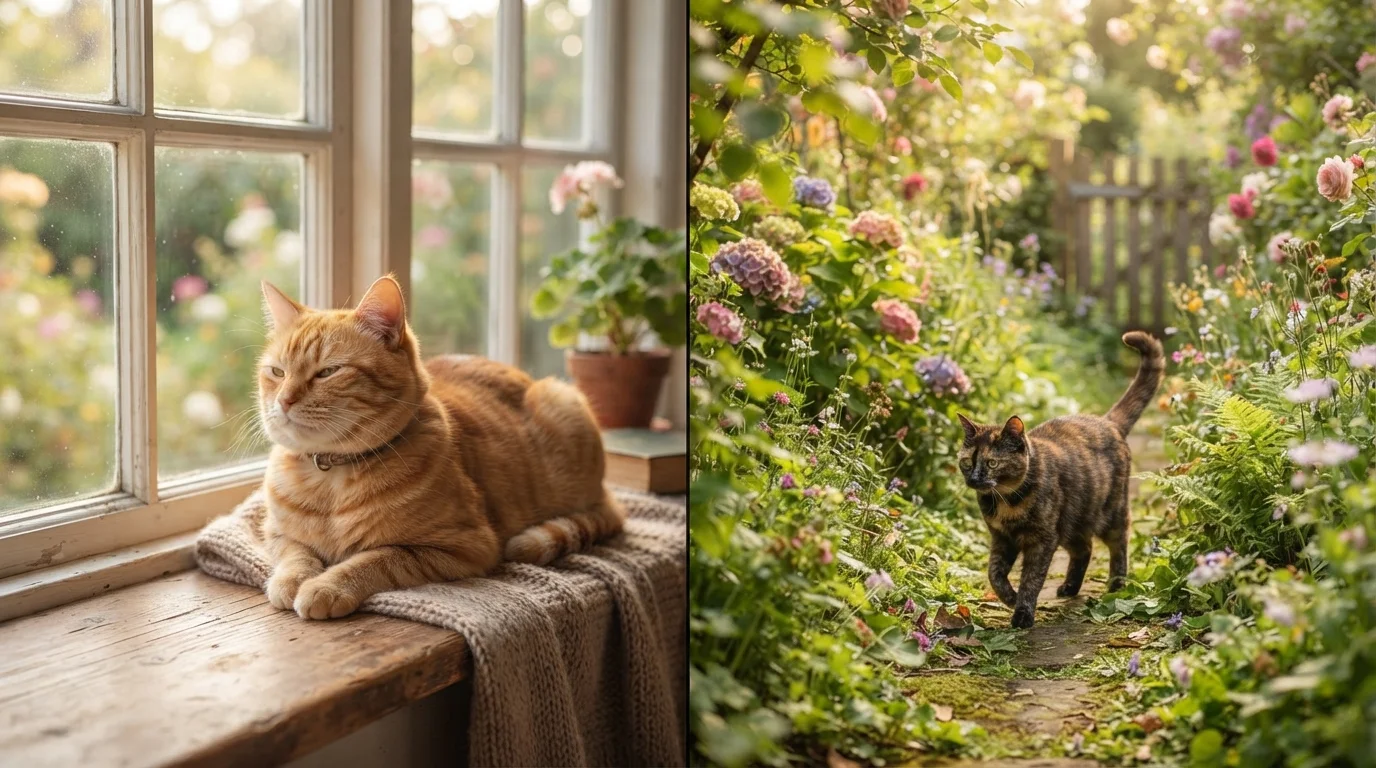
Neither lifestyle is universally right or wrong. Indoor living generally offers stronger safety and health protections, particularly in urban or suburban settings, while outdoor access can benefit cats with strong predatory drives when managed carefully. The most responsible approach weighs the specific cat, environment, and owner capacity to provide adequate enrichment or supervision.
Owners willing to invest in enrichment strategies for indoor cats, or who have safe, enclosed outdoor spaces to offer supervised access.
What the Research Actually Shows About Lifespan
One of the most consistent findings in feline veterinary literature is the lifespan gap between indoor and outdoor cats. Indoor-only cats are generally estimated to live between 12 and 18 years on average, while cats with regular unsupervised outdoor access average closer to 5 to 7 years, according to figures widely cited by veterinary organizations. That gap reflects cumulative exposure to hazards - not a single dramatic event.
The causes of premature death in outdoor cats are varied: vehicle strikes, attacks from dogs or wildlife, infectious disease contracted from feral cats, ingestion of rodenticides or other toxins, and becoming lost or stolen. These aren't rare edge cases; they represent the statistical reality of unsupervised roaming in most US neighborhoods.
12-18 yrs
Average lifespan of indoor-only cats
Veterinary estimates consistently place indoor cat lifespan well above that of cats with unsupervised outdoor access.
5-7 yrs
Average lifespan of free-roaming outdoor cats
This figure is widely cited by veterinary organizations and reflects cumulative exposure to traffic, disease, predators, and toxins.
That said, lifespan isn't the only measure of a good life. Quality of life - behavioral expression, mental stimulation, and freedom from chronic stress - also matters enormously for cats. The lifespan data is a starting point, not the whole picture.
The Real Risks of Outdoor Living
Outdoor cats face a wide spectrum of health and safety threats that indoor cats largely avoid.
Higher risk of obesity and related disease
Reduced activity combined with ad libitum feeding frequently leads to weight gain in indoor cats, which in turn increases risk of diabetes, joint disease, and urinary issues.
Greater susceptibility to boredom and stress
Without adequate enrichment, indoor cats may develop repetitive behaviors, inter-cat aggression, or anxiety-related issues such as over-grooming. The home environment must actively compensate for the absence of natural stimulation.
Dental health requires more active management
Indoor cats don't chew through prey, which means owners must be more deliberate about oral hygiene. Dental disease is extremely common in domestic cats and often goes undetected - a topic explored in our cat dental health overview.
Outdoor hazards: traffic, predators, and violence
Free-roaming cats face genuine risk from vehicles, dogs, coyotes, and in some cases deliberate harm. These risks are not theoretical - they account for the statistically shorter lifespan of outdoor cats.
Exposure to parasites and infectious disease
Fleas, ticks, intestinal worms, and serious viral diseases like FIV and FeLV are all more common in cats with outdoor access and contact with other animals.
Risk of ingesting toxins
Common garden plants, pesticides, fertilizers, and rodent poisons can be lethal to cats. Outdoor cats roam unpredictably and cannot be protected from every hazard in a neighborhood.
It's also worth noting that free-roaming cats can have significant ecological impact on local wildlife populations, particularly birds and small mammals. This is an ethical consideration that some owners factor into their decision, separate from their cat's personal safety.
Cats that were raised outdoors from kittenhood, or those with high prey drive and activity needs, may experience genuine behavioral distress if suddenly confined indoors without thoughtful transition. Any change in lifestyle warrants a gradual adjustment period.
The Hidden Challenges of Keeping Cats Indoors
Indoor living solves many safety problems but introduces its own set of welfare challenges that owners must actively manage.
Protected from traffic and physical injury
Indoor cats have no exposure to vehicle strikes, one of the leading causes of traumatic injury and death in free-roaming cats.
Lower risk of infectious disease
Diseases like feline leukemia virus (FeLV), feline immunodeficiency virus (FIV), and upper respiratory infections spread through contact with other cats - a risk dramatically reduced indoors.
No exposure to toxins or predators
Indoor cats cannot ingest lawn chemicals, rodenticides, or antifreeze, and are safe from dogs, coyotes, and other wildlife that pose threats to outdoor cats.
Easier to monitor health changes
Owners of indoor cats can observe litter box habits, appetite, and behavior daily, making it easier to catch early signs of illness before they become serious.
Longer average lifespan
The cumulative effect of avoided hazards means indoor cats statistically live significantly longer - often more than double the lifespan of free-roaming cats.
Indoor cats are more dependent on their owners to create a stimulating, varied environment. Without that investment, they can develop chronic stress, anxiety-related behaviors, or physical health problems. Our guide on keeping an indoor cat mentally and physically stimulated covers enrichment strategies in detail - window perches, food puzzles, and structured play can make a significant difference.
Obesity is a particular concern. Indoor cats tend to be less active, and many owners unintentionally overfeed. Weight management should be a regular conversation with your veterinarian, and diet choices matter - see our overview of wet food vs. dry food tradeoffs for context on how food type affects feline health.
Finding a Middle Ground: Supervised Outdoor Access
For many cats and owners, a hybrid approach offers a practical compromise. Supervised outdoor access - through a leash and harness, a securely enclosed catio (cat patio), or a fenced garden with cat-proof barriers - can provide the sensory richness of the outdoors without unrestricted roaming risk.
Catios: A Growing Middle-Ground Solution
Enclosed outdoor cat enclosures - commonly called catios - have become increasingly popular as a way to give cats safe access to fresh air, sunlight, and natural stimuli without unsupervised roaming. They can be attached to windows or doors, or built as freestanding structures. If you're considering this option, consult your local building codes and choose materials appropriate for your climate.
Leash training is possible for many cats, particularly when started in kittenhood, though it requires patience and should always be guided by the cat's comfort level, never forced. Catios range from small window boxes to large walk-in enclosures, and can be DIY-built or purchased as modular systems. They allow exposure to fresh air, sunlight, and natural sights and sounds while keeping a cat fully contained.
If your cat already spends time outdoors, ensuring they are spayed or neutered, microchipped, and fully vaccinated - including for feline leukemia if they have contact with other cats - are non-negotiable baseline protections. Regular veterinary checkups are especially important for outdoor cats, who can mask illness effectively. Your vet is the right resource for tailoring preventive care to your cat's actual lifestyle.
The content provided on our blog site traverses numerous categories, offering readers valuable and practical information. Readers can use the editorial team’s research and data to gain more insights into their topics of interest. However, they are requested not to treat the articles as conclusive. The website team cannot be held responsible for differences in data or inaccuracies found across other platforms. Please also note that the site might also miss out on various schemes and offers available that the readers may find more beneficial than the ones we cover.