

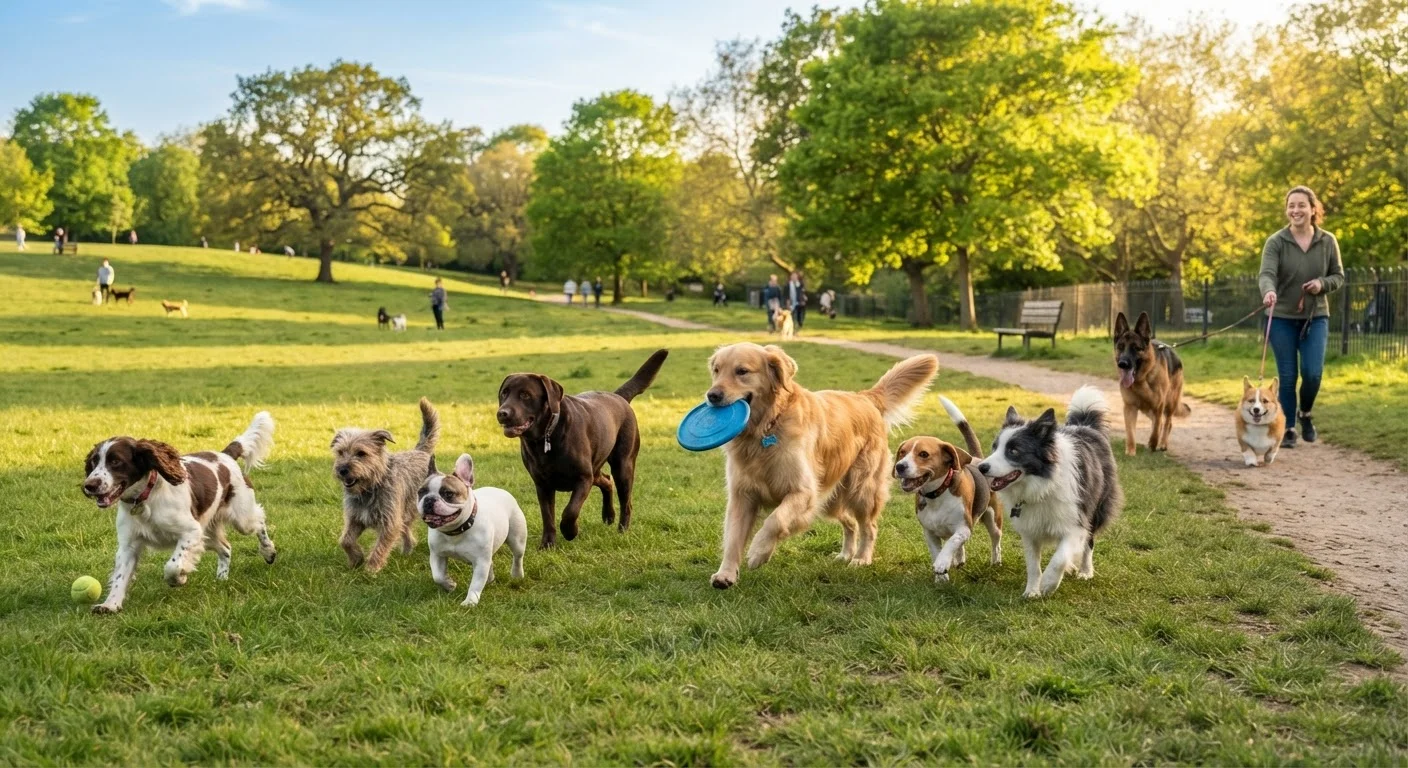
Why Exercise Fit Matters More Than You Think
Choosing a dog based on appearance alone - without considering activity needs - is one of the most common mistakes new owners make. A Border Collie in a studio apartment or a Basset Hound with a marathon runner will both struggle, just in opposite directions. Mismatches between a dog's exercise requirements and an owner's lifestyle are a leading driver of behavioral issues, including destructive chewing, excessive barking, and anxiety. For a deeper look at how under-stimulation presents, see our article on what separation anxiety looks like versus normal boredom.
Exercise also intersects directly with nutrition. An active dog has different caloric needs than a couch-companion breed. Feeding needs shift across a dog's life stages, and activity level is a key part of that equation.
The five breed categories below capture the spectrum from high-drive working dogs to low-key companion breeds, helping you honestly assess the match before - or after - bringing a dog home.
High-Energy Working and Herding Breeds
Breeds in the herding and working groups - Border Collies, Australian Shepherds, Belgian Malinois, Siberian Huskies - were developed for sustained, demanding physical and cognitive labor. Most require 90 minutes to two or more hours of vigorous activity daily, and they need variety: running, hiking, agility, fetch, or structured training sessions.
These dogs thrive with owners who exercise regularly and can integrate the dog into that routine. Without sufficient outlets, herding breeds in particular may redirect their instincts toward chasing children, nipping at heels, or compulsive pacing. If your lifestyle involves sedentary weekdays, a high-drive herding breed is likely a poor fit regardless of how active you plan to be on weekends.
High-drive herding breeds often need two or more hours of vigorous daily activity to stay mentally stable.
Sporting Breeds Built for Endurance
Retrievers, Spaniels, Setters, and Pointers were bred to work alongside hunters for hours in the field. Breeds like the Labrador Retriever, Golden Retriever, and Springer Spaniel generally need 60 to 90 minutes of exercise per day, with a mix of aerobic activity and off-leash time.
Sporting breeds are highly adaptable and make excellent family dogs when their exercise needs are met - but they do gain weight easily when under-exercised, which compounds joint stress. Swimming is a particularly good option for many retrievers, providing low-impact cardiovascular work that's easy on hips and elbows.
Retrievers and spaniels adapt well to family life, provided they receive consistent daily aerobic activity.
Terriers and Scent Hounds: Moderate but Persistent
Terriers (Jack Russell, Airedale, West Highland White) and scent hounds (Beagles, Basset Hounds, Bloodhounds) occupy a middle ground. Most do well with 45 to 60 minutes of daily activity, but they have strong instincts that shape how that exercise should be structured.
Terriers are tenacious and bold - they benefit from activities that engage their prey drive, like fetch or earthdog games. Scent hounds are driven by their noses and can follow a scent trail to the exclusion of all else, making reliable recall and leash manners essential safety priorities. A long sniff-focused walk - letting the dog set the pace and explore - counts as genuine mental exercise for scent hound breeds.
For scent hounds, a nose-led walk isn't just a stroll - it's serious mental and physical enrichment.
Toy and Companion Breeds: Less, But Not None
Chihuahuas, Shih Tzus, Cavalier King Charles Spaniels, and Pugs are often described as low-energy, and compared to working breeds they are - but they still need regular movement. Most do well with 20 to 30 minutes of daily exercise, split across shorter walks.
Brachycephalic (flat-faced) breeds like Pugs, French Bulldogs, and Boston Terriers require particular care: their compressed airways make them prone to overheating and respiratory distress during exertion. Exercise these dogs during cooler parts of the day and watch for labored breathing, excessive panting, or blue-tinged gums, which warrant immediate veterinary attention.
Flat-faced breeds face real respiratory limits - always exercise them in cool conditions and watch for distress signals.
Senior and Puppy Considerations Across All Breeds
Age reshapes exercise requirements significantly regardless of breed. Puppies should not be over-exercised - a commonly cited veterinary guideline is approximately five minutes of structured exercise per month of age, up to twice daily, to protect developing growth plates. Avoid repetitive high-impact activity like long runs or jumping until a veterinarian confirms skeletal maturity, which varies by breed size.
Senior dogs often slow down gradually, and owners sometimes miss subtle signs that their dog is struggling - lagging on walks, stiffness after rest, or reluctance to jump. Reducing duration and intensity while maintaining daily movement supports joint health and healthy weight. Your vet can help identify whether a senior dog's exercise tolerance reflects normal aging or an underlying condition that warrants treatment.
Puppies and seniors both need tailored exercise plans - over-exertion at either life stage can cause lasting harm.
Putting It Into Practice
No single rule covers every dog. A senior Labrador may need far less exercise than a young one of the same breed, and individual dogs sometimes fall outside their group's typical range. Your veterinarian is the right starting point for building an exercise plan tailored to your dog's age, weight, and health history - particularly if your dog has joint issues, heart conditions, or has recently had surgery.
Start With an Honest Lifestyle Audit
Before choosing a breed - or adjusting your current dog's routine - assess your actual daily activity, not your aspirational version of it. How many days a week do you walk or run? Do you have a yard? Can you exercise the dog before and after work? Matching a breed's documented needs to your realistic schedule, not your best-case scenario, is what leads to a lasting, happy relationship.
Whatever your dog's breed group, quality matters as much as quantity. A 30-minute off-leash session where a dog can sniff, explore, and move freely often provides more mental and physical benefit than an equal time on a tight leash. Mental stimulation - training sessions, puzzle feeders, nose work - can supplement physical activity and is especially valuable for intelligent, high-drive breeds on days when outdoor exercise is limited. Our at-home dog care guide also covers how routine handling builds a calmer, more cooperative dog overall.
This article provides general information for educational purposes and is not a substitute for personalized veterinary advice. Always consult a licensed veterinarian regarding your individual dog's health and exercise needs.
The content provided on our blog site traverses numerous categories, offering readers valuable and practical information. Readers can use the editorial team’s research and data to gain more insights into their topics of interest. However, they are requested not to treat the articles as conclusive. The website team cannot be held responsible for differences in data or inaccuracies found across other platforms. Please also note that the site might also miss out on various schemes and offers available that the readers may find more beneficial than the ones we cover.