

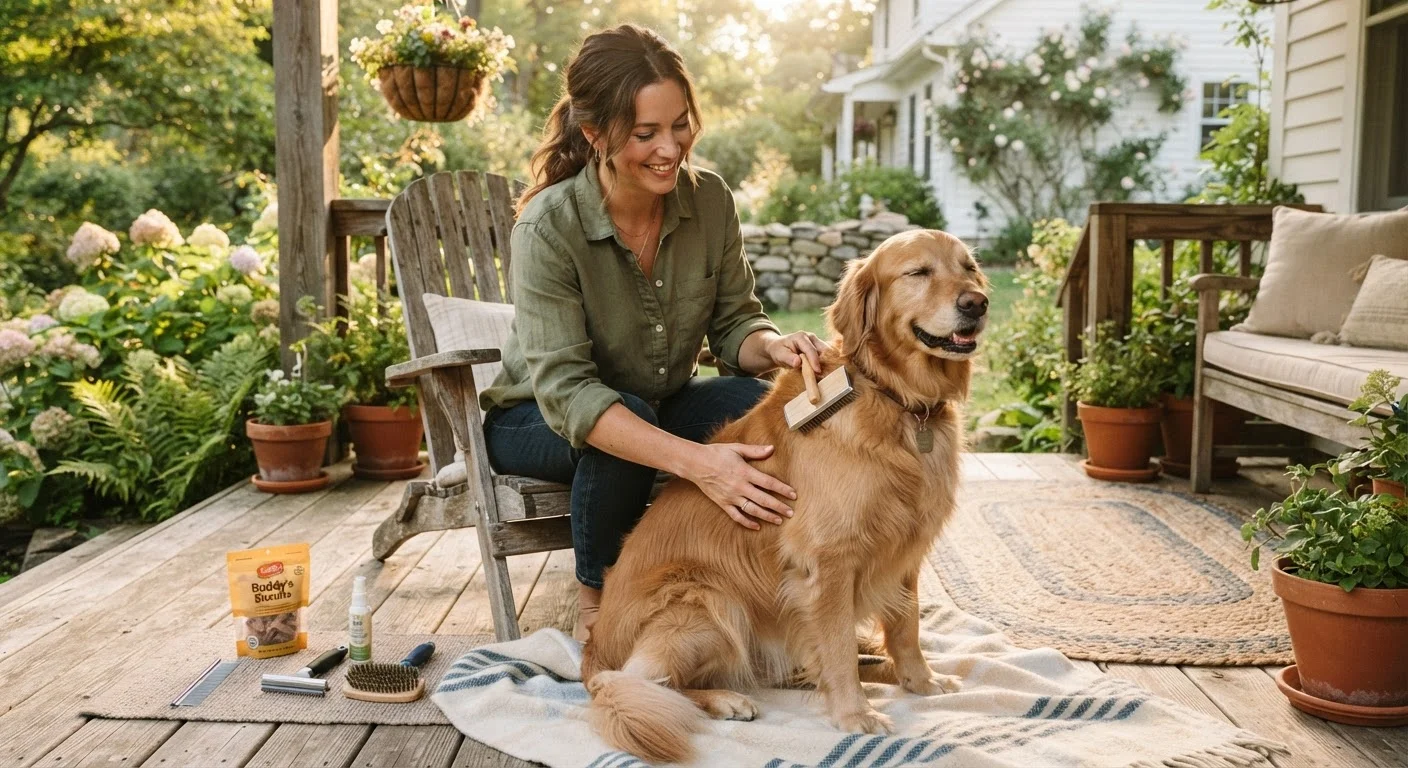
Why At-Home Grooming Matters - and Where It Has Limits
Regular grooming is about more than appearances. Brushing removes dead hair and distributes skin oils; clean ears reduce infection risk; trimmed nails prevent painful gait changes. Much of this can happen at home, on your schedule, without professional fees. But the line between manageable and risky isn't always obvious - and crossing it can hurt your dog or erode their trust in handling.
Think of it the way a motivated homeowner approaches repairs: some tasks reward a careful, prepared amateur, while others carry consequences that outweigh the savings. Our dog's annual wellness visit is a good checkpoint to ask your vet which grooming tasks suit your specific dog's coat, temperament, and health status.
Tasks You Can Safely Handle at Home
The following are well within reach for most owners who prepare properly, use appropriate tools, and keep sessions short and positive. Dogs groomed gently and consistently from an early age - ideally starting when you're preparing your home for a new puppy - are generally far more cooperative as adults.
Tooth brushing deserves special mention. Periodontal disease is among the most common conditions in adult dogs, and daily brushing is the single most effective home intervention. Our detailed guide on dental health in dogs explains what neglected teeth actually look like and how brushing changes the outcome.
Start Dental Habits Early
Puppies accept tooth brushing far more readily than adult dogs encountering it for the first time. Even if your dog is older, a slow, reward-based introduction - starting with just the toothpaste flavor - can build acceptance over a few weeks. Consistency matters more than perfection; brief daily contact beats thorough weekly sessions.
When to Call a Professional Groomer or Vet
Some grooming tasks require training, specialized equipment, or an understanding of anatomy that goes beyond most owners' preparation. Attempting them without that foundation can cause injury - physical or psychological - that's harder to undo than the original problem.
Signs That Grooming Should Wait
If your dog is shaking their head, scratching at ears, scooting, or showing skin redness before a grooming session, pause and consult your vet first. These may indicate an underlying infection or irritation that grooming could aggravate. Proceeding without diagnosis risks making the condition worse and causing unnecessary discomfort.
Anal gland expression is a prime example: done incorrectly, it can cause bruising or rupture. Full scissor or clipper work on double-coated breeds risks damaging the undercoat structure. And if your dog shows signs of a skin condition, ear infection, or matting close to the skin, a groomer or vet should assess before any grooming proceeds. Just as with DIY car maintenance, the honest question is whether a mistake is recoverable - if not, professional help is the right call.
~80%
Dogs with dental disease by age 3
Veterinary dental associations commonly cite that the majority of dogs show signs of periodontal disease by age three, underscoring why home dental care matters early.
1 in 5
Veterinary visits related to ear issues
Ear infections are among the most frequent reasons dogs visit a veterinarian in the US, according to general veterinary industry reports - many are linked to preventable moisture and debris buildup.
If you're uncertain about any task, ask your veterinarian or a certified groomer to walk you through the technique in person. Many offer brief handling demonstrations during routine visits.
This article provides general pet care information and is not a substitute for professional veterinary advice. Always consult a qualified veterinarian for guidance specific to your dog's health and needs.
The content provided on our blog site traverses numerous categories, offering readers valuable and practical information. Readers can use the editorial team’s research and data to gain more insights into their topics of interest. However, they are requested not to treat the articles as conclusive. The website team cannot be held responsible for differences in data or inaccuracies found across other platforms. Please also note that the site might also miss out on various schemes and offers available that the readers may find more beneficial than the ones we cover.