

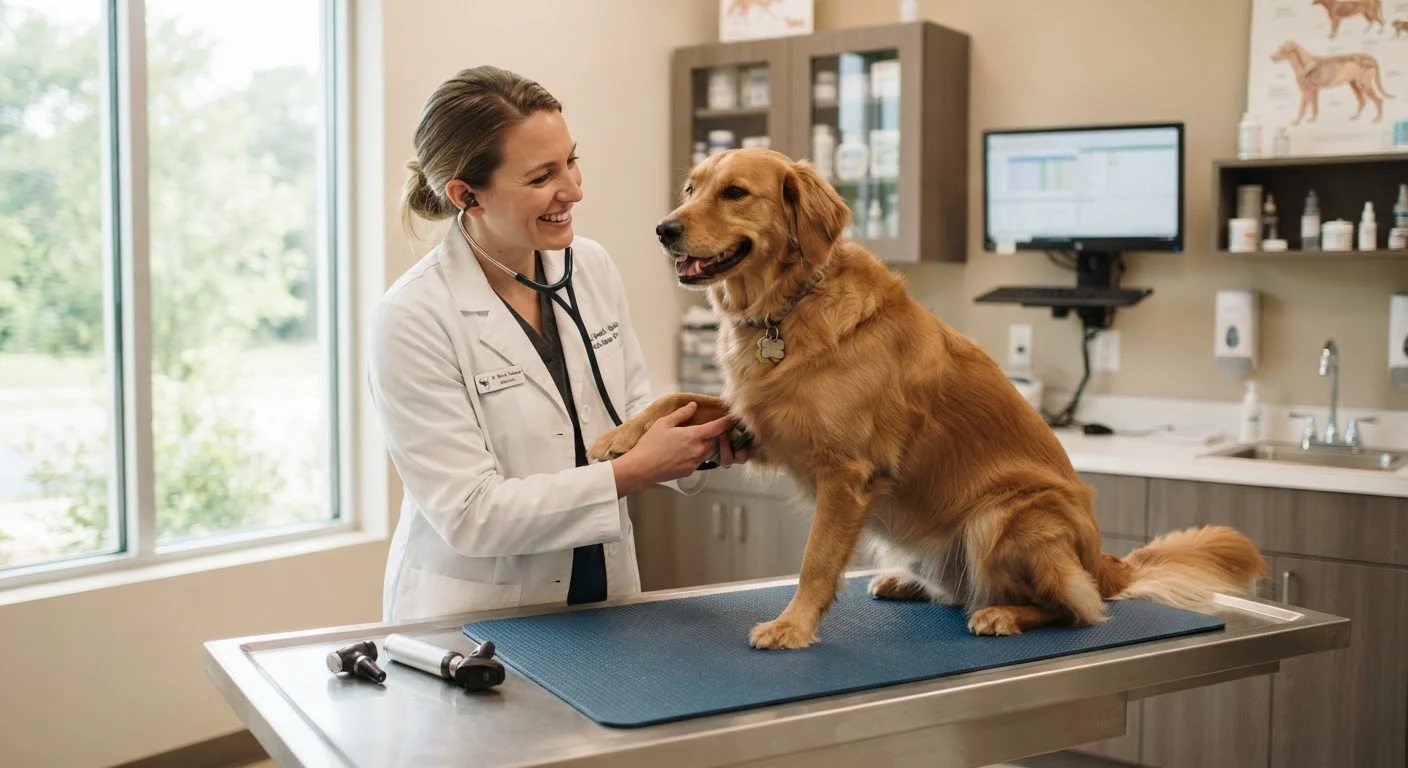
What the Vet Is Actually Checking
The centerpiece of an annual wellness visit is the nose-to-tail physical examination. In roughly 10-15 minutes, a veterinarian gathers an enormous amount of information by systematically assessing each body system.
- Eyes and ears: Checked for discharge, redness, cloudiness, infection, or signs of pain.
- Mouth and teeth: Dental disease is one of the most common - and most overlooked - conditions in adult dogs. The vet will look for tartar buildup, gum inflammation, loose teeth, and oral masses. See our article on dental health in dogs for why this matters so much.
- Lymph nodes: Swelling can indicate infection or, in some cases, more serious disease.
- Heart and lungs: A stethoscope listen for murmurs, arrhythmias, or abnormal breath sounds.
- Abdomen: Gentle palpation checks organ size and detects unusual masses or pain responses.
- Skin and coat: Inspected for parasites, growths, hair loss, or inflammation.
- Musculoskeletal: Gait, joint range of motion, and muscle mass - important for spotting early arthritis, especially in older dogs.
- Weight and body condition: Compared against previous records to flag trends in either direction.
Make the Exam Table Less Stressful
Dogs that associate the vet's office with fear are harder to examine and more prone to stress-related illness spikes that can skew results. Practice handling your dog's ears, paws, and mouth at home regularly. Consider asking your vet clinic about fear-free or low-stress handling techniques - many practices now offer these approaches as standard.
The physical exam also sets a baseline. Over multiple years, your vet builds a picture of what is normal for your individual dog - making it easier to spot meaningful changes.
Vaccines, Parasite Prevention, and Lab Work
Beyond the exam, the visit is an opportunity to review and update your dog's preventive care plan.
Vaccinations
Not every dog needs every vaccine every year. Vets distinguish between core vaccines - recommended for virtually all dogs regardless of lifestyle, such as rabies and the distemper-parvovirus combination - and lifestyle (non-core) vaccines like Bordetella, leptospirosis, or Lyme disease, which depend on where your dog goes and what they're exposed to. For a deeper look at vaccine guidance, our article on common dog vaccination myths addresses misconceptions that many owners bring into the exam room.
Parasite Screening and Prevention
A fecal sample is commonly analyzed for intestinal parasites such as roundworms, hookworms, giardia, and whipworms. The vet will also review your dog's current heartworm prevention status and may recommend a heartworm antigen test, which is typically done annually.
Bloodwork
For adult and senior dogs especially, a complete blood count (CBC) and chemistry panel provide a window into organ function, red and white blood cell levels, and metabolic health. These tests can flag early kidney disease, liver changes, diabetes indicators, and thyroid dysfunction - well before clinical signs appear.
80%
Dogs with dental disease by age 3
The American Veterinary Medical Association (AVMA) estimates that the vast majority of dogs show signs of periodontal disease by age three, making dental checks a critical part of every annual exam.
1 in 200
Dogs test positive for heartworm annually
According to the American Heartworm Society, heartworm disease is diagnosed across all 50 US states, reinforcing why annual testing and consistent prevention matter regardless of geography.
7 years
When senior wellness needs increase
Veterinary guidelines generally recommend more frequent checkups - often every six months - for dogs entering their senior years, typically around age 7 for larger breeds and somewhat later for smaller ones.
How to Prepare - and What to Bring Up
A wellness visit is a two-way conversation. The more information you bring in, the more useful the appointment becomes.
Before You Arrive
- Collect a fresh stool sample (within 12-24 hours) in a sealed container.
- Write down any behavioral changes - increased thirst, changes in appetite or energy, new lumps, changes in bathroom habits.
- Note any supplements, medications, or recent diet changes. Nutrition shifts at different life stages matter - our guide on feeding a dog at every life stage can help you frame relevant questions.
- If visiting a new clinic, bring prior vaccine records.
Questions Worth Asking
- Is my dog's weight appropriate for their size and age?
- Are there any early signs I should be watching for given my dog's breed?
- Is my current parasite prevention approach adequate for where we live?
- Should we discuss spay/neuter timing or the effects of that decision? Our article on spaying vs. neutering covers current research on timing.
Cat Owners: Similar Rules Apply
Annual wellness visits are just as important for cats, though the specifics differ - including exam focus, vaccine schedules, and behavior observations. If you share your home with a feline companion, see our guide on the annual vet visit for cats for a parallel walkthrough.
This article is for informational purposes only and does not constitute veterinary advice. Always consult a licensed veterinarian for guidance specific to your dog's health needs.
Frequently Asked Questions
Most annual wellness visits last between 30 and 60 minutes. The time varies depending on whether bloodwork is drawn, vaccines are administered, or specific concerns need discussion. Arriving with notes about your dog's recent behavior can help keep things efficient.
Core vaccines like rabies and distemper-parvovirus combination follow schedules that may be annual or every three years depending on the product and local regulations. Lifestyle vaccines such as Bordetella (kennel cough) or leptospirosis may be recommended annually based on your dog's exposure risk. Your vet will review your dog's records and advise accordingly.
Yes. Many conditions - including dental disease, heart murmurs, and early kidney changes - show no obvious symptoms until they're well advanced. A yearly exam gives the vet a baseline and the opportunity to detect changes before they escalate. Prevention is almost always less costly and less stressful than treatment.
Bring any prior vaccination records if you're visiting a new clinic, a fresh stool sample for parasite testing, and a written list of any behavioral or physical changes you've noticed. Note any medications, supplements, or dietary changes since the last visit.
A wellness visit is proactive and scheduled in advance to assess overall health when your dog seems fine. A sick visit is reactive - it's scheduled because your dog has a specific symptom or concern. Both are important, but they serve different purposes and are typically billed differently.
The content provided on our blog site traverses numerous categories, offering readers valuable and practical information. Readers can use the editorial team’s research and data to gain more insights into their topics of interest. However, they are requested not to treat the articles as conclusive. The website team cannot be held responsible for differences in data or inaccuracies found across other platforms. Please also note that the site might also miss out on various schemes and offers available that the readers may find more beneficial than the ones we cover.