

Summary
28 items · 1-3 hours depending on home size
Why Puppy-Proofing Matters Before Day One
Puppies are relentlessly curious and completely unaware of danger. Within minutes of arriving home, a new puppy can chew through a phone charger, knock over a bottle of cleaning spray, or swallow a small object left on the floor. Veterinary emergency clinics regularly treat puppies for ingestion injuries and toxin exposure - most of which happen in the first weeks of ownership, inside the home.
Puppy-proofing is not about perfection; it is about removing the most likely risks before they become emergencies. Think of it as a safety audit you run once carefully, then maintain as a habit. Use the checklist below room by room, ideally at least 24 hours before your puppy comes home.
Once your puppy is settled, you will also want to think about crate setup. Our guide to crate training without punishment walks you through making that space feel safe and welcoming from the very first day.
What You Will Need
Most puppy-proofing requires items you may already own or can find at any hardware or home goods store. Gather these before you begin your room-by-room audit.
Childproof cabinet locks
Prevent puppies from nosing open under-sink cabinets containing cleaning products or trash.
Baby gates
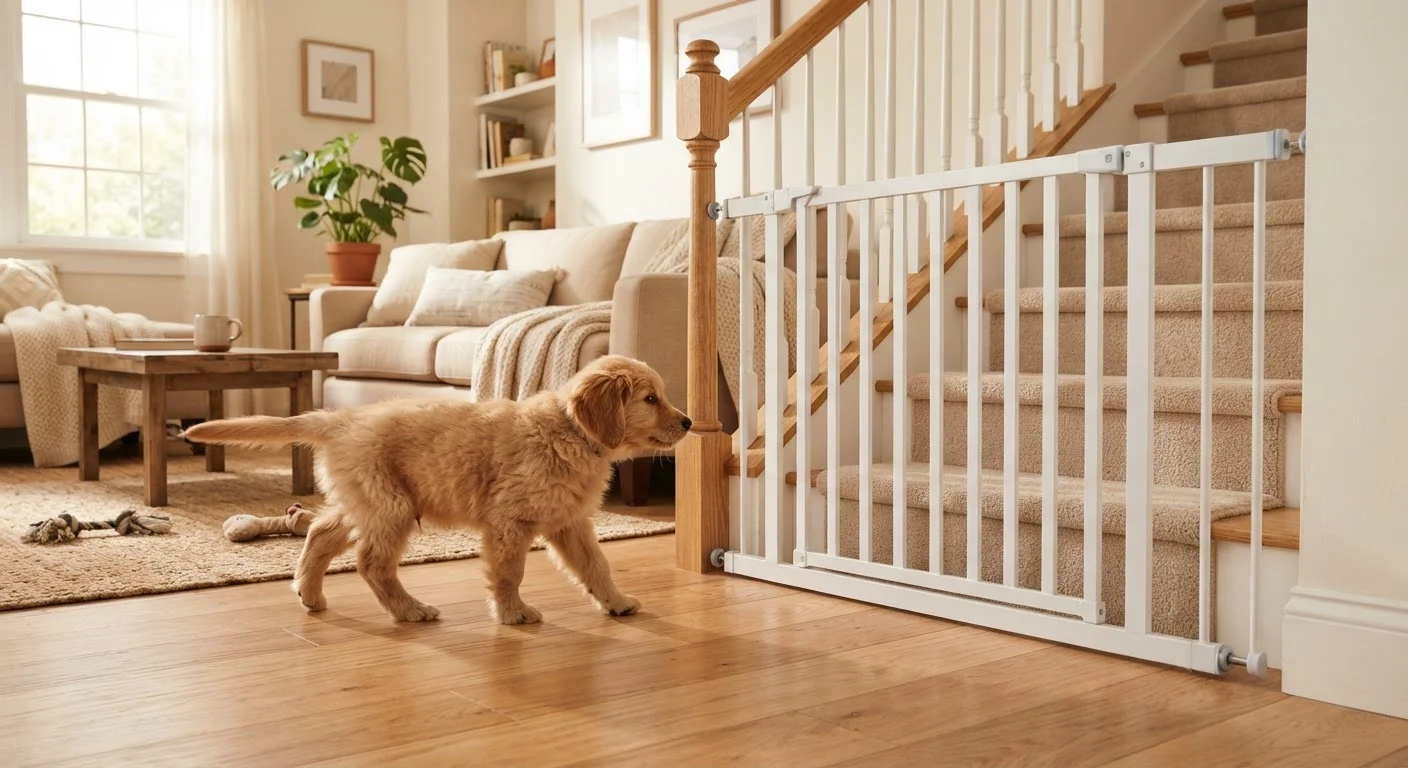
Block stairways and restrict access to rooms that have not been fully puppy-proofed.
Cord organizer or flex tubing
Bundle and conceal electrical cords so they cannot be chewed.
Puppy pen or crate
Create a secure, contained safe space for rest, feeding, and initial confinement.
Lidded, weighted trash can
Replace open bins that a curious puppy can tip over and rummage through.
Washable pet blanket
Provide comfortable, easy-to-clean bedding in the safe space.
Appropriate chew toys
Give the puppy a safe, supervised outlet for natural chewing behavior.
ASPCA Animal Poison Control Center number (888-426-4435)
Post this number somewhere visible as an immediate reference if accidental ingestion occurs.
Room-by-Room Puppy-Proofing Checklist
Work through each area of your home systematically. Get down to puppy level - literally crouch or sit on the floor - to spot hazards a standing adult would miss. Pay special attention to the kitchen, bathroom, and any room with cords or houseplants.
Whole-Home Hazards
Kitchen
Bathroom
Living Room & Bedrooms
Garage & Outdoor Spaces
Safe Space Setup
Toxic Foods and Plants Are the Top Risk
Even small amounts of certain substances - including xylitol (found in sugar-free gum and some peanut butters), grapes, raisins, and sago palm - can cause organ failure in puppies. Do not assume a food or plant is safe simply because it is harmless to humans. If you suspect your puppy has ingested something toxic, contact your veterinarian or the ASPCA Animal Poison Control Center immediately.
Setting Up a Safe Space for Arrival
Even after hazards are removed, a puppy needs a designated area where it can rest, decompress, and feel secure. This space - whether a crate, a gated corner of the living room, or a puppy pen - should be set up completely before your dog arrives.
Place the crate or resting area away from heavy foot traffic and direct sunlight. Add a soft, washable blanket and, if possible, a cloth that carries the scent of the puppy's previous environment to ease the transition. Keep food and water nearby but not inside the sleeping area.
Do Not Skip the Crate Introduction
A crate placed in the room without a proper introduction will feel like confinement, not comfort. Puppies who are shut inside a crate abruptly often develop anxiety around it that is difficult to reverse. Read our crate training guide before your puppy arrives so you can start positive associations from day one.
If you are preparing for a small pet rather than a puppy, our small pet homecoming checklist covers a parallel room-by-room approach tailored to rabbits, hamsters, and guinea pigs.
The content provided on our blog site traverses numerous categories, offering readers valuable and practical information. Readers can use the editorial team’s research and data to gain more insights into their topics of interest. However, they are requested not to treat the articles as conclusive. The website team cannot be held responsible for differences in data or inaccuracies found across other platforms. Please also note that the site might also miss out on various schemes and offers available that the readers may find more beneficial than the ones we cover.