

Why Enrichment Is More Than a Bonus
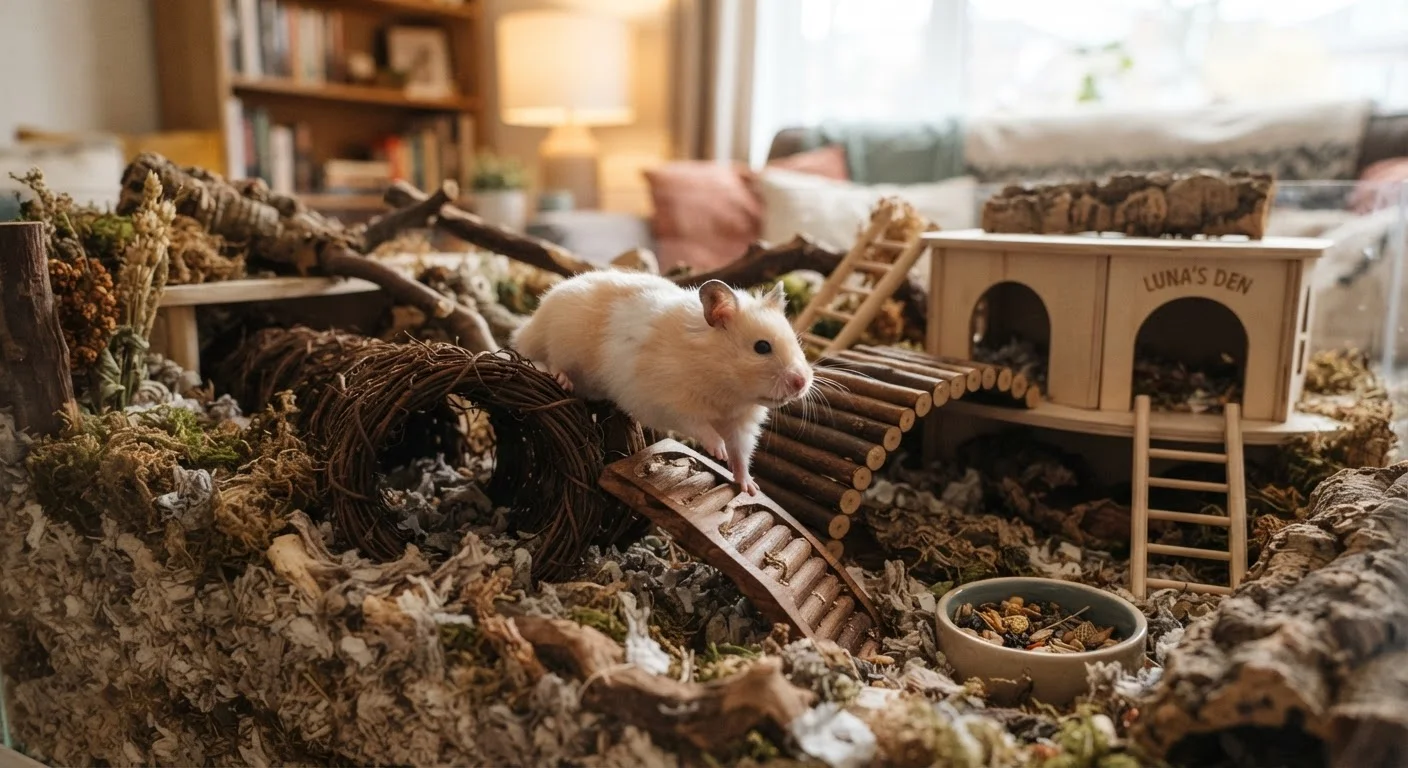
A small caged pet isn't simply content as long as it has food, water, and a wheel. Animals like hamsters, gerbils, and mice are highly active in the wild - burrowing, foraging, and traveling significant distances nightly. In captivity, an under-stimulating environment can lead to repetitive behaviors (sometimes called stereotypies), such as bar-chewing or pacing, which are recognized stress indicators in small mammals.
Enrichment isn't about making a habitat look impressive - it's about giving your pet the physical and cognitive outlets that match its biology. A thoughtfully designed space supports natural behavior, reduces anxiety, and can even improve the animal's overall wellbeing. If you're still weighing whether a small pet is right for your household, our honest guide to small pet ownership outlines what families can realistically expect.
Core Habitat Features Every Small Pet Needs
Before adding enrichment accessories, the foundation has to be right. Four elements form the baseline of any quality small-pet environment:
- Adequate floor space: Minimum cage footprints vary by species, but larger is consistently better. Hamsters in particular benefit from significantly more space than many starter kits provide.
- Deep substrate: Burrowing is a core behavior for hamsters and gerbils. Substrate depth of at least 6 inches - using paper-based, aspen, or other pet-safe bedding - allows genuine digging rather than surface scratching.
- Hides and shelters: Every small pet needs at least one enclosed retreat for sleeping and feeling secure. Multiple hides give the animal choices, which itself is a form of control that reduces stress.
- Appropriate temperature and lighting: Small mammals are sensitive to drafts, direct sunlight, and temperatures above 75-78°F. Positioning the habitat away from windows and heating vents supports a stable, comfortable environment.
See our pre-arrival checklist for a full breakdown of supplies to have ready before your pet comes home.
5+ miles
Distance wild hamsters may travel nightly
Research on wild European hamsters has documented nightly travel ranges that highlight just how active these animals are by nature, informing modern enrichment standards.
6+ inches
Recommended minimum substrate depth for hamsters
Animal welfare organizations and small-mammal veterinary guidelines increasingly recommend deep substrate as a baseline welfare standard, not an optional extra.
Best Practices for Active Enrichment
Once the habitat foundation is solid, these practices make the biggest difference in daily quality of life:
Provide a wheel sized appropriately for your specific species
Running is a core nocturnal behavior, particularly for hamsters and mice. An undersized wheel forces the animal into an unnatural back arch, which can cause spinal strain over time. A solid-surface wheel without rungs prevents leg and tail injuries.
Introduce foraging by scattering food rather than always using a bowl
Wild small mammals spend much of their active time searching for food. Scatter feeding engages natural foraging instincts, extends activity periods, and provides mental stimulation that a static food bowl cannot.
Rotate enrichment items on a weekly schedule
Novelty is a significant driver of exploratory behavior in small mammals. Leaving the same objects in place indefinitely reduces stimulation; rotating items maintains interest without requiring new purchases.
Offer species-appropriate chewing materials
Rodents have continuously growing teeth, and chewing is both physically necessary and behaviorally satisfying. Providing safe materials reduces the likelihood of bar-chewing and keeps teeth worn to a healthy length.
Design the habitat to allow natural social or solitary behavior as the species requires
Gerbils are social animals that generally thrive in same-sex pairs or groups, while Syrian hamsters are solitary and should be housed alone. Mismatching social setup to species needs is a significant source of chronic stress.
Quick Wins You Can Implement Today
You don't need to overhaul the entire habitat at once. Start with one or two changes and observe how your pet responds - behavioral feedback is often immediate.
Watch Your Pet's Response to Changes
After introducing any new enrichment item, observe your pet during its active period for a night or two. Confident exploration, scent-marking, and immediate use of a new hide are positive signals. Prolonged avoidance of a new object is normal at first, but persistent fear responses may suggest the item is too large, too reflective, or placed in a location that feels exposed. Adjust placement before removing the item entirely.
Keep in mind that behavioral changes - decreased activity, hiding more than usual, or changes in eating - can sometimes signal that something is wrong rather than just unfamiliar. Our article on signs a small pet is unwell helps owners distinguish normal adjustment from genuine health concerns.
The content provided on our blog site traverses numerous categories, offering readers valuable and practical information. Readers can use the editorial team’s research and data to gain more insights into their topics of interest. However, they are requested not to treat the articles as conclusive. The website team cannot be held responsible for differences in data or inaccuracies found across other platforms. Please also note that the site might also miss out on various schemes and offers available that the readers may find more beneficial than the ones we cover.