

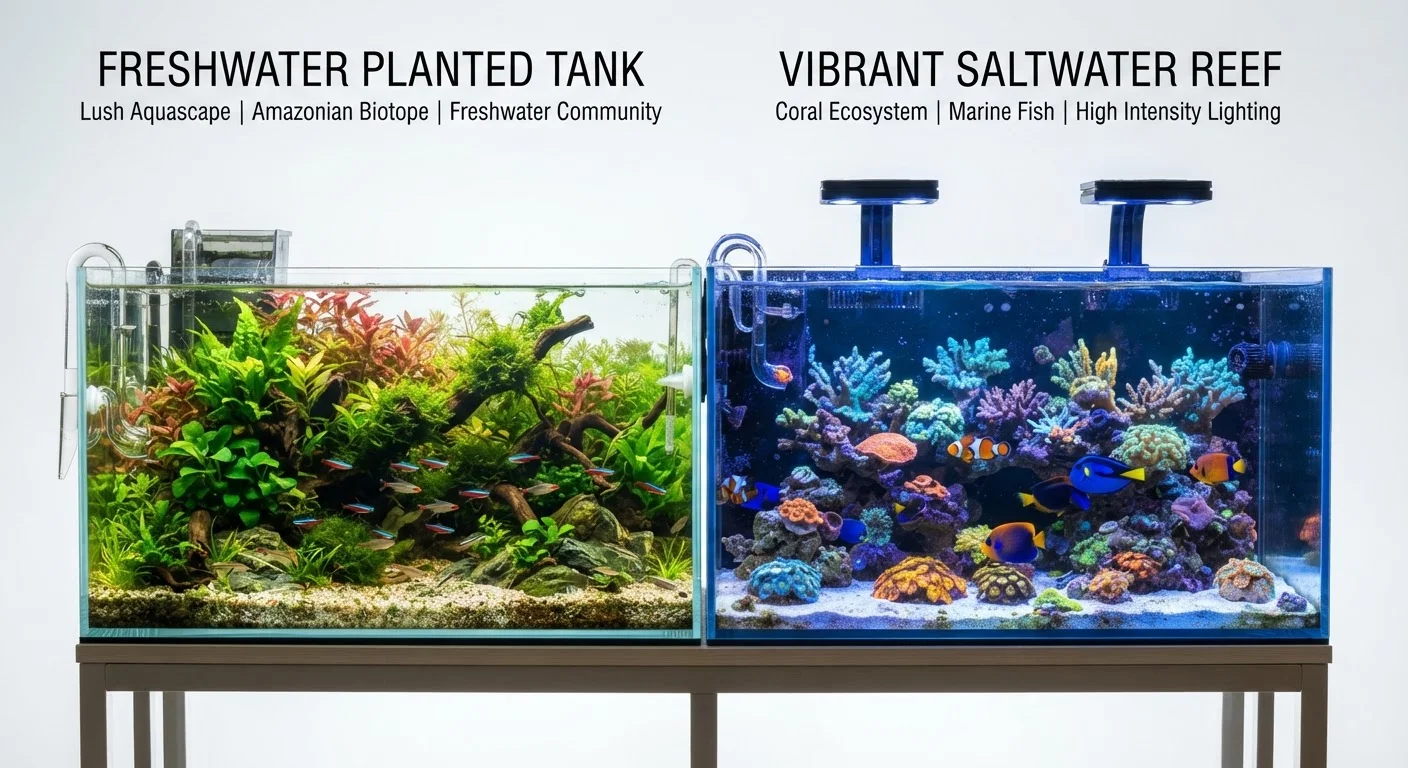
Our Verdict
For most first-time owners, a freshwater aquarium offers the most forgiving introduction to fishkeeping. Saltwater tanks can be deeply rewarding, but they demand a steeper financial commitment and a higher tolerance for complexity. Whichever path you choose, success comes from understanding the real maintenance requirements before you buy.
| Best for | Recommended |
|---|---|
| Families new to fishkeeping with a modest budget | Freshwater tank |
| Experienced hobbyists seeking visually stunning reef ecosystems | Saltwater tank |
| Households with children learning pet responsibility | Freshwater tank |
| Owners ready to invest significant time in daily water monitoring | Saltwater tank |
Why the Choice Matters More Than It Seems
Picking a fish tank feels like a simple weekend errand - until you're standing in the store facing two completely different ecosystems. Freshwater and saltwater aquariums aren't just different in appearance; they differ in cost structure, biological complexity, and daily demands. Getting this decision right at the start saves families significant time, money, and frustration.
The fish you picture - colorful clownfish and neon tetras - live in very different environments that require very different technology and expertise to replicate at home. Understanding what each system actually asks of you is the most important step before any purchase.
| Freshwater Tank | Saltwater Tank | |
|---|---|---|
| Typical starter cost | $100-$300 | $500-$1,500+ |
| Equipment complexity | Low to moderate | High |
| Water testing frequency | Weekly | Daily to every few days |
| Tolerance for beginner errors | Relatively forgiving | Low - errors can be fatal quickly |
| Species variety | Very wide range | Wide but more specialized |
| Visual impact | Moderate to high | Very high (especially reef tanks) |
| Recommended experience level | Beginner-friendly | Intermediate to advanced |
Setup Costs and Equipment
A basic freshwater starter kit - tank, filter, heater, lighting, and substrate - typically runs between $100 and $300 for a 20-gallon setup. Fish themselves are relatively affordable, often $3-$15 each for common species like guppies, tetras, or bettas.
Saltwater setups demand considerably more. A comparable reef-ready aquarium with a protein skimmer, live rock, specialized lighting for coral, and a salinity monitoring system can easily cost $500-$1,500 or more before a single fish is added. Marine fish and corals also carry higher price tags. Families should factor these costs alongside household finances - a resource like a household budgeting guide can help set realistic spending limits before committing.
Start Smaller Than You Think You Need
It can be tempting to buy the largest tank you can afford, but a 10- to 20-gallon freshwater tank is an ideal learning environment. Smaller tanks are easier to manage initially and allow you to build skills before scaling up. Once you've maintained stable water parameters for several months, upgrading makes much more sense financially and practically.
Water Chemistry and Daily Maintenance
Freshwater tanks are more biologically forgiving. Most species tolerate modest fluctuations in pH, temperature, and hardness. A weekly partial water change (roughly 25%) and periodic filter cleaning are typically sufficient to keep the tank healthy.
Saltwater aquariums operate within much narrower tolerances. Salinity, pH, alkalinity, calcium, and magnesium must all stay within specific ranges - and they shift constantly. Many saltwater keepers test water parameters daily. A single spike in ammonia or an unexpected salinity drop can prove fatal to marine fish within hours. Recognizing how fish stress shows up in either system is an essential skill, but in saltwater tanks the margin for error is narrower and the consequences more immediate.
Fish Variety and Visual Appeal
Freshwater tanks offer an impressive range of species - from peaceful community fish like corydoras catfish and rasboras to striking centerpiece fish like angelfish or discus. Planted freshwater tanks, which incorporate live aquatic plants, can be genuinely beautiful and support a natural ecosystem with relatively modest effort.
Saltwater systems, particularly reef tanks featuring coral, anemones, and fish like clownfish and tangs, are visually stunning in a way that freshwater setups rarely match. For many hobbyists, that aesthetic payoff is worth the added complexity. However, many marine species have specialized dietary and habitat needs that beginners may find difficult to meet consistently.
~12 million
US households with freshwater fish
The American Pet Products Association regularly identifies freshwater fish as one of the most commonly kept pets in the United States.
3-5x
Higher typical startup cost for saltwater vs. freshwater
Hobbyist aquarium communities and veterinary extension resources commonly cite saltwater setups as costing several times more than comparable freshwater systems.
Long-Term Commitment and Who Should Choose What
Freshwater fishkeeping is genuinely accessible for families with children, renters working within space limits, or anyone new to the hobby. Mistakes are recoverable. Livestock is replaceable without major financial pain. The learning curve is measured in weeks, not months.
Saltwater fishkeeping rewards patience and preparation. Those who thrive tend to enjoy the science of water chemistry, have time for regular testing and adjustments, and are comfortable with higher financial stakes. It is not an inherently unachievable goal for a first-time owner, but it should be entered with eyes open.
Whatever setup you choose, consistency in care - stable temperatures, clean water, and attentive observation - matters more than any piece of equipment. If you're also managing broader home upkeep responsibilities, understanding home maintenance basics can help you realistically assess how much capacity your household has for a new recurring care routine.
Avoid Impulse Purchases at the Pet Store
Many first-time owners buy fish the same day they buy the tank - before the aquarium has cycled and established a stable nitrogen cycle. This is one of the most common causes of early fish loss. Allow a new tank to cycle for two to four weeks before adding livestock, and research compatibility requirements for any species you plan to keep together.
The content provided on our blog site traverses numerous categories, offering readers valuable and practical information. Readers can use the editorial team’s research and data to gain more insights into their topics of interest. However, they are requested not to treat the articles as conclusive. The website team cannot be held responsible for differences in data or inaccuracies found across other platforms. Please also note that the site might also miss out on various schemes and offers available that the readers may find more beneficial than the ones we cover.