

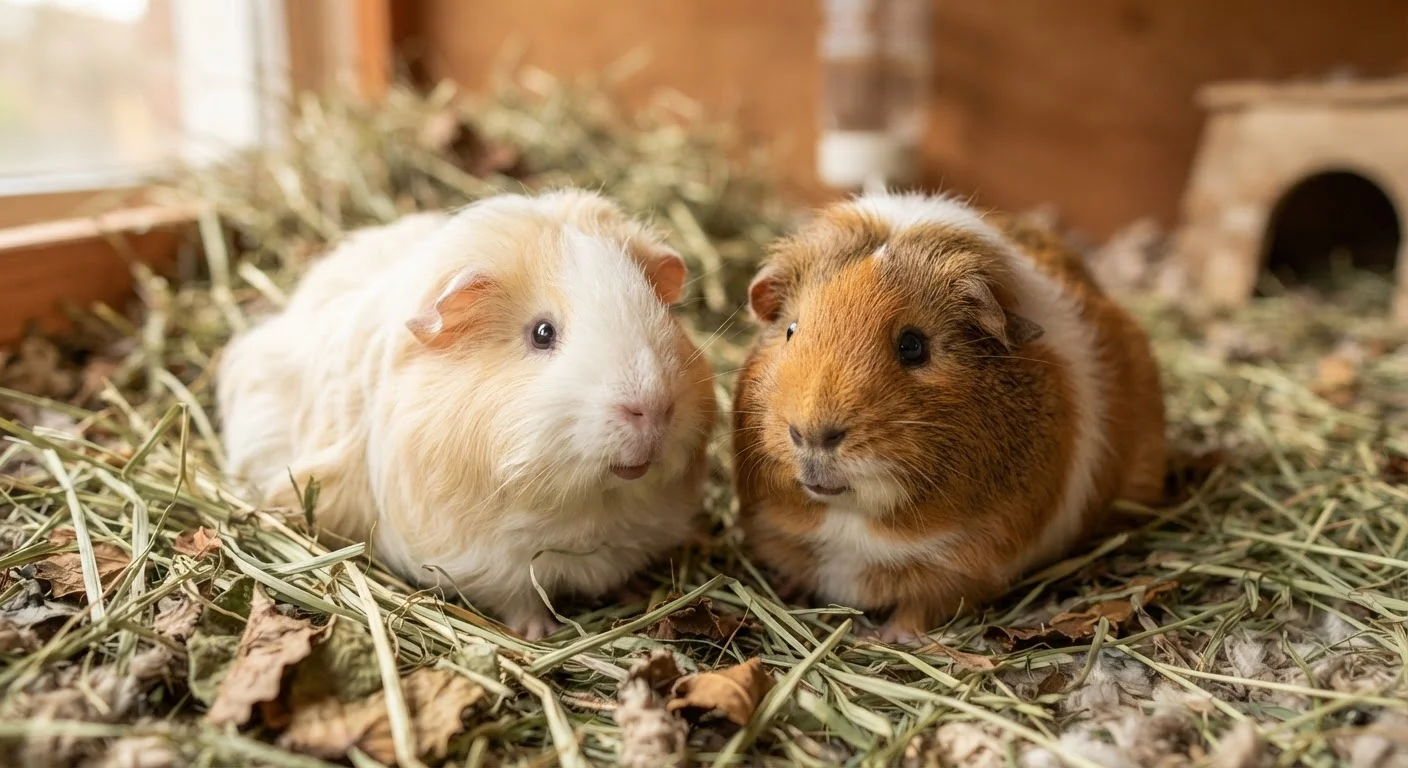
Why Guinea Pigs Make Great Family Pets
Guinea pigs - also called cavies - are gentle, expressive, and surprisingly communicative small mammals that adapt well to family life. Unlike many small pets, they are active during the day, making them far easier for children to interact with. Their repertoire of vocalizations, from soft purring to excited "wheeking," makes them genuinely engaging companions.
They are, however, a meaningful commitment. A well-cared-for guinea pig typically lives 4-7 years, and their social, dietary, and space needs are more demanding than many first-time owners expect. Understanding those needs before bringing one home is the foundation of responsible ownership.
4-7 years
Average guinea pig lifespan
With proper diet, space, and veterinary care, many guinea pigs reach the higher end of this range.
7.5 sq ft
Minimum recommended floor space per pair
Cavy welfare organizations and exotic animal veterinarians consistently cite this as the baseline for a pair of guinea pigs.
70-80%
Proportion of diet that should be hay
Grass hay is essential for digestive health and natural tooth wear in guinea pigs.
Housing and Habitat Essentials
Space is one of the most commonly underestimated requirements for guinea pigs. Veterinary and cavy welfare organizations generally recommend a minimum of 7.5 square feet of floor space per pair - more is always better. Standard pet-store cages are often too small. Many experienced owners use C&C (coroplast and cube grid) enclosures, which are easy to customize and expand.
Key habitat features
- Bedding: Paper-based or fleece bedding works well. Avoid cedar or pine shavings, which contain aromatic oils that can irritate the respiratory tract.
- Hiding spots: At least one shelter per guinea pig helps them feel secure. Guinea pigs are prey animals and need places to retreat.
- Temperature: Keep enclosures between 65-75°F (18-24°C). Guinea pigs are sensitive to heat and drafts.
- Cleaning: Spot-clean bedding daily and do a full enclosure clean at least once a week.
For broader enrichment ideas, see our guide on building an enriching environment for a small caged pet - many principles apply directly to guinea pig setups.
Choosing the Right Location for the Enclosure
Place the enclosure in a room where the family spends regular time - guinea pigs acclimatize to household sounds and become more confident when they are part of daily activity. Avoid garages, basements, or isolated rooms, which can increase stress and make health monitoring harder. Keep the enclosure out of direct sunlight and away from heating and cooling vents.
Diet and Nutrition
A nutritionally balanced diet is central to guinea pig health. Their digestive systems are designed for constant, slow movement of fibrous material - which is why hay is so critical.
The core components
- Timothy hay (or other grass hay)
- Should be available at all times. Hay supports healthy digestion and keeps teeth worn down naturally. It should represent roughly 70-80% of total daily intake.
- Fresh leafy vegetables
- Offer about one cup per guinea pig daily. Dark leafy greens like romaine lettuce, kale (in moderation), and bell peppers are excellent choices.
- Vitamin C
- Guinea pigs, like humans, cannot synthesize vitamin C. Bell peppers and leafy greens are good natural sources. Vitamin C degrades quickly in water, so drops added to a water bottle are not reliable - prioritize food sources instead.
- Pellets
- Plain, grass hay-based pellets round out the diet in small amounts (about ⅛ cup per guinea pig per day). Avoid seed-and-nut mixes marketed for guinea pigs - these are often high in fat and nutritionally incomplete.
Vitamin C Is Non-Negotiable
Unlike most mammals, guinea pigs cannot synthesize vitamin C internally. A deficiency leads to scurvy, causing joint pain, rough coat, lethargy, and eventually serious illness. Fresh vegetables high in vitamin C - particularly bell peppers - should be offered every single day, not as an occasional treat. Do not rely on water-soluble vitamin drops as a primary source, as vitamin C degrades rapidly once mixed with water.
Social Needs and Handling
Guinea pigs are highly social animals that, in the wild, live in groups. Keeping a single guinea pig is widely considered a welfare concern by cavy experts and veterinarians - solitary guinea pigs are at risk of loneliness-related stress. Same-sex pairs or small groups are the standard recommendation, with neutered male-female pairs also an option.
When it comes to handling, patience is essential. A newly homed guinea pig may freeze, hide, or vocalize when picked up - this is normal prey-animal behavior, not aggression. Consistent, calm interaction over several weeks builds confidence.
Introduce a new guinea pig to an existing one on neutral territory - a playpen neither animal has used before - to reduce territorial tension from the start.
Guinea pigs establish social hierarchies, and introducing a newcomer directly into an established animal's space increases the likelihood of aggressive confrontations.
Weigh your guinea pig on the same day each week using a kitchen scale and log the results - a 2-3 oz drop over two weeks is a meaningful health signal even if the animal looks fine.
Because guinea pigs mask illness, gradual weight loss is often the earliest detectable sign of underlying health problems, giving owners a critical head start on veterinary care.
Handling tips
- Always support the hindquarters when lifting - never pick a guinea pig up by its midsection alone.
- Keep sessions short at first (5-10 minutes) and gradually increase as the animal becomes comfortable.
- Sit on the floor during early handling sessions to eliminate fall risk.
- Children should always be supervised and seated when holding guinea pigs.
Health Checks and Common Concerns
Guinea pigs are prey animals with a strong instinct to hide signs of illness - by the time symptoms are obvious, a condition may already be advanced. Weekly at-home checks are a practical safeguard.
What to check weekly
- Weight: A kitchen scale used consistently will catch slow weight loss before it becomes visible.
- Teeth: Front incisors should align properly and not overgrow. Malocclusion (misaligned teeth) is a common dental problem requiring veterinary attention.
- Coat and skin: Look for bald patches, excessive scratching, or mites.
- Eyes and nose: Both should be clear and free of discharge.
- Feet: Check for sores on the footpads, a condition called bumblefoot that can develop on wire flooring or in dirty bedding.
Common health concerns in guinea pigs include respiratory infections, urinary tract issues, and vitamin C deficiency (scurvy). Any change in eating, elimination, movement, or behavior warrants a call to a veterinarian familiar with exotic small mammals. Our companion article on signs a small pet is unwell that owners often dismiss covers the subtle signals that are easiest to overlook.
Finding the Right Veterinarian
Not all veterinary practices see guinea pigs regularly. Before you bring your guinea pig home, locate a veterinarian in your area who is experienced with exotic small mammals or cavies specifically. An annual wellness exam is recommended even for apparently healthy animals, and having an established relationship with a vet makes urgent appointments much easier to secure.
This article provides general educational information about guinea pig care and is not a substitute for veterinary advice. Always consult a qualified veterinarian for health concerns about your pet.
Getting Ready Before Your Guinea Pig Arrives
Setting up the correct environment before your guinea pig comes home dramatically reduces stress for the animal during the critical settling-in period. Have the enclosure fully assembled and stocked with bedding, hay, water, and hiding spots before arrival day.
Our detailed preparation checklist for bringing a small pet home walks through every supply and safety step room by room - it's worth reviewing even for experienced owners. If your family is also considering a rabbit, bringing home a rabbit: what the first two weeks look like offers a useful contrast in settling-in needs between the two species.
Give a newly arrived guinea pig at least 24-48 hours of quiet time to acclimate before attempting extended handling. Resist the urge to invite friends over immediately - a calm, predictable environment in the first week builds trust that pays dividends for years to come.
“The single biggest mistake new guinea pig owners make is underestimating how much space and social contact these animals genuinely need. They're not 'starter pets' - they're companion animals with real behavioral and nutritional complexity.”
— Dr. Susan Brown, Exotic small mammal veterinarian and author on small animal care
The content provided on our blog site traverses numerous categories, offering readers valuable and practical information. Readers can use the editorial team’s research and data to gain more insights into their topics of interest. However, they are requested not to treat the articles as conclusive. The website team cannot be held responsible for differences in data or inaccuracies found across other platforms. Please also note that the site might also miss out on various schemes and offers available that the readers may find more beneficial than the ones we cover.