

Orlando Has More Going On Than You Might Think
Most families arrive in Orlando with a printed park schedule and little else planned. That's understandable - the parks are a genuine draw. But once you've survived the lines and the overpriced frozen lemonade, you'll find that the broader Orlando area holds some genuinely surprising experiences that kids remember just as vividly as any roller coaster.
Central Florida sits on top of one of the most ecologically rich landscapes in the continental United States. Clear-water springs, vast wildlife corridors, and a downtown arts scene all exist within easy reach of the resort strip. The challenge is simply knowing they're there. This list is built around destinations and experiences that families routinely overlook - places worth carving out even a half-day for, especially if you're staying a full week.
If you're still deciding how to structure your overall trip, it's worth reading about the pitfalls that derail family trips - overscheduling and single-track itineraries are among the most common culprits.
Wekiwa Springs State Park
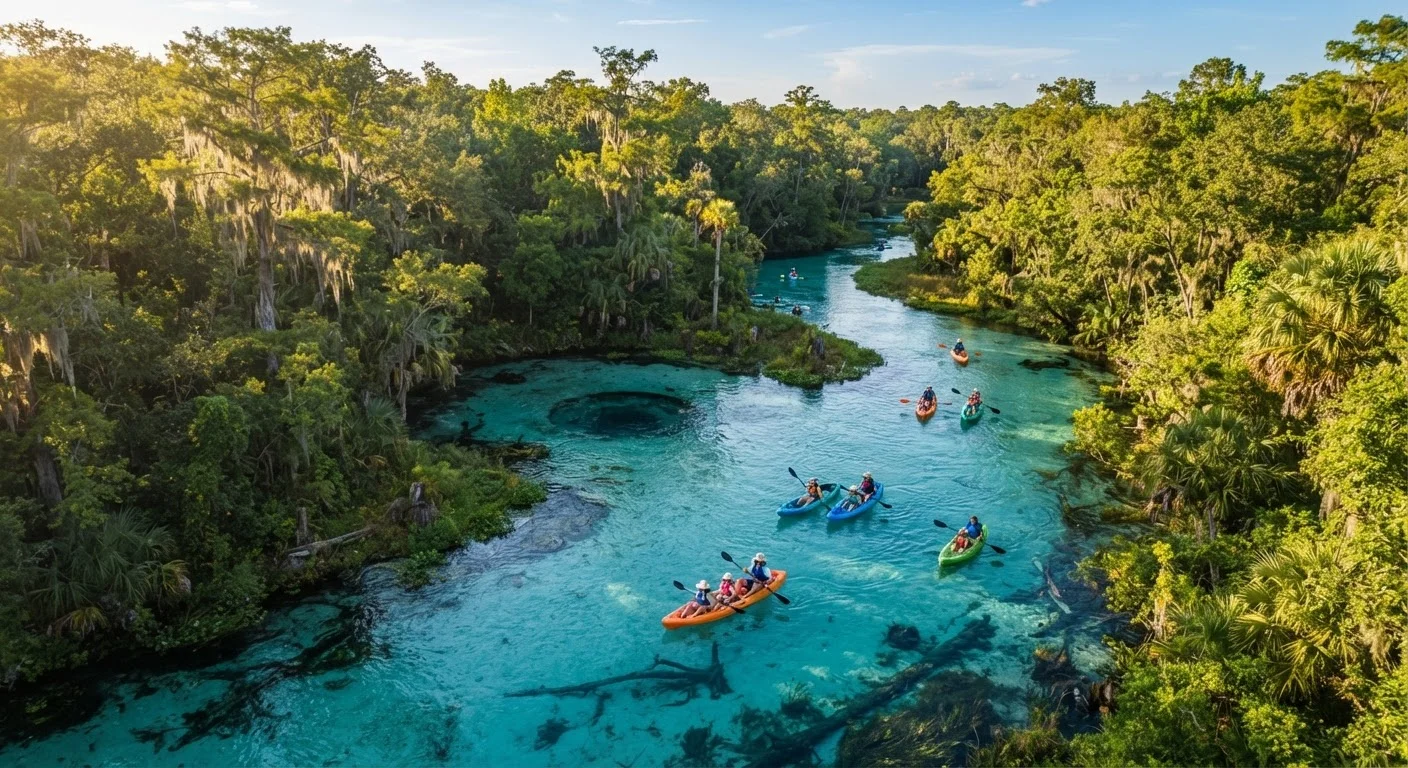
About 30 minutes northwest of the resort corridor, Wekiwa Springs is one of Florida's first-magnitude springs - meaning it discharges an enormous volume of water at a constant temperature of around 68°F year-round. Families can swim in the natural basin, rent canoes or kayaks, and explore hiking trails that wind through Florida scrub and sandhill habitat.
The park is a genuine contrast to the manufactured environment of the parks - kids see alligators in their actual habitat, spot wading birds along the spring run, and interact with a landscape that hasn't been engineered for them. It's also one of the better value outdoor experiences in the region; Florida state park admission is typically very reasonable per vehicle.
Wekiwa Springs offers swimming, paddling, and wildlife in a landscape that requires no ticket upgrades.
Merritt Island National Wildlife Refuge
About an hour east of Orlando near the Space Coast, Merritt Island is one of the most biodiverse wildlife refuges in the United States. It sits adjacent to Kennedy Space Center and shares a barrier island with some of the country's most intact coastal habitat. Families can drive the Black Point Wildlife Drive, a seven-mile loop through marshes that's often packed with roseate spoonbills, bald eagles, manatees in cooler months, and dozens of shorebird species.
The refuge is free to enter and requires no reservation for the driving loop. For families who've done national parks and want something comparable in ecological richness but lower in logistics - this fits the bill. It pairs naturally with a Kennedy Space Center visit if you're already heading east. For a broader framework on nature-based family travel, see our guide to using national parks as a family travel strategy.
Merritt Island is free, ecologically stunning, and often completely off the radar for Orlando visitors.
The Orlando Museum of Art and Mennello Museum
Downtown Orlando has a genuinely walkable arts district anchored by Loch Haven Park, where the Orlando Museum of Art and the Mennello Museum of American Art sit within easy walking distance of each other. The Mennello focuses on folk art and is unusually engaging for kids - the collection is colorful, accessible, and doesn't require art-world knowledge to appreciate.
Both museums are affordable by family standards, and the park surrounding them has open green space, a lake, and a relaxed atmosphere that's a meaningful change of pace from resort-area density. Check each museum's current hours and programming before visiting, as schedules can vary.
Loch Haven Park's museums offer genuine cultural depth at a fraction of theme park admission costs.
Blue Spring State Park (Seasonal)
Between roughly November and March, Blue Spring State Park in Orange City - about 45 minutes north of Orlando - hosts one of the most accessible manatee-viewing sites in the world. West Indian manatees congregate in the warm spring water in numbers that can reach into the hundreds on cold mornings. Viewing is from boardwalks along the spring run, and rangers are typically present to provide context.
Swimming in the spring is suspended during manatee season, but the experience of watching dozens of gentle giants clustered in the clear blue water is remarkable for kids and adults alike. Outside of manatee season, the spring reopens for swimming and paddling. Either way, it's a worthwhile detour from Orlando.
In winter months, Blue Spring offers some of the most accessible wild manatee viewing anywhere in the U.S.
Lake Eola Park and the Orlando Farmer's Market
In the heart of downtown Orlando, Lake Eola Park is a genuinely pleasant urban green space with a swan-shaped paddleboat rental, a walking path circling the lake, and an amphitheater. On Sunday mornings, the Orlando Farmer's Market takes over the park's southern edge, drawing local food vendors, artisans, and live music.
For families that want to spend a morning experiencing Orlando as a city rather than a resort destination, this is the most straightforward option. It costs nothing to walk the park, and the market gives kids the chance to pick out their own breakfast snacks. It's one of those low-key experiences that often lands in the "favorite morning of the trip" category.
Lake Eola's Sunday market is one of the most pleasant free family mornings in all of Orlando.
Kelly Park and Rock Springs Run
Kelly Park in Apopka, about 35 minutes from the resort corridor, sits along Rock Springs Run - one of the clearest and most beautiful natural water features in the state. The main draw is a natural lazy river: families float downstream through a canopied cypress and hardwood forest on inner tubes (available for rental at the park) in 68°F spring water. The float takes around 30 minutes and winds through genuinely beautiful natural scenery.
The park is very popular on summer weekends and can reach capacity before midday, so arriving early is strongly advised. Weekday visits or off-season trips offer a quieter experience. Either way, it's the kind of Florida that doesn't show up in any resort brochure - and kids tend to love it. If you're thinking about structuring your family travel more broadly around independent exploration like this, the comparison of all-inclusive vs. independent family travel is worth a read before your next booking.
Rock Springs Run is a natural lazy river through old-growth Florida forest - and it costs a few dollars to enter.
Making the Most of Orlando's Hidden Side
Blending a couple of these experiences into a theme park trip doesn't require major logistical gymnastics. Many sites open early enough to fill a morning before afternoon park crowds peak, and several are close enough for a relaxed evening outing. Families who build in one or two "off-script" days tend to return home with a more complete picture of what Florida actually is - not just what's been built on top of it.
Plan off-park days early, not as afterthoughts
The best natural springs and wildlife sites can fill up fast on summer weekends - some reach capacity by mid-morning. Build your non-park experiences into the trip itinerary from the start rather than leaving them as backup plans. A little advance research into seasonal hours and reservation requirements goes a long way.
For families weighing accommodation choices that support more flexible exploration, the vacation rental vs. hotel trade-offs piece covers how kitchen access and space factor into longer multi-day itineraries. And if cost is a central concern, our guide to free and low-cost attractions in major U.S. cities includes Orlando among its featured destinations.
The content provided on our blog site traverses numerous categories, offering readers valuable and practical information. Readers can use the editorial team’s research and data to gain more insights into their topics of interest. However, they are requested not to treat the articles as conclusive. The website team cannot be held responsible for differences in data or inaccuracies found across other platforms. Please also note that the site might also miss out on various schemes and offers available that the readers may find more beneficial than the ones we cover.