

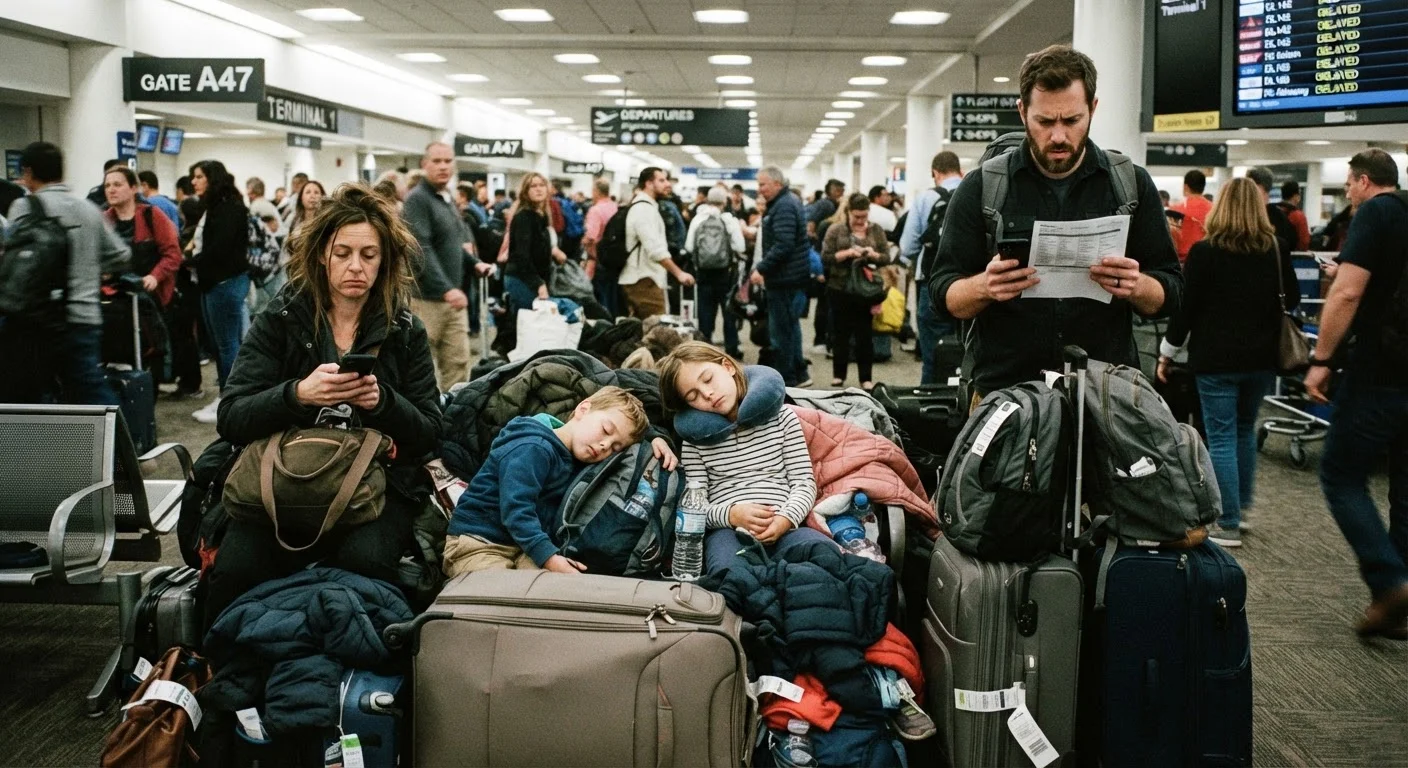
Why Family Trips Go Sideways (And How to See It Coming)
Family vacations carry enormous expectations - quality time, shared memories, a break from routine. That emotional weight is exactly what makes planning mistakes so costly. When a trip underdelivers, it doesn't just feel disappointing; it feels like a failure of something that really mattered.
The good news: most family travel stress is predictable. The pitfalls that derail trips tend to repeat themselves across families and destinations, which means they're also avoidable. Whether you're planning a family road trip across the US or an international adventure, recognizing these patterns before you pack is half the battle.
Overpacking the Schedule Is the Most Common Culprit
Families frequently underestimate how long transitions take with children - loading the car, finding restrooms, managing snacks, and calming a restless toddler all add real time. A schedule that looks reasonable on paper can collapse entirely by day two. Build in at least one unscheduled half-day per three days of travel, and treat downtime as a planned feature, not wasted time.
The Mistakes Families Keep Making
These six patterns show up repeatedly in family travel - from first-timers to seasoned travelers who let optimism override planning discipline. Understanding why each happens makes them much easier to sidestep.
Trying to see everything instead of experiencing a few things deeply.
Why it happens: Parents want to justify the cost of the trip by maximizing activities, especially on expensive destinations like Hawaii or international travel.
Choosing a destination that suits adults but doesn't fit the kids' ages or interests.
Why it happens: Adults plan from their own travel wish lists, forgetting that a long museum day or an ambitious hiking trail may not work for a five-year-old.
Underestimating the true cost of the trip once you arrive.
Why it happens: Families often budget for flights and lodging but overlook meals, park entry, parking, tips, souvenirs, and last-minute extras that add up fast.
Skipping flexibility in travel day planning.
Why it happens: Families book connecting flights with tight layovers, schedule activities the same evening they arrive, or plan long driving days without rest stops - because it looks efficient on paper.
Not researching the destination's realities for families with kids.
Why it happens: Travel content often presents idealized versions of destinations without noting heat, crowd density, safety considerations, or logistical friction for families.
Assuming the accommodation type will solve - or doesn't affect - the trip experience.
Why it happens: Families sometimes book whatever's cheapest or most familiar without thinking through whether a hotel or vacation rental actually fits their needs.
For families working with a tighter budget, many of these mistakes carry financial consequences on top of the stress. Our complete family travel planning framework covers how to approach the full picture - from booking to packing - in a way that protects both your budget and your sanity.
Reframing What a Successful Family Trip Looks Like
The families who come home feeling genuinely refreshed tend to share one mindset shift: they stopped measuring trip success by how much they did and started measuring it by how everyone felt. A slower itinerary with two great days beats a frantic week with zero breathing room.
61%
Families who report travel stress outweighing relaxation
A survey by the American Psychological Association found that vacation stress is commonly reported among US adults, with logistical overload cited as a leading cause.
2-3 days
Average time before kids hit 'trip fatigue'
Child development experts and pediatric travel researchers broadly note that young children often need rest and routine restoration after two to three days of high stimulation.
It also helps to choose your destination honestly. Some popular family destinations carry hidden costs and logistical friction that erode the experience - our piece on destination decisions that drain family budgets is worth reading before you commit to a spot. And if you're weighing resort-style travel against independent exploration, our all-inclusive vs. independent travel comparison lays out both sides honestly.
The best family trips aren't perfect - they're flexible. Build in the margin to let things go sideways a little, and you'll probably remember those moments most fondly.
The content provided on our blog site traverses numerous categories, offering readers valuable and practical information. Readers can use the editorial team’s research and data to gain more insights into their topics of interest. However, they are requested not to treat the articles as conclusive. The website team cannot be held responsible for differences in data or inaccuracies found across other platforms. Please also note that the site might also miss out on various schemes and offers available that the readers may find more beneficial than the ones we cover.