

Our Verdict
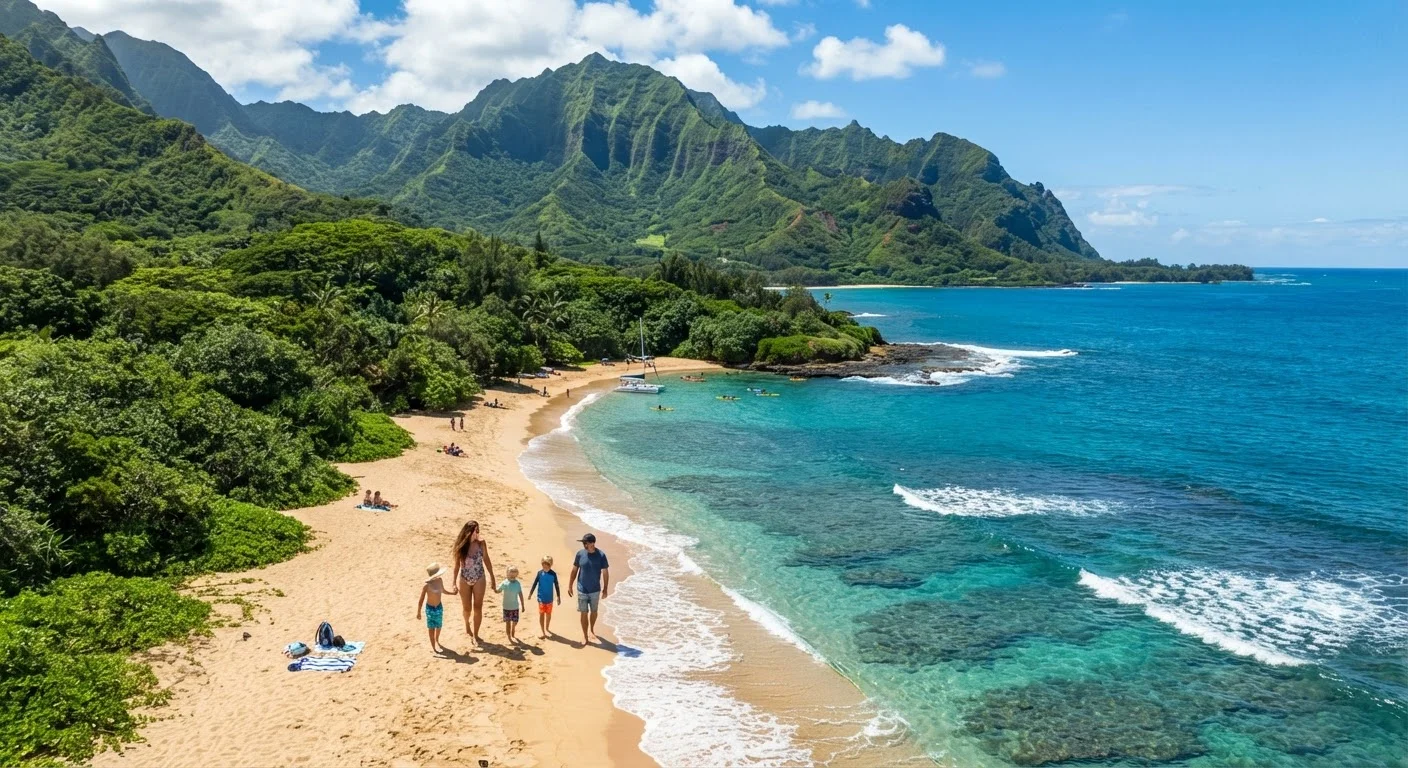
No single Hawaiian island is universally 'best' for families — the right choice depends entirely on your priorities. Oahu is the most practical all-rounder, Maui offers the smoothest resort experience, Kauai is the most scenic escape, and the Big Island is the most geologically thrilling. Knowing what your family actually wants from a vacation is the most useful planning tool you have.
| Best for | Recommended |
|---|---|
| Families who want convenience, variety, and iconic experiences | Oahu |
| Families prioritizing calm beaches, snorkeling, and resort amenities | Maui |
| Families seeking lush scenery, hiking, and a slower pace | Kauai |
| Adventure-focused families interested in volcanoes and stargazing | Big Island |
Why Island Choice Matters More Than You Think
Hawaii is often treated as a single destination, but the four main islands — Oahu, Maui, Kauai, and the Big Island (Hawaii Island) — feel remarkably different from one another. Choosing the wrong one for your family's travel style can mean long drives, limited activities for kids, or a price tag that doesn't match the experience you had in mind.
Before comparing islands side by side, it helps to define what your family actually wants. Are you after beach time and ease, or does someone in your group need a hike to feel satisfied? Is your budget tight, or is this a splurge trip? Do teens need stimulation and options, or are you traveling with toddlers who need predictable nap schedules? These questions matter more than any ranking. For broader planning guidance, avoid the common missteps that derail family trips before you commit to a destination.
| Oahu | Maui | Kauai | Big Island | |
|---|---|---|---|---|
| Best for | First-timers, urban energy | Beach and resort experience | Nature, hiking, scenery | Adventure, geology, science |
| Beach quality for families | Good (Waikiki, Lanikai) | Excellent (calm, protected bays) | Good (some remote) | Variable (black sand, rough surf) |
| Crowd levels | High year-round | Moderate to high | Low to moderate | Low to moderate |
| Flight accessibility | Most direct flights from mainland | Many direct flights | Fewer direct flights | Some direct flights |
| Budget friendliness | Most flexible range | Higher cost overall | Moderate, limited options | Moderate, high driving costs |
| Activities for teens | High variety | Good variety | Outdoor-focused | Unique, activity-rich |
| Ease for young children | High | High | Moderate | Moderate |
Oahu: The All-Rounder
Oahu is Hawaii's most visited island, and for good reason — it's also the most logistically accessible. Honolulu's Daniel K. Inouye International Airport receives the most direct mainland flights, often at lower fares. Families can find accommodation across every price point, from modest hotels near Waikiki to vacation rentals further from the tourist corridor.
Pearl Harbor, the Polynesian Cultural Center, and the North Shore's surf culture give kids and teens genuine things to engage with beyond the beach. Waikiki Beach is calm enough for young swimmers and centrally located enough to serve as a reliable home base. The tradeoff is crowd density — Waikiki is busy year-round, and the island's commercial energy won't suit families looking for quiet. Still, for first-time visitors to Hawaii or those managing tighter budgets, Oahu tends to deliver the most per dollar spent. See which destination costs quietly add up to plan without surprises.
Consider a Two-Island Itinerary
For trips of ten days or longer, pairing Oahu with a neighbor island can give families both logistical ease and a quieter nature experience. A few days on Oahu followed by a week on Kauai or Maui is a proven combination. Factor in inter-island flights early — they add cost and travel time, but the variety is often worth it for families who want more than one kind of Hawaii.
Maui, Kauai, and the Big Island: Matching Pace to Personality
Maui is often the top choice for families who want a premium beach experience with minimal friction. The West Maui and South Maui resort corridors offer calm, protected bays — Kapalua Bay and Kaanapali Beach are particularly gentle for young swimmers and snorkelers. Maui also offers the Road to Hana for families with older kids who enjoy scenic drives, and whale watching during winter months is a genuinely memorable experience. It's a polished, higher-cost island, and accommodation prices reflect that.
Kauai is the most scenically dramatic of the four, defined by the Na Pali Coast cliffs, Waimea Canyon (often called the Grand Canyon of the Pacific), and lush interior valleys. Families who hike, kayak, or simply want to feel surrounded by nature often find Kauai the most rewarding. It's also the least developed, which means fewer dining options and a genuine need to plan ahead. Young children who need entertainment infrastructure may find it limiting.
The Big Island is the largest island by far and the most geologically active. Hawaii Volcanoes National Park, Mauna Kea stargazing, black sand beaches, and manta ray night snorkeling make it a natural fit for curious, adventure-oriented families. Distances between attractions are significant — this island requires a rental car and a flexible itinerary. Budget-minded families should also factor inter-island flight costs and car rental into their planning. A complete family travel budget framework can help you account for these variables before you book.
10 million+
Annual visitors to Hawaii
Hawaii Tourism Authority data consistently shows visitor volumes exceeding 10 million annually across all islands combined, with Oahu receiving the largest share.
333,000 acres
Size of Hawaii Volcanoes National Park
Hawaii Volcanoes National Park on the Big Island covers approximately 333,000 acres, making it one of the most expansive national parks in the US.
Practical Considerations Before You Book
Regardless of which island appeals most, a few universal factors shape the Hawaii experience for families. First, accommodation style matters enormously — a vacation rental with a kitchen can significantly reduce food costs, especially for families with young children or dietary restrictions. Weighing vacation rentals against hotels is worth doing before you finalize your stay.
Second, travel timing affects both price and experience. Winter brings calmer waters on Maui's leeward coast and whale sightings; summer tends to be drier island-wide and busier everywhere. Shoulder seasons (April–May and September–October) can offer a reasonable balance of weather and crowd levels.
Finally, consider whether an all-inclusive or independent approach fits your family better — Hawaii doesn't have many true all-inclusives, but the resort corridor model on Maui and Oahu functions similarly. Understand the real trade-offs between resort stays and independent travel to make an informed call. Whatever you choose, matching the island to your family's genuine preferences — not just the most popular option — is what turns a good vacation into a great one.
The content provided on our blog site traverses numerous categories, offering readers valuable and practical information. Readers can use the editorial team’s research and data to gain more insights into their topics of interest. However, they are requested not to treat the articles as conclusive. The website team cannot be held responsible for differences in data or inaccuracies found across other platforms. Please also note that the site might also miss out on various schemes and offers available that the readers may find more beneficial than the ones we cover.