

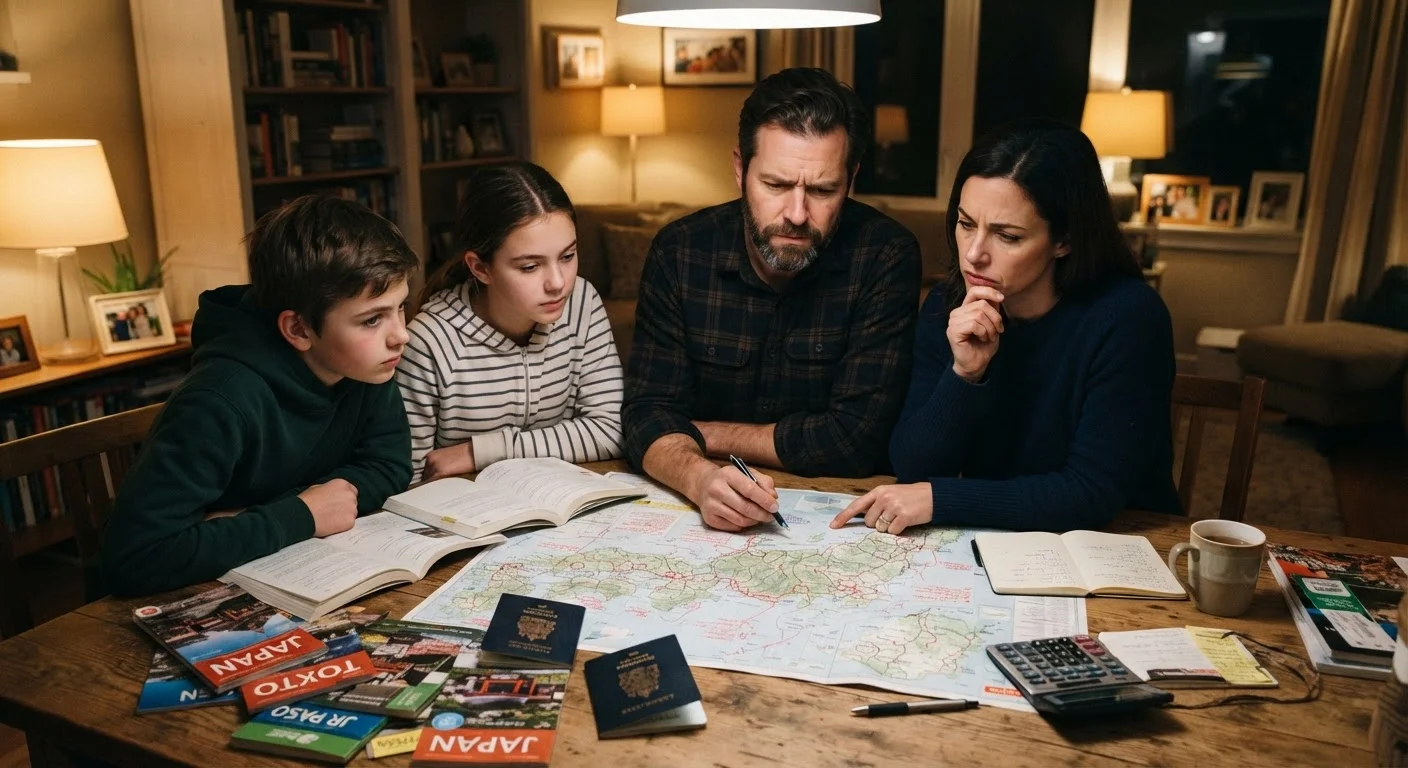
Why the Destination Choice Is a Budget Decision
Most families treat destination selection as a dream-building exercise and budget planning as a separate, later step. That sequence is precisely where costs begin to slip. The destination itself - its infrastructure, tourism economy, season, and geography - determines the baseline price of almost every subsequent decision.
A trip to a remote island with limited grocery access will cost more to feed a family than a drive to a city with competitive restaurant options. A theme-park destination charges per-person admission that scales brutally with family size. A beach resort in peak season operates at entirely different price points than the same beach six weeks earlier. These are destination-level variables, not booking mistakes.
Understanding this early shifts how families evaluate options. Rather than asking "Can we afford the flights?", the more useful question is: "What does a full day at this destination actually cost our family?" That reframe catches the quiet budget drains before they become surprises. For a full planning framework built around this approach, see our complete family travel budget planning guide.
Advertised Prices Are Only Part of the Story
A headline flight deal or discounted hotel rate rarely reflects what a family of four will actually spend at a destination. Resort fees, parking charges, per-person activity costs, and tourist-zone meal prices can add hundreds of dollars to a trip that looked affordable at first glance. Always research the full cost ecosystem of a destination before committing your budget.
Common Destination Mistakes and How to Sidestep Them
The mistakes that drain family travel budgets aren't usually dramatic blunders. They're quiet assumptions - about what "affordable" means, about how costs scale, about which seasons are truly unavoidable. The following patterns show up repeatedly in family travel planning, and each one is avoidable with a bit of earlier research.
Choosing a destination based on flight price alone without researching ground costs.
Why it happens: Cheap flights create a compelling anchor price that makes a destination feel affordable before families investigate what everything else will cost once they land.
Booking a hotel in a tourist-zone location without considering what meals and transport will cost nearby.
Why it happens: Families often prioritize proximity to major attractions, not realizing that restaurant prices and convenience fees in those zones are consistently inflated.
Ignoring per-person activity pricing when comparing destinations.
Why it happens: Adults naturally benchmark costs for one or two people; multiplying by four or five quickly changes the math in ways families don't anticipate.
Defaulting to peak travel season without considering whether flexibility is possible.
Why it happens: School schedules and workplace leave policies make summer and holiday travel feel like the only viable option, even when modest flexibility could exist.
Assuming an all-inclusive resort automatically controls total spending better than independent travel.
Why it happens: All-inclusive pricing feels predictable and safe, but families often underestimate additional costs - excursions, premium dining upgrades, resort fees, and tipping - that fall outside the base rate.
~40%
Of trip costs often unaccounted for at booking
Travel industry analysts broadly estimate that ground transportation, meals, and activities frequently account for 35-45% of total trip spend - costs families often forget to budget before departure.
2x
Peak vs. shoulder season hotel rate gap
Lodging data from travel research firms consistently shows that rates at popular family destinations during school-break periods can be roughly double those available just weeks earlier or later.
One often-overlooked factor is how luggage and packing choices interact with destination decisions - particularly when flying to cost-sensitive destinations. Our guide on how luggage choices affect what families spend addresses this angle specifically. And if stress - not just cost - is your concern, our guide to avoiding stressful family trips covers the planning missteps that create friction on the road.
Peak Season Pricing Hits Families Hard
School calendars force most families into the most expensive travel windows of the year. Summer, spring break, and holiday periods routinely see hotel rates double and activity prices surge at popular destinations. Where flexibility exists - such as for families who homeschool or have older students - traveling during shoulder or off-peak periods can deliver meaningful savings without sacrificing experience quality. See our seasonal pricing reference guide for what to expect across popular destinations.
Budgeting well for family travel isn't about choosing cheaper destinations - it's about choosing destinations whose cost structure aligns with what your family actually values and will actually spend money on. That distinction makes all the difference.
The content provided on our blog site traverses numerous categories, offering readers valuable and practical information. Readers can use the editorial team’s research and data to gain more insights into their topics of interest. However, they are requested not to treat the articles as conclusive. The website team cannot be held responsible for differences in data or inaccuracies found across other platforms. Please also note that the site might also miss out on various schemes and offers available that the readers may find more beneficial than the ones we cover.