

Why Families Keep Coming Back to the Yucatán
The Yucatán Peninsula sits at an almost unfair crossroads of natural beauty, ancient history, and logistical accessibility. Direct flights from dozens of U.S. cities reach Cancún International Airport, and a strong tourism infrastructure means families aren't navigating unknown territory alone. Yet the region genuinely rewards curiosity beyond the resort zone — and that's what keeps families returning.
The scale of what's available is unusual. Within a few hours of the beach, families can stand at the base of a 1,000-year-old pyramid, swim in underground freshwater caves, or wander a pastel-painted colonial city. For parents trying to make a vacation feel meaningful alongside relaxing, the Yucatán offers rare density of experience.
It's also worth comparing against other popular family destinations. Families considering Costa Rica will find a very different kind of adventure — rainforest-heavy and more rustic in places — whereas the Yucatán skews more polished and historically rich.
35M+
Annual visitors to Mexico's Caribbean coast
The Riviera Maya corridor is consistently one of the most visited international destinations for U.S. travelers, according to Mexico's tourism ministry data.
~2 hrs
Drive time: Cancún to Chichén Itzá
The major archaeological site is within day-trip range of the Riviera Maya resort corridor, making it accessible for families based on the coast.
6,000+
Cenotes estimated across the Yucatán
Geologists estimate thousands of cenotes dot the peninsula, formed by the collapse of limestone bedrock over an ancient underground river system.
The Honest Reality: What Works and What Doesn't With Kids
Traveling here with children is genuinely manageable, but a few friction points show up consistently. Heat and humidity are real — especially between May and October. Young children and sun exposure in 90°F weather require serious planning: shade, hydration, and early-morning activity windows matter more than most families expect until they're there.
Food and water safety are also legitimate considerations. Tap water is not considered safe for drinking throughout the region; bottled or filtered water should be used consistently, including for brushing teeth. Stomach issues are a common travel hiccup, and pediatric dehydration can escalate faster in tropical heat. Many families find that sticking with well-frequented, busy restaurants reduces risk.
Sun and Heat Deserve More Respect Than Most Families Give Them
Tropical UV intensity is significantly higher than most U.S. families are accustomed to, even on overcast days. Children can burn or overheat faster than parents expect. Schedule outdoor activities for early morning (before 10 a.m.) or late afternoon, keep reusable water bottles filled constantly, and treat signs of heat exhaustion in children as a reason to end the activity immediately.
The flip side: Mexican families travel heavily throughout the Yucatán, and the culture is genuinely warm toward children. Restaurants are kid-tolerant at virtually all hours. Portions are generous, menus are flexible, and local staples — tortillas, rice, mild beans — tend to be safe bets even for picky eaters. For families worried about common beach vacation myths, know that this region is more forgiving than many assume.
Key Destinations to Know
The peninsula contains several distinct zones, and understanding them helps families avoid the trap of spending an entire trip in one place.
- Cancún Hotel Zone: Heavily commercialized but convenient. Useful as an arrival/departure base or for families who genuinely want a pool-and-beach-focused trip. Less culturally immersive.
- Playa del Carmen: A walkable town with better local character than Cancún, good for families who want some beach time mixed with restaurants and street life.
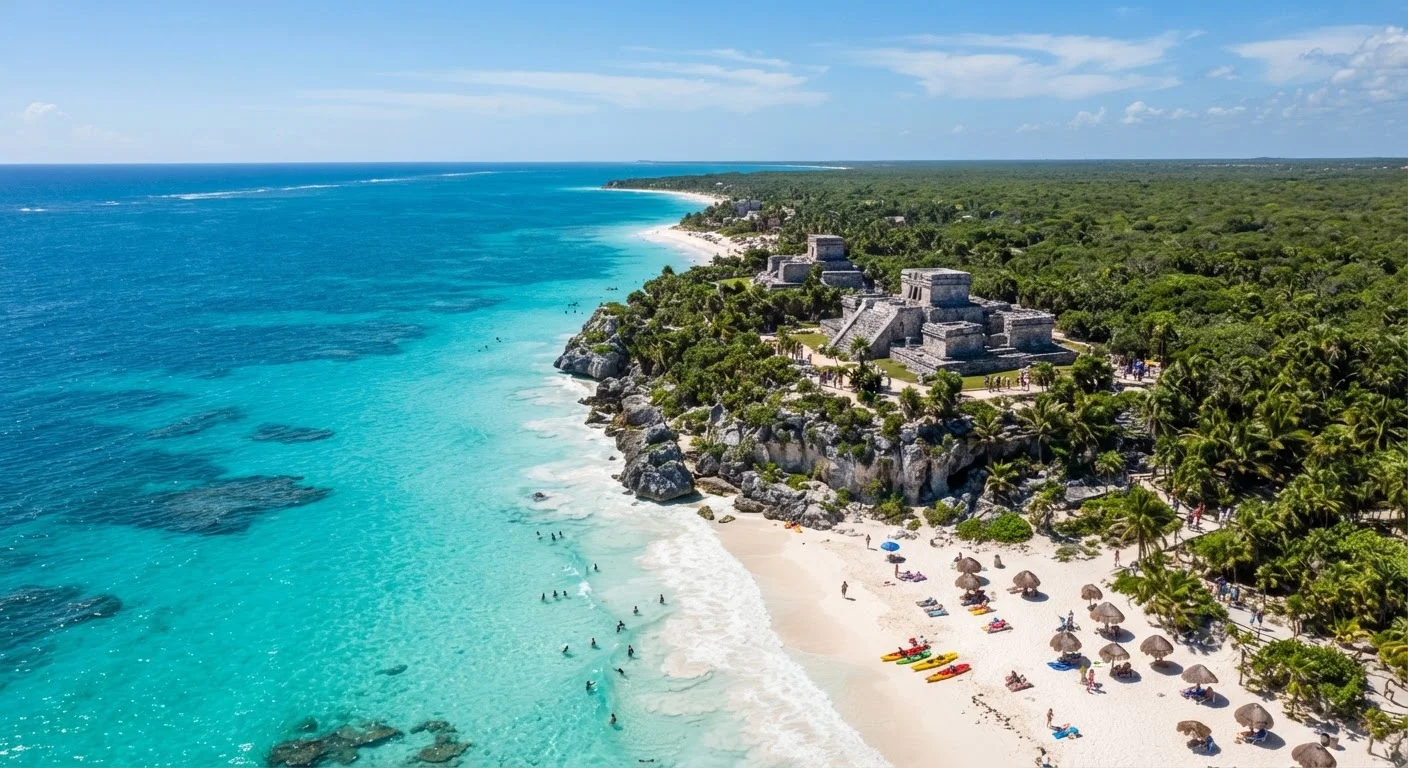
- Tulum: Increasingly developed, but retains an aesthetic that appeals to families seeking something less resort-like. The nearby ruins sit dramatically on a cliff above the Caribbean.
- Mérida: The peninsula's colonial capital — architecturally striking, culturally vibrant, and genuinely off the all-inclusive map. A worthwhile base for families who want a different angle.
- Isla Holbox and Isla Mujeres: Small islands with slower paces and car-free or car-limited streets. Both work well for families who've already done the mainland highlights.
When visiting Chichén Itzá, arrive at opening time and head directly to the main pyramid before tour buses arrive — crowds triple by 10 a.m. and the heat becomes punishing.
Early access dramatically changes the experience at one of Mexico's most popular sites, where midday conditions can be overwhelming for children.
For cenotes, look for sites that offer life jackets and have gradual entry options — these details aren't always advertised and are worth confirming before you go with young swimmers.
Cenote depth and entry style vary enormously; a quick check before arrival ensures the experience is safe and enjoyable for all ages.
Cenotes, Ruins, and Cultural Experiences
Cenotes — natural sinkholes connected to underground rivers — are one of the Yucatán's most distinctive offerings and are generally excellent for families. Open-air cenotes feel like natural swimming holes; cavern-style cenotes are more dramatic but require more swimming ability. Life jackets are typically available at reputable sites. Younger children do best at well-developed open cenotes with gradual entry points rather than jump-in-only styles.
Chichén Itzá remains the most visited archaeological site in Mexico, and while crowds can be intense during midday, arriving early substantially improves the experience. The pyramid of El Castillo is no longer climbable, but the site is still visually stunning and historically rich enough to hold older kids' attention with some context provided beforehand. Uxmal, slightly less trafficked, is often cited by families as an equally impressive and more relaxed alternative.
Mérida's Sunday street festivals, local markets, and food halls give families an accessible entry point to Yucatecan culture without requiring a structured tour. The city's relative safety record within Mexico, walkability, and culinary reputation make it a genuinely underrated family stop.
Make Mérida More Than a One-Night Stop
Most families treat Mérida as a quick detour on the way to ruins, but two nights there pays real dividends. The Sunday morning 'Gran Mercado' and the nightly Paseo de Montejo pedestrian scene give children an authentic cultural experience that sticks with them. Mérida also tends to run cooler than the coast, which matters in warmer months.
Practical Planning: Timing, Safety, and Logistics
November through April represents the dry season and is widely considered the most comfortable period for families. December and spring break windows bring peak crowds and higher accommodation rates, but the weather is reliable. Hurricane season runs roughly June through November, with September and October carrying the highest risk; travel insurance with weather-related coverage is worth considering if booking in that window.
On safety: the U.S. State Department issues travel advisories that are updated periodically and vary by Mexican state. Families should check the current advisory for Quintana Roo (home to Cancún, Playa del Carmen, and Tulum) and Yucatán state (Mérida, Chichén Itzá) before booking, and verify again before departing. Conditions change, and published advisories reflect the most current government assessment.
Always Check Travel Advisories Before You Book
The U.S. State Department maintains advisory levels for each Mexican state, and they are not uniform across the country. Quintana Roo and Yucatán state have historically carried different advisory levels than other parts of Mexico, but these assessments are updated periodically. Check travel.state.gov for current guidance before booking and again before departure — do not rely on advisories from a previous trip or second-hand accounts.
Getting around is manageable. ADO buses connect major destinations reliably and inexpensively. Rental cars give families the most flexibility for cenote-hopping and ruins day trips, but road navigation and driving norms require attention. Many families find that a mix of organized day trips and independent exploration — rather than committing entirely to one approach — works well. See our look at all-inclusive versus independent travel trade-offs for a fuller breakdown of that decision.
Staying and Eating: Choices That Shape the Trip
Accommodation choices significantly affect how a Yucatán trip feels. All-inclusive resorts along the Riviera Maya reduce logistical friction and can be cost-effective for families with young children who need predictable meals and close-by pools. The trade-off is a more insulated experience — many families barely leave the property. Vacation rentals versus hotels is a worthwhile comparison if you're weighing flexibility against amenities.
Mid-range family-friendly hotels in Playa del Carmen or Mérida let families walk to restaurants and markets, which tends to produce more memorable trips. Boutique hotels in Mérida's historic center in particular offer a strong sense of place that resorts can't replicate.
Yucatecan food deserves genuine attention — cochinita pibil (slow-roasted pork), sopa de lima (citrus-based chicken soup), and fresh ceviches are regional staples. Families who make a point to eat at local spots rather than defaulting to familiar chains consistently report that the food becomes one of their trip highlights. Be thoughtful about raw preparations and street food hygiene, but don't let caution entirely crowd out culinary exploration — it's one of the Yucatán's real gifts.
For families working through the broader question of what makes or breaks a trip, it's worth reading about common pitfalls that turn family vacations stressful before finalizing your itinerary.
This article provides general travel information for educational purposes. Entry requirements, travel advisories, health recommendations, and local conditions can change. Always verify current official guidance from the U.S. Department of State, CDC, and relevant Mexican authorities before traveling.
The content provided on our blog site traverses numerous categories, offering readers valuable and practical information. Readers can use the editorial team’s research and data to gain more insights into their topics of interest. However, they are requested not to treat the articles as conclusive. The website team cannot be held responsible for differences in data or inaccuracies found across other platforms. Please also note that the site might also miss out on various schemes and offers available that the readers may find more beneficial than the ones we cover.