Our Verdict
Overnight driving is a genuinely useful strategy for some families - particularly those with school-age kids, a co-pilot who can share the wheel, and a manageable total drive time. But it carries real safety risks that shouldn't be minimized. Fatigue impairs judgment much like alcohol does, and dark roads reduce visibility even in well-lit vehicles. The strategy works best when it's a deliberate, well-rested choice rather than a last-minute attempt to squeeze in more miles.
Families with two licensed drivers, school-age children who sleep well in the car, and road trips under 500 miles where arriving early unlocks the destination faster.
Why Families Try Overnight Driving in the First Place
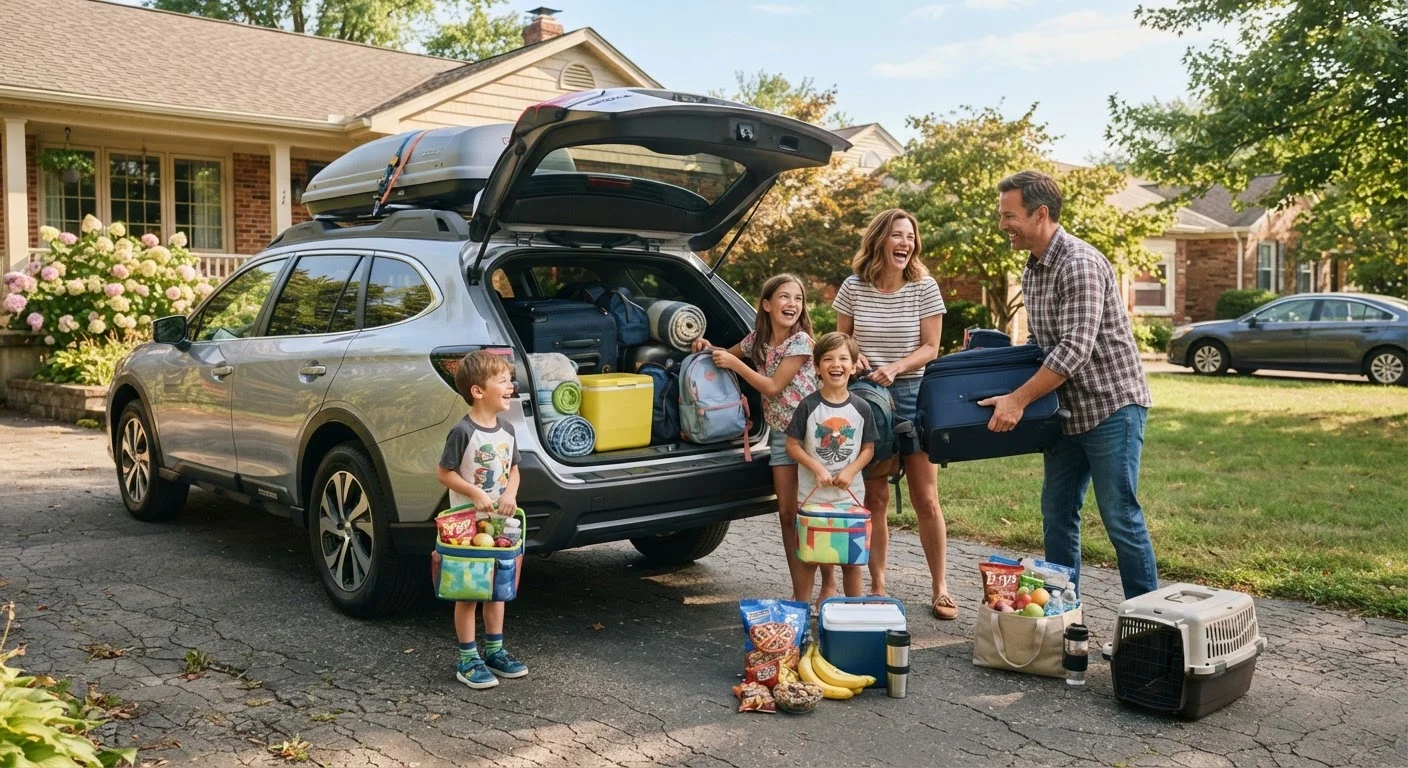
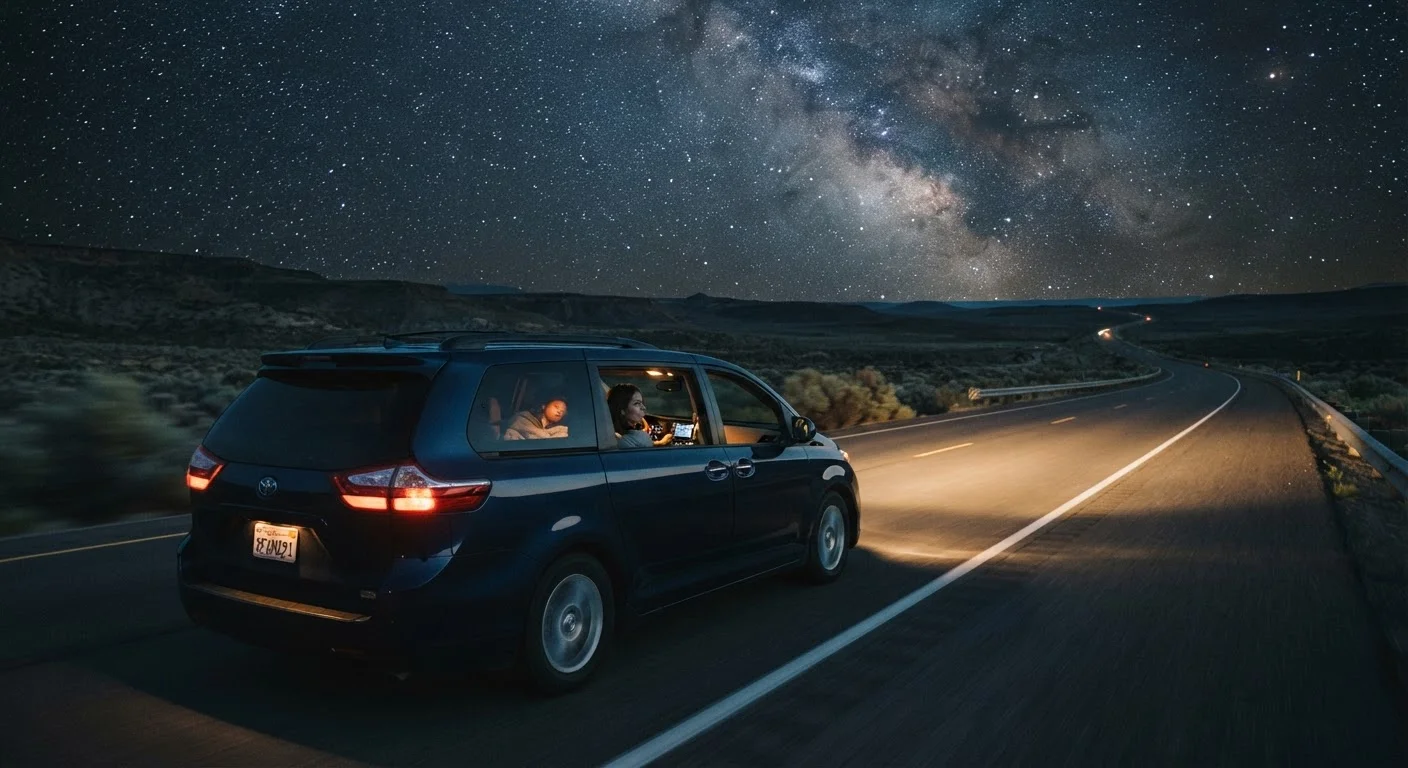
The appeal is intuitive: load up the car after dinner, merge onto a quiet interstate, and by the time the kids stir, you're already pulling into the driveway of a vacation rental. No screen-time battles, no "are we there yet," no midday gas station meltdowns. For parents who've survived a six-hour daytime drive with restless toddlers, an overnight run sounds like a tactical masterstroke.
It's not a new idea - generations of American families have made the overnight push standard practice. But whether it's the right call for your family depends on factors that go well beyond whether the kids will sleep.
Understanding realistic daily mileage limits for family trips is a useful starting point before deciding whether to shift those miles into the dark.
Kids often sleep through most of the drive
School-age children who are already tired from a normal day will frequently sleep for three to five hours in a moving vehicle, turning what would be a tense daytime stretch into a quiet, low-friction journey.
Highways are significantly less congested at night
Traffic through major metro areas and construction zones that can add hours during peak daytime travel is largely absent between 10 p.m. and 5 a.m., making actual drive times noticeably shorter.
No need to plan midday entertainment or snack stops
Daytime drives with kids often require structured breaks and activities to manage restlessness. Overnight drives sidestep this need almost entirely while children are asleep.
Arrive early and maximize the first full day
Pulling into a destination by early morning means your family can check in, rest, and be ready to explore by midday - rather than losing a half-day to travel during daylight hours.
Can reduce the need for an overnight hotel stop
For medium-distance trips of 400-600 miles, an overnight drive can eliminate one night of accommodation costs and the time lost to checking in and out.
The Real Risks of Driving After Dark
The downsides of overnight driving aren't just about tired parents needing an extra coffee. Fatigue genuinely impairs driving ability - slowing reaction times, narrowing attention, and in severe cases causing microsleep episodes that last several seconds. That's enough time to drift lanes or miss a stopped vehicle.
Nighttime also reduces visibility. Even with headlights, depth perception and peripheral vision are compromised after dark, and wildlife crossings become harder to detect. As detailed in our article on why night driving is riskier than most people assume, fatal crash rates increase after sunset - and most drivers don't adjust their habits accordingly.
For families with infants, overnight drives carry an additional wrinkle: feeding schedules, diaper changes, and unpredictable sleep patterns mean the baby who "always sleeps in the car" may not cooperate at 2 a.m. on an unfamiliar highway. See our guide on road tripping with babies and toddlers for what to realistically expect.
Driver fatigue is a genuine safety hazard
Drowsy driving impairs reaction time and decision-making in ways that parallel alcohol impairment. The risk compounds after midnight and in the hours just before dawn, which are statistically the most dangerous for fatigue-related crashes.
Reduced visibility increases collision risk
Headlights illuminate only a portion of the road ahead, and depth perception degrades in the dark. Animal crossings, road debris, and slow-moving vehicles become harder to spot in time to react.
Infants and toddlers may not cooperate with the plan
Very young children have unpredictable sleep and feeding needs that don't pause for a highway drive. Stops at 1 or 3 a.m. in unfamiliar locations are more stressful than the same stop in daylight.
Adults arrive exhausted and less able to parent
Even a "successful" overnight drive often means parents who are running on minimal sleep when the destination's activities begin - turning what was meant to be a vacation into an endurance test.
Kids miss scenery and road-trip experiences
Part of the value of a family road trip is what happens during the drive - regional landscapes, roadside curiosities, spontaneous stops. Overnight travel eliminates most of that for the whole family.
Making an Overnight Drive Work Safely
If you've weighed the pros and cons and the overnight route still makes sense for your family, the margin for error narrows - so preparation matters more, not less.
One Driver? Reconsider the Overnight Plan
If only one adult will be behind the wheel the entire night, the calculus shifts significantly. Solo overnight driving with sleeping children is one of the highest-risk configurations for a family road trip - there's no one to monitor the driver's alertness, and stopping safely with young children in tow is more complicated in the dark. If you're flying solo, a well-timed early-morning departure (4-5 a.m.) can capture many of the same traffic benefits with far less fatigue risk.
- Sleep before you leave. Departing at 10 p.m. after a full day of activity is a recipe for impaired driving. A nap before departure isn't optional - it's a safety measure.
- Rotate drivers. If you have a second licensed adult, plan explicit handoff times rather than waiting until someone feels tired. Tiredness is a lagging indicator.
- Know the stopping options. Identify rest areas and 24-hour locations along your route before you leave. Discovering there's no exit for 60 miles when your eyes are heavy is not the moment for that research.
- Keep the cabin cool and quiet. Warmth accelerates sleepiness in the driver. Mild, fresh air from a cracked window helps more than another energy drink.
Pairing an overnight strategy with a smart plan for where your family will sleep at the destination can also reduce the pressure to keep driving when you're not at your sharpest.
3x
Higher fatigue crash risk after midnight
Research from the AAA Foundation for Traffic Safety has found that drowsy-driving crash risk increases sharply in the midnight-to-6 a.m. window, when circadian pressure to sleep is strongest.
~50%
Of fatal crashes occur in low-light conditions
According to the National Safety Council, roughly half of all traffic fatalities occur at night despite significantly lower traffic volumes, highlighting the disproportionate danger of after-dark driving.
The content provided on our blog site traverses numerous categories, offering readers valuable and practical information. Readers can use the editorial team’s research and data to gain more insights into their topics of interest. However, they are requested not to treat the articles as conclusive. The website team cannot be held responsible for differences in data or inaccuracies found across other platforms. Please also note that the site might also miss out on various schemes and offers available that the readers may find more beneficial than the ones we cover.